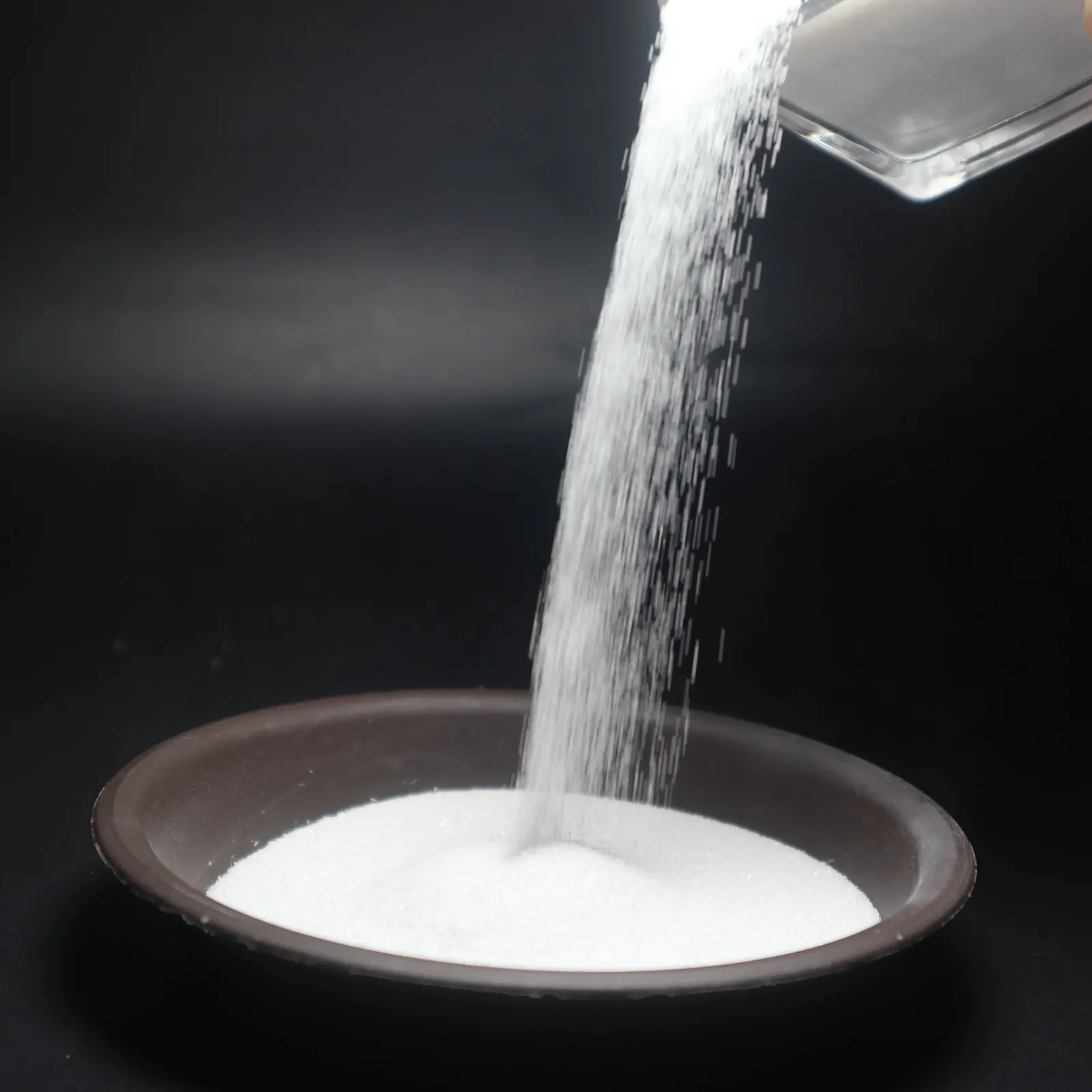
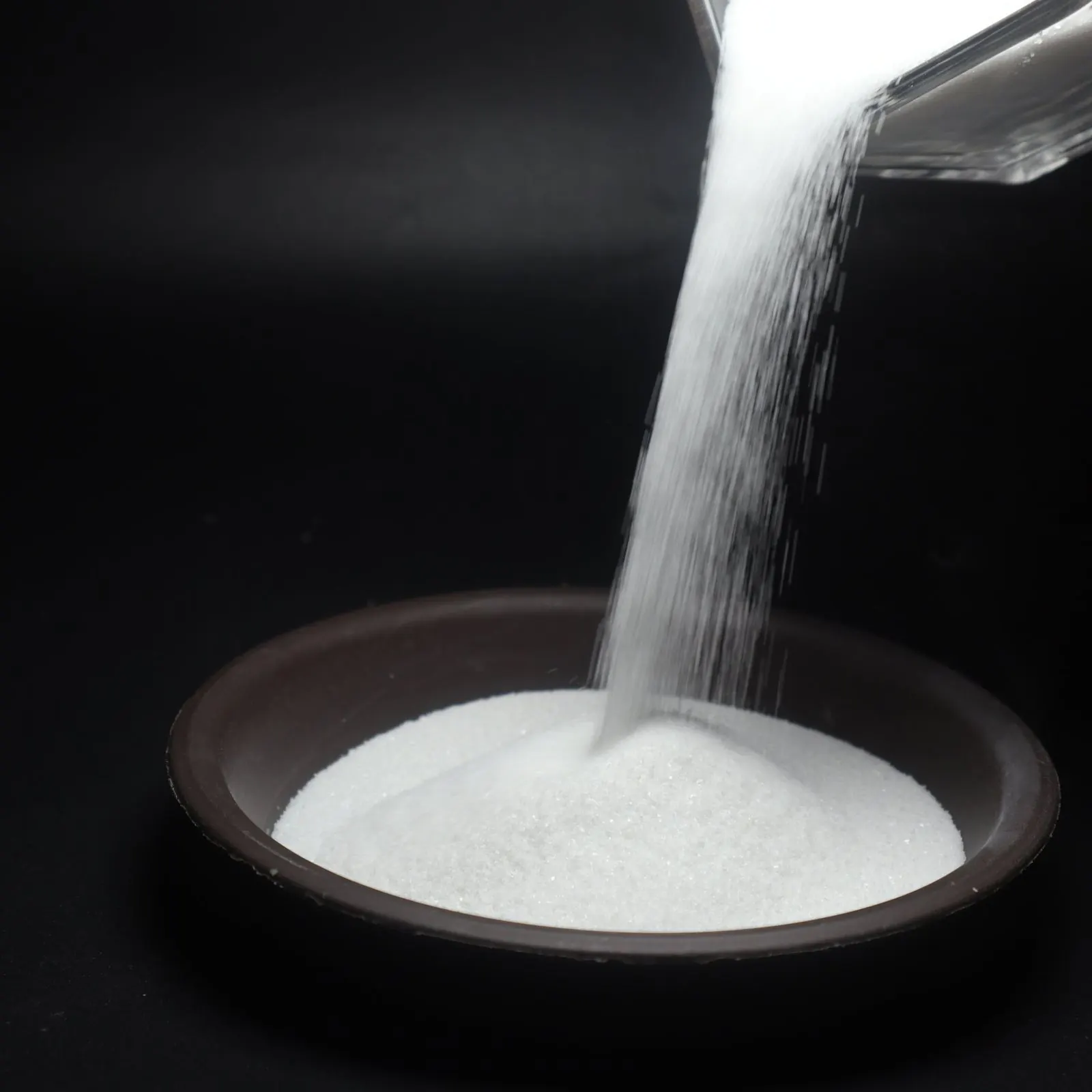
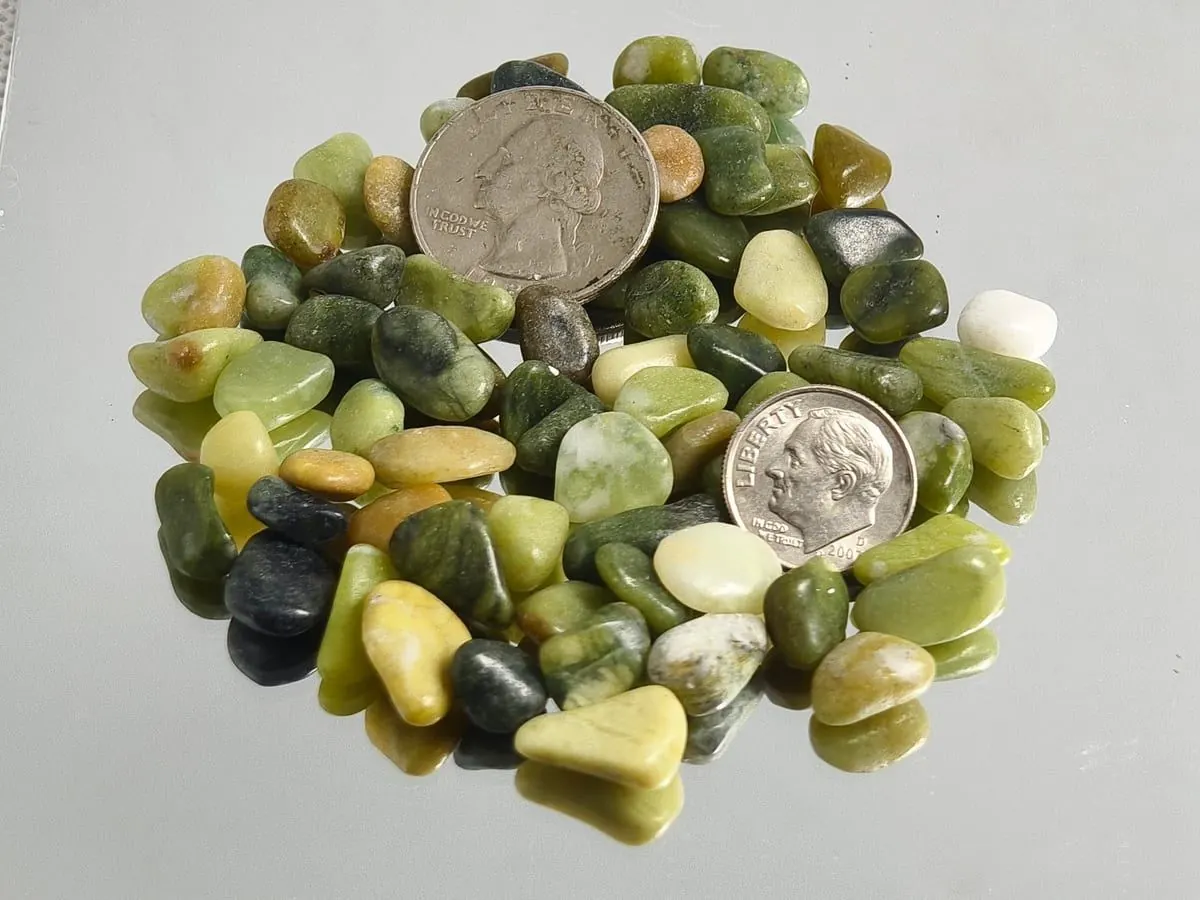
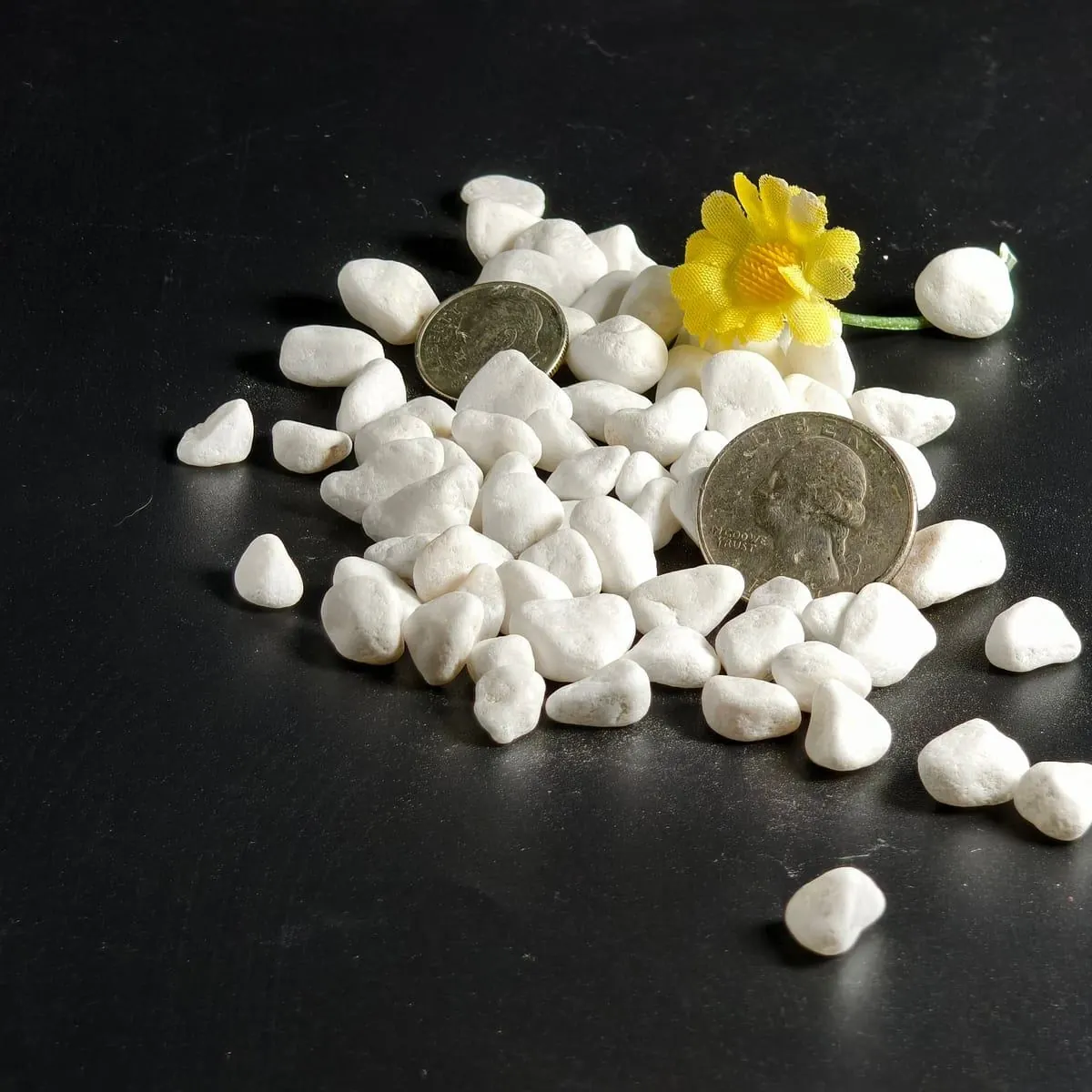
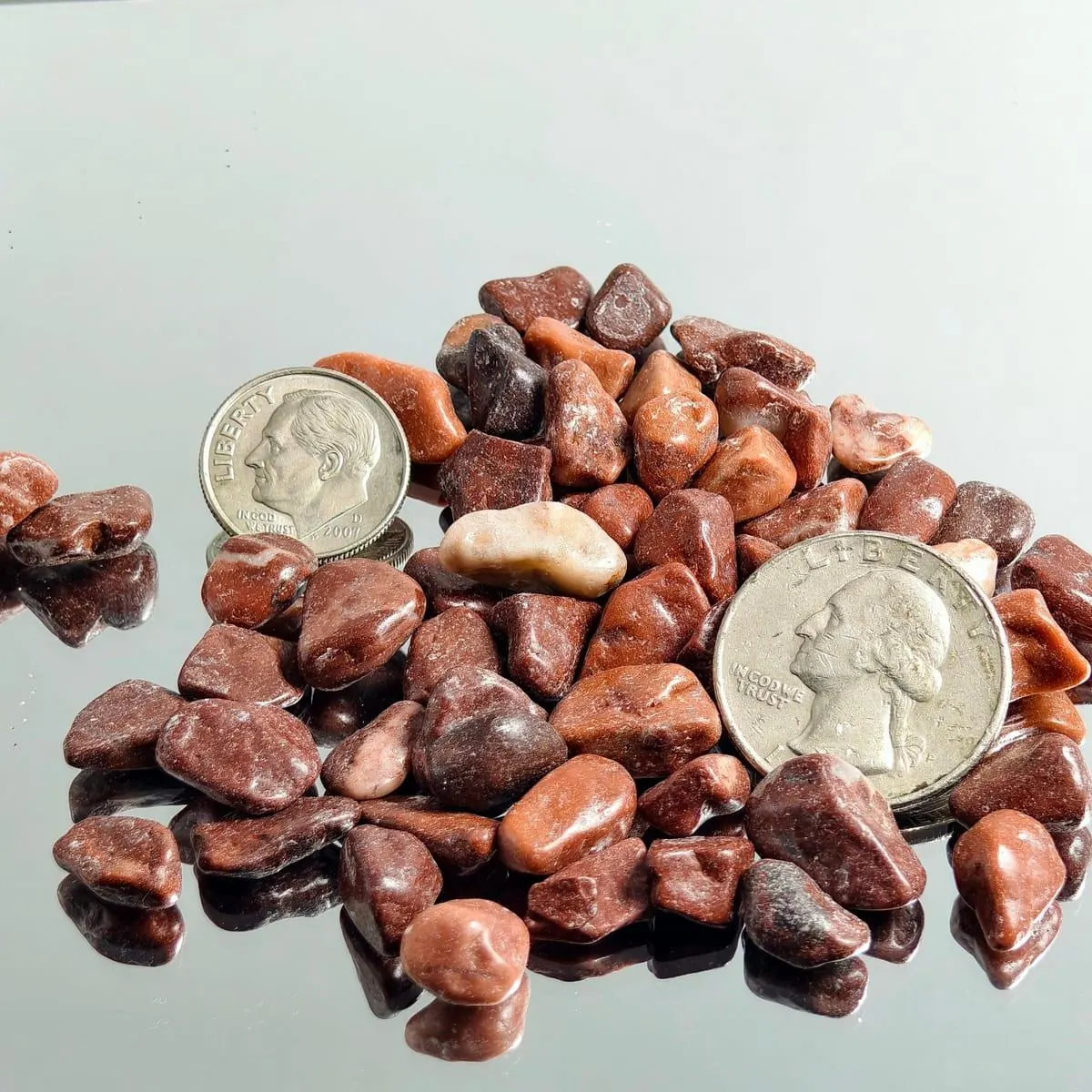
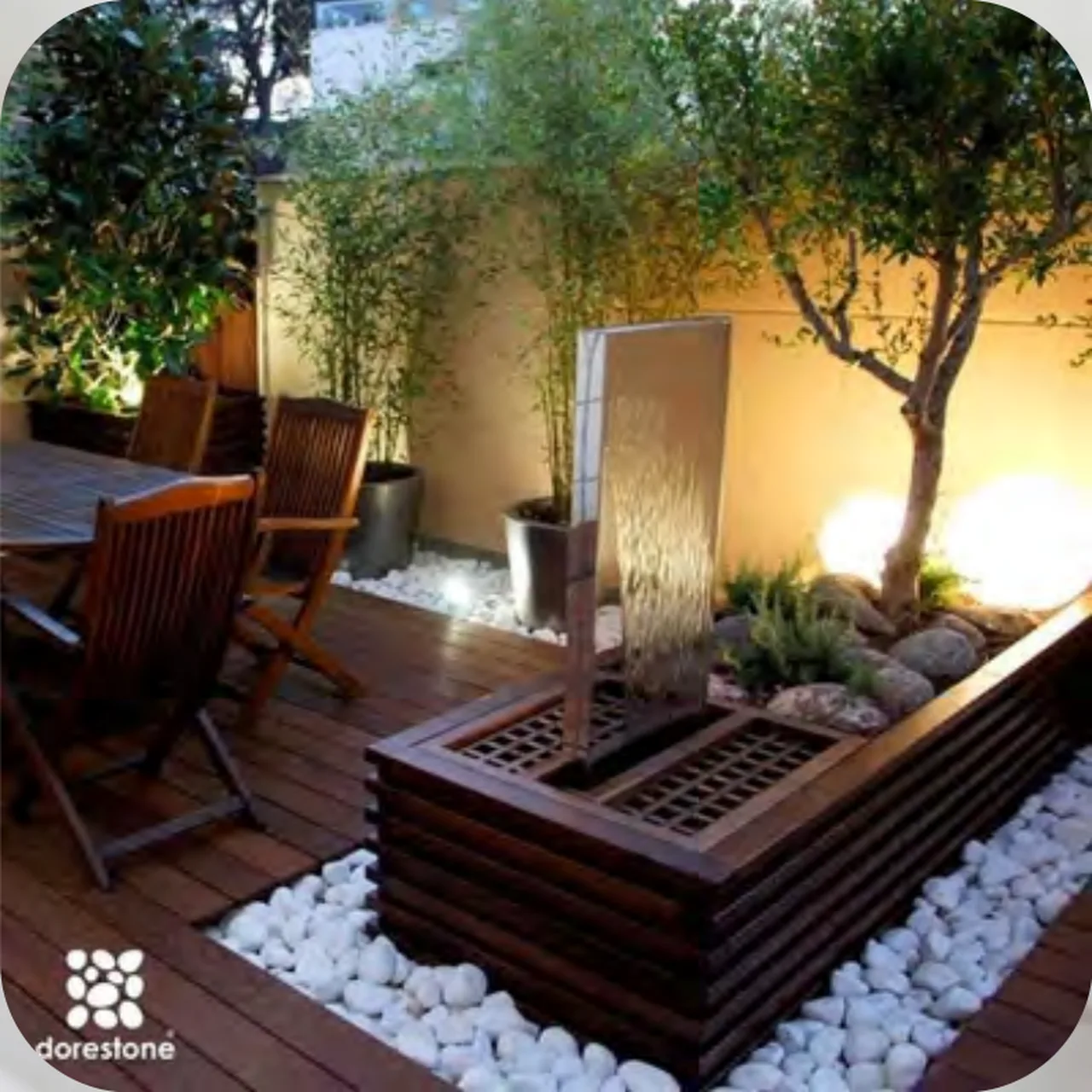
A volleyball court needs washed, rounded quartz sand graded roughly 0.5–2 mm with fines below about 1%, laid at least 40 cm deep over a drained sub-base. A 16 × 8 m court alone takes 75–80 tonnes. This guide covers FIVB depth rules, grain size, colour trade-offs, container packing and the specification lines for a bulk order.
Roof ballast calls for washed, rounded to sub-rounded stone graded roughly 20–60 mm with fines below 1%, applied at 50–60 kg/m² in the roof field and up to 100–120 kg/m² at perimeters and corners. This guide covers the grades membrane manufacturers accept, the coverage maths per tonne and container, and the specification lines to put on a bulk order.
Playground surfacing calls for a washed, natural sand with rounded grains graded roughly 0.25–1.5 mm, laid 200–300 mm deep in fall zones, while silica sand for artificial grass infill is a separate rounded 0.5–1.0 mm grade applied at about 5–10 kg/m². This guide covers the safety criteria, tonnage maths and the specification lines to put on a bulk order for both grades.
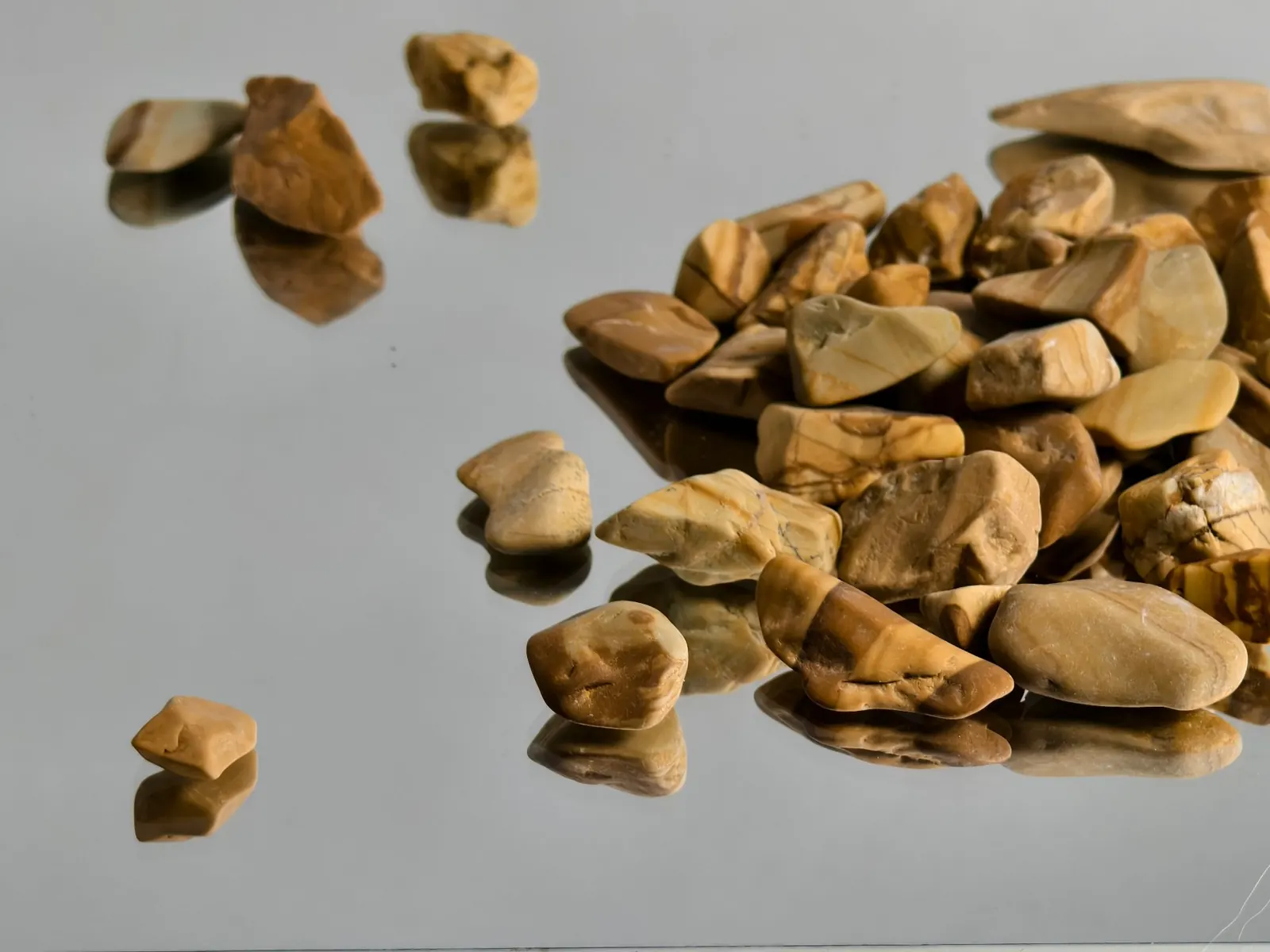
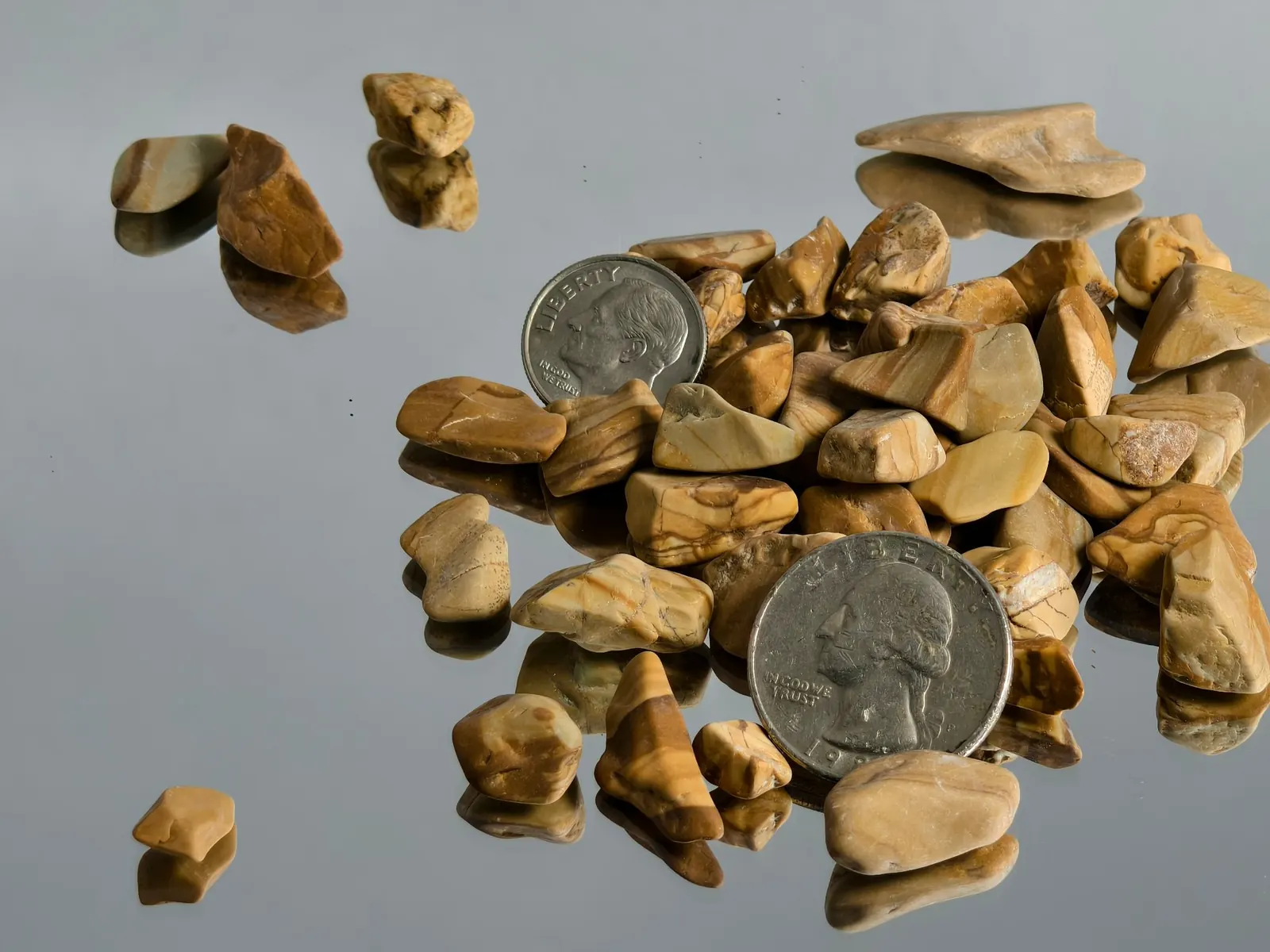
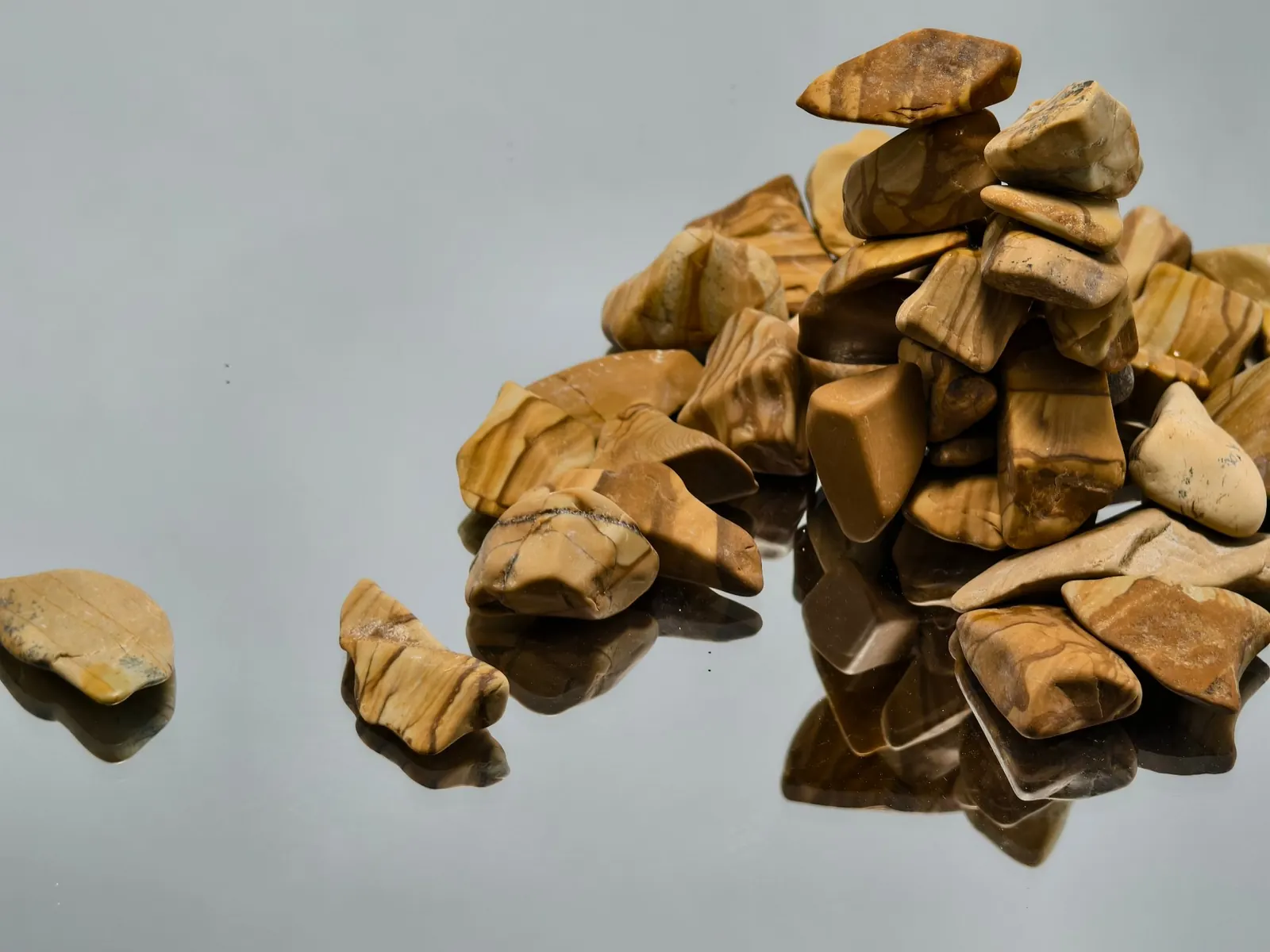
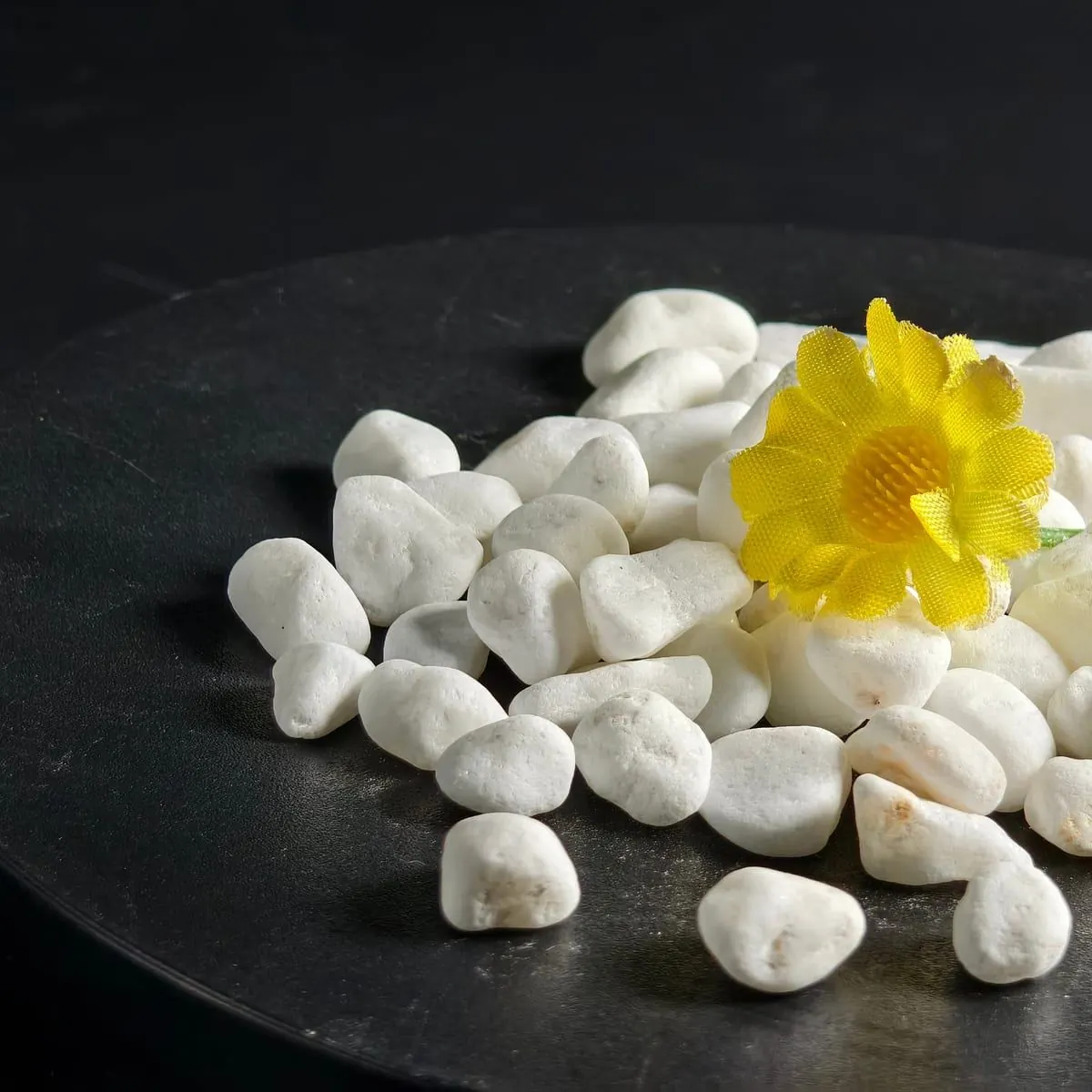
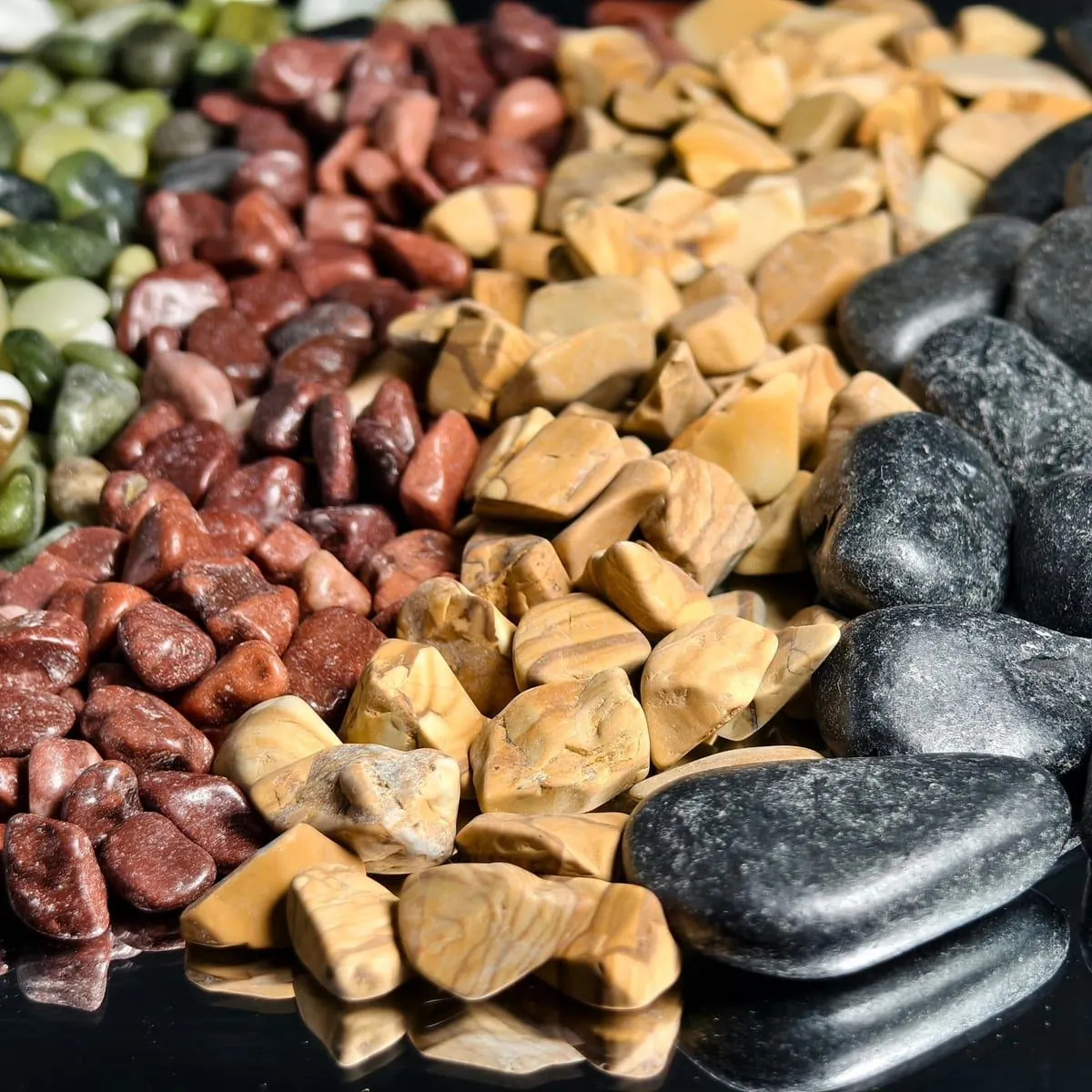
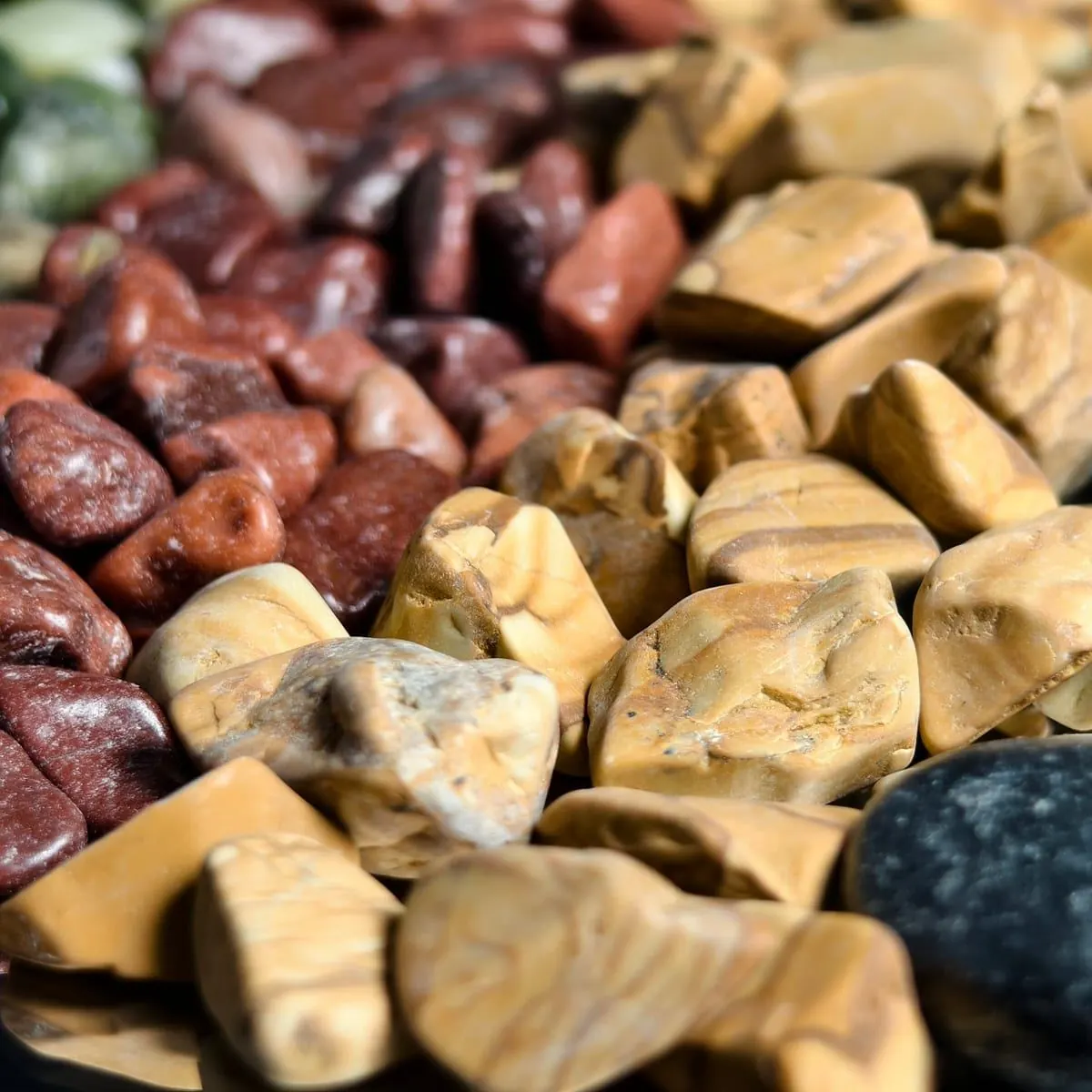
Wood grain stone is a grip-friendly decorative material: its natural striated, layered surface carries texture in the rock itself, and a cleft or naturally weathered face typically holds a wet pendulum test value in the PTV 36+ band — the low slip-risk range — while a sawn-smooth or polished face can fall into the 20s. That makes textured wood grain stone a practical choice for pool decking borders, pathways and wet-area edging when the surface finish is specified, tested and kept unpolished.
For low retaining walls up to about 600 mm, use graded landscape boulders of 100–300 mm laid as a gravity wall on compacted base, with free-draining angular gravel backfill behind the mass; taller walls need engineered gabion baskets or structural block with 150–300 mm of drainage stone. A 10 m² boulder face at 500 mm height consumes roughly 4–6 tonnes of wall stone plus 2–3 tonnes of backfill gravel.
For garden edging, use washed natural black pebbles in a 20–40 mm grade, laid 50–75 mm deep in a 100–200 mm wide band over geotextile with a rigid edge restraint. That band takes 8–26 kg of stone per linear metre depending on width and depth, and one 24–27 tonne container covers roughly 1,000–3,000 linear metres of edging.
For paver joints, black small pebbles should be roughly one third to one half of the joint width: 2–3 mm for 5 mm joints, 3–5 mm for 8–10 mm joints and 5–8 mm for 12–15 mm joints. Budget 4–6 kg per square metre of tight-jointed paving, fill to 5–10 mm below the paver face, and buy single-size washed stone with fines under 1%.
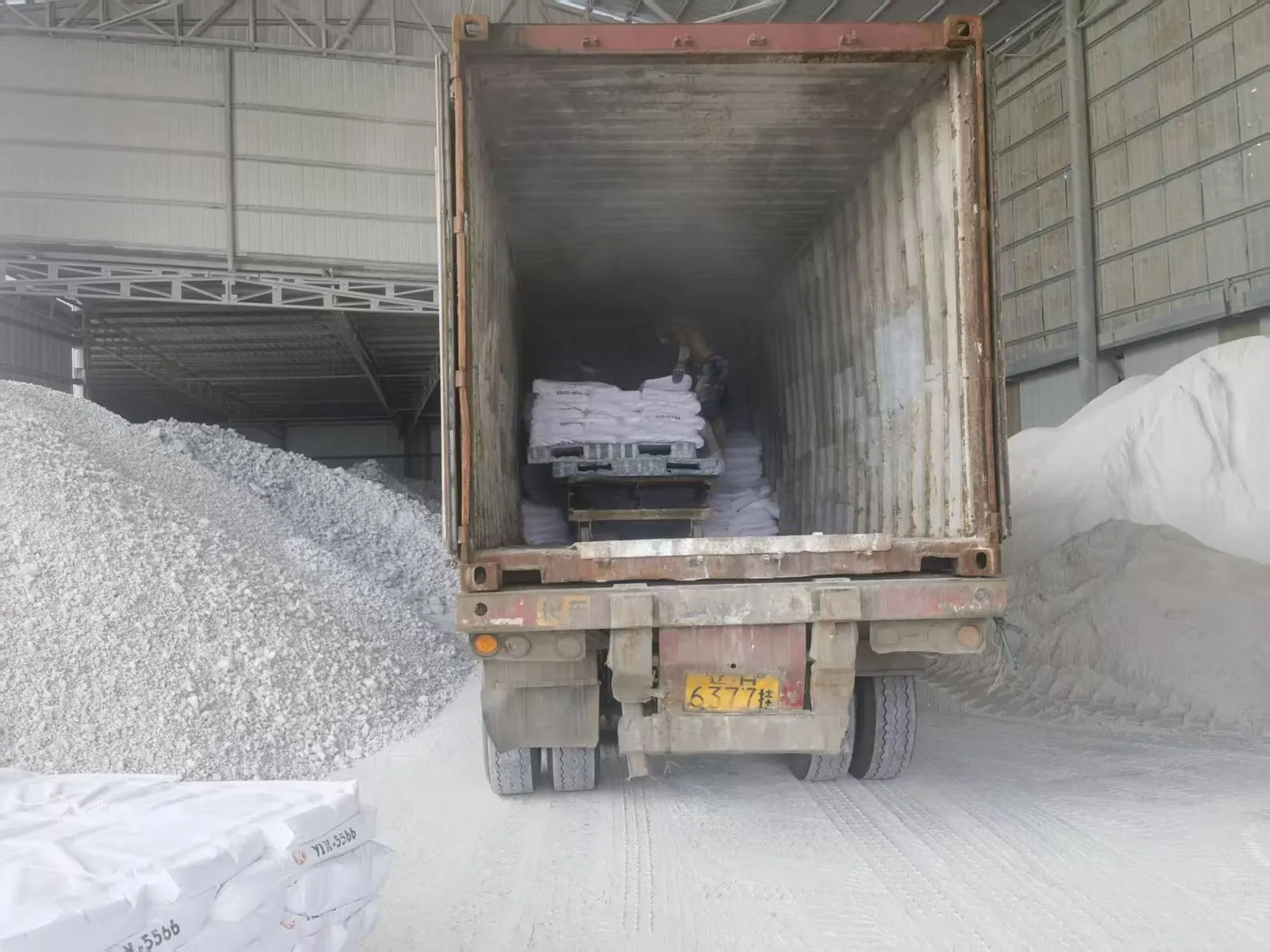
The MOQ for decorative gravel is normally one 20 ft container — about 24–27 tonnes loose-loaded, or roughly 960–1,080 × 25 kg bags. Single screened colours can open at a 5–10 tonne trial, while colour-sorted blends need a full 20–27 tonne production run, and jumbo bags of 1,000–1,200 kg pack 24–27 per container.
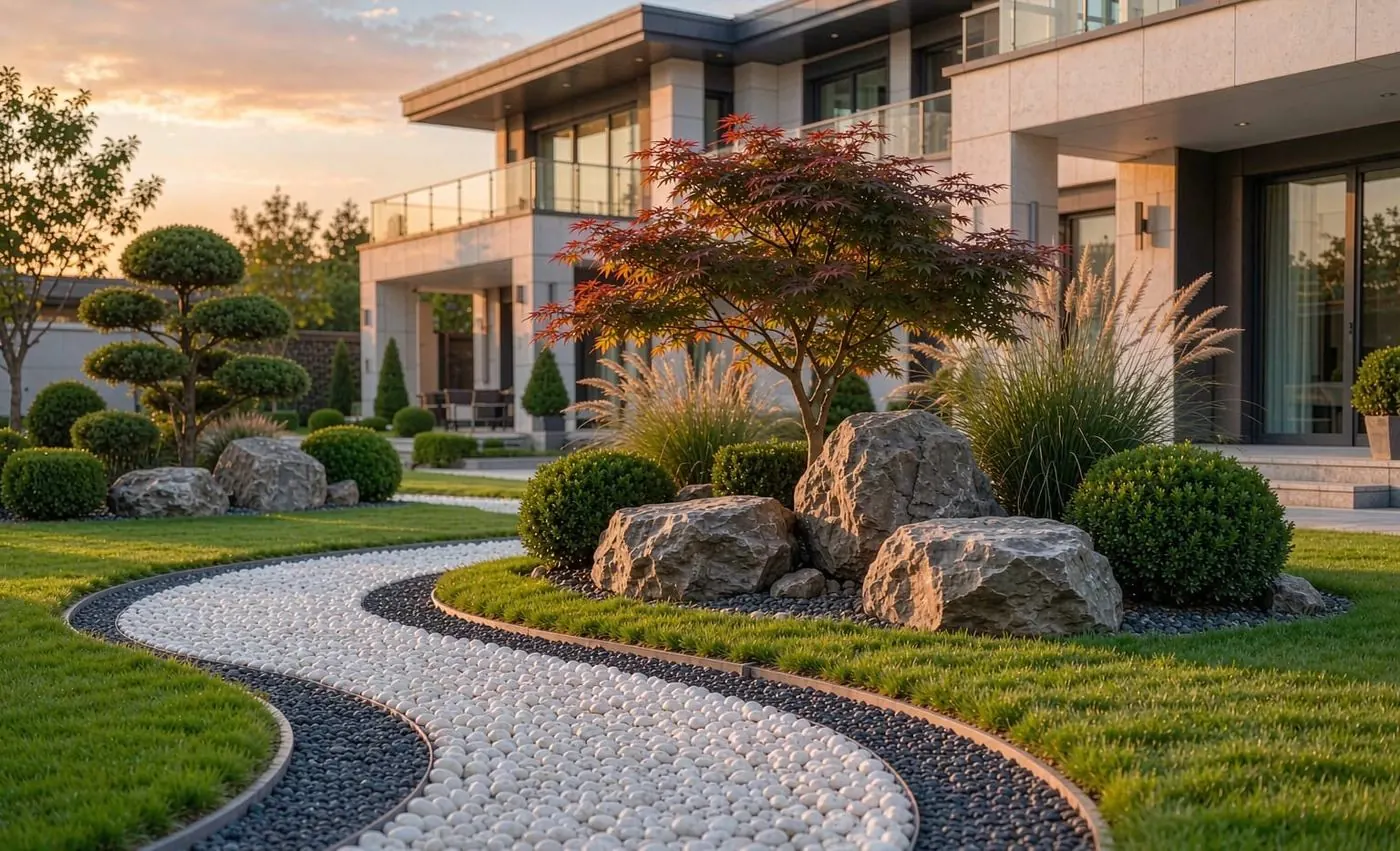
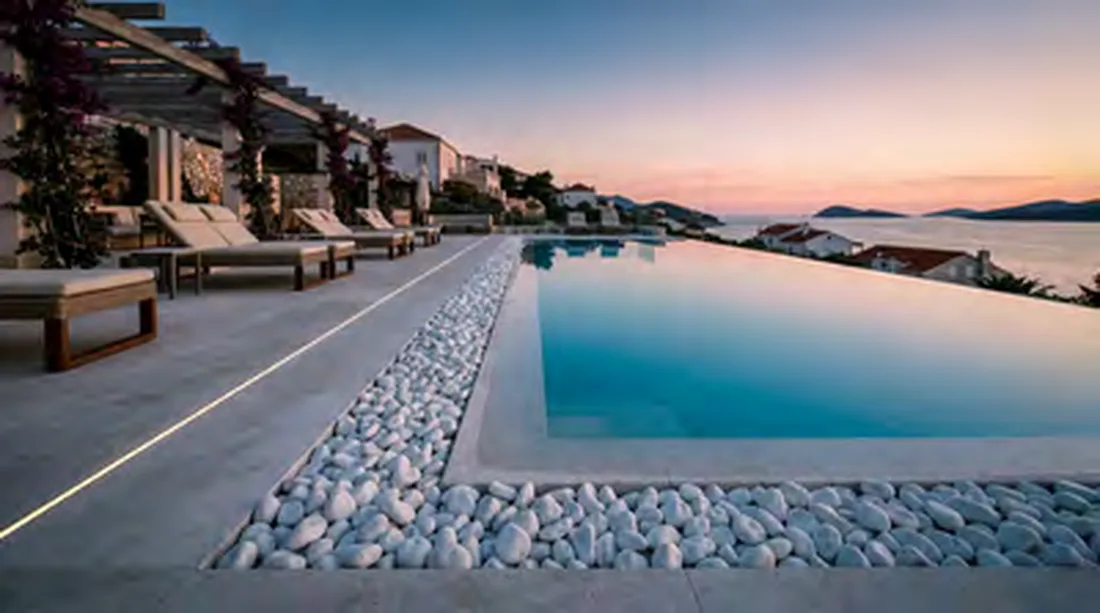
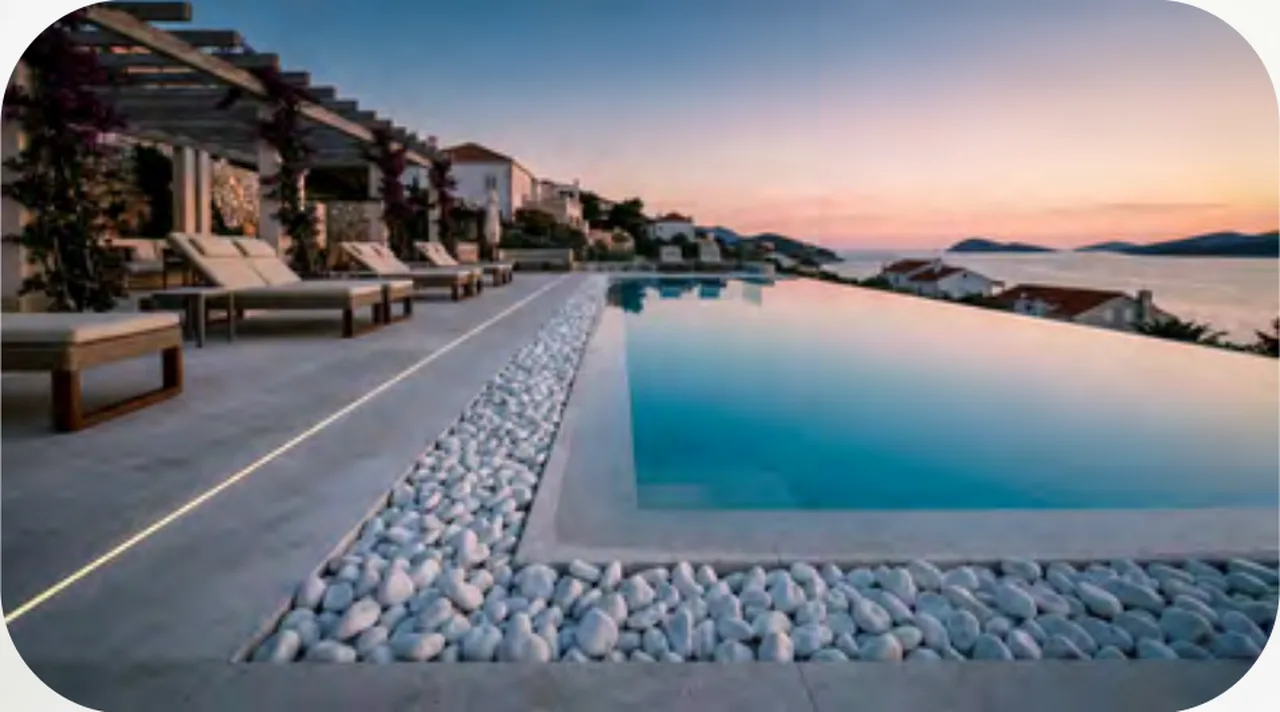
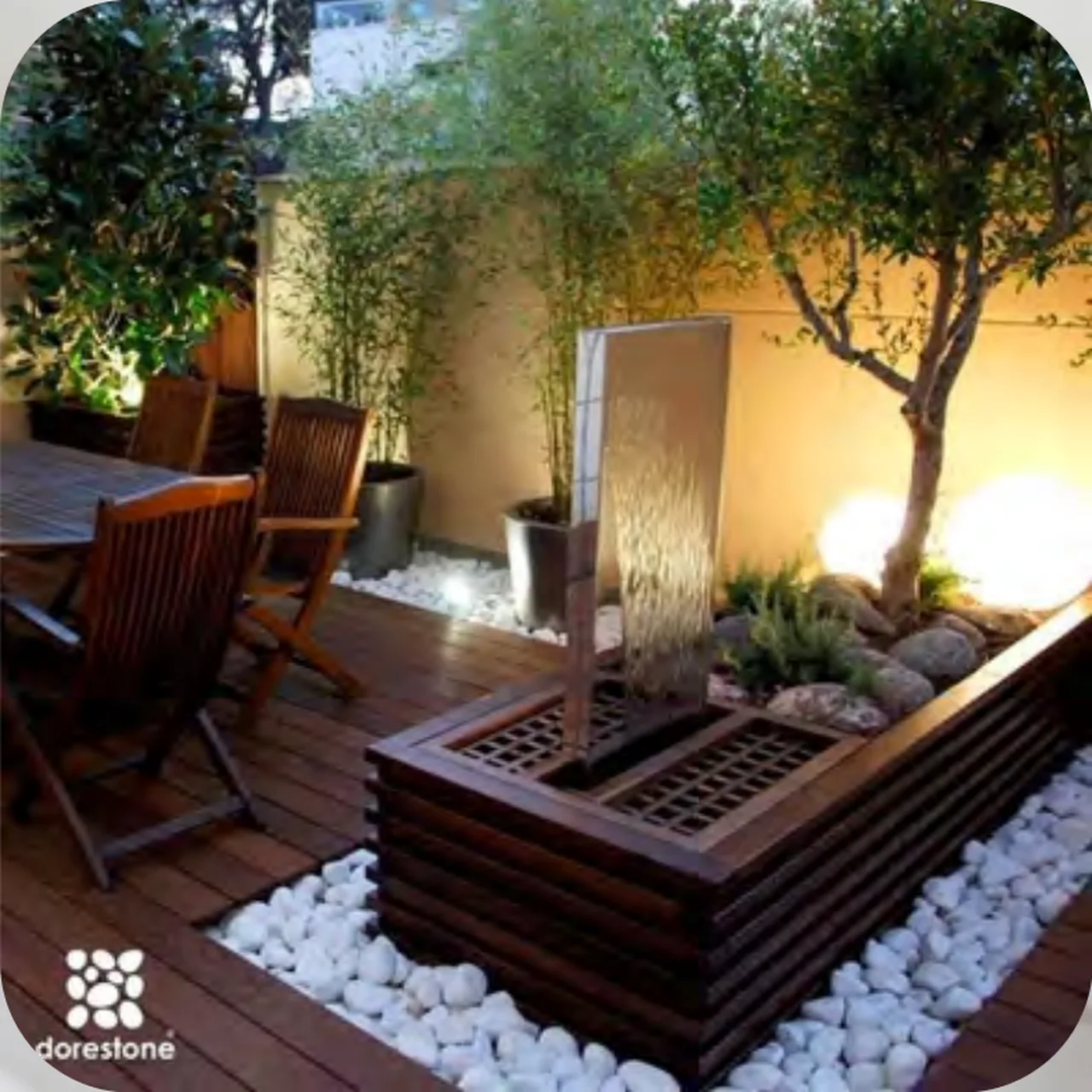
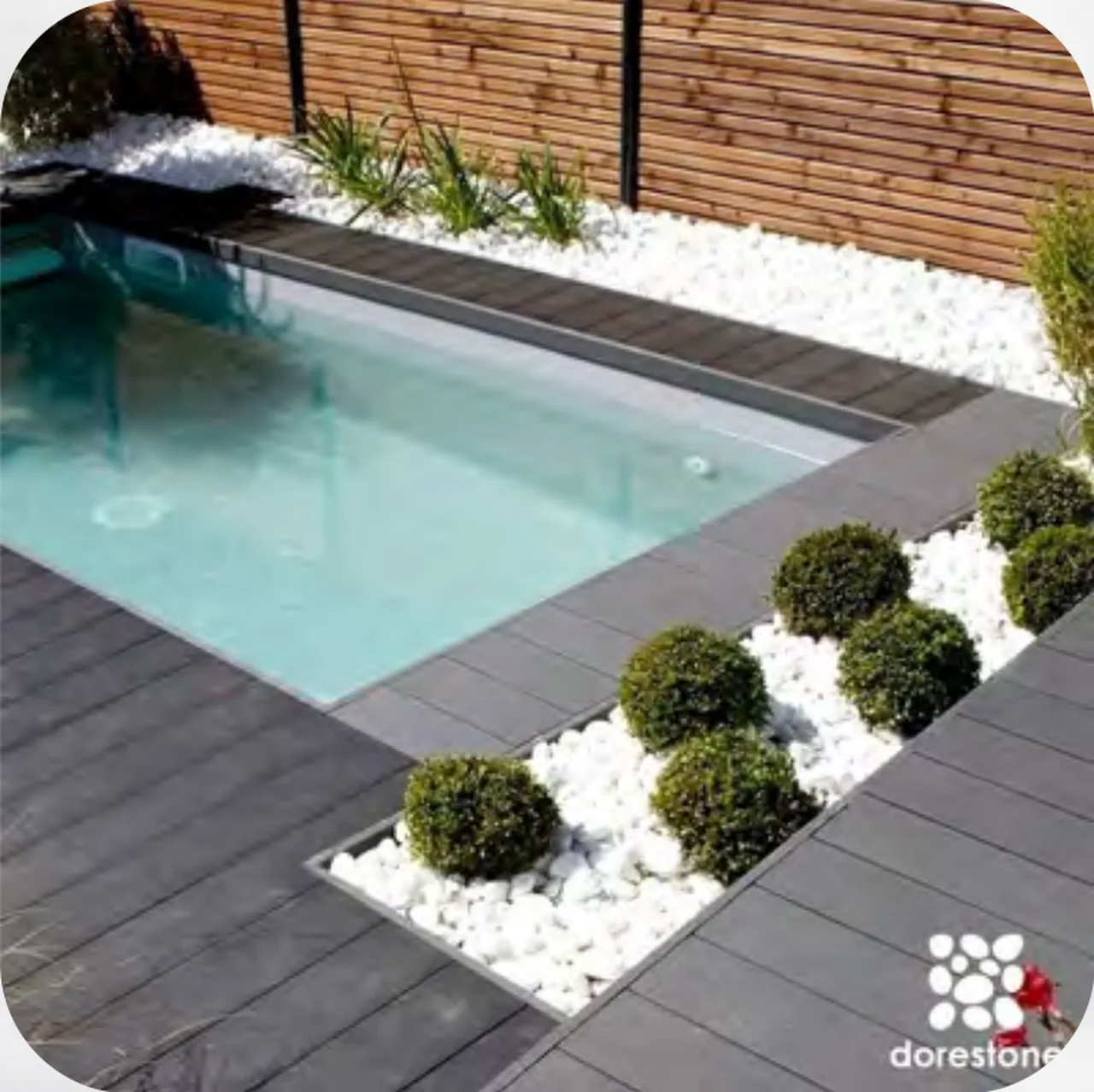
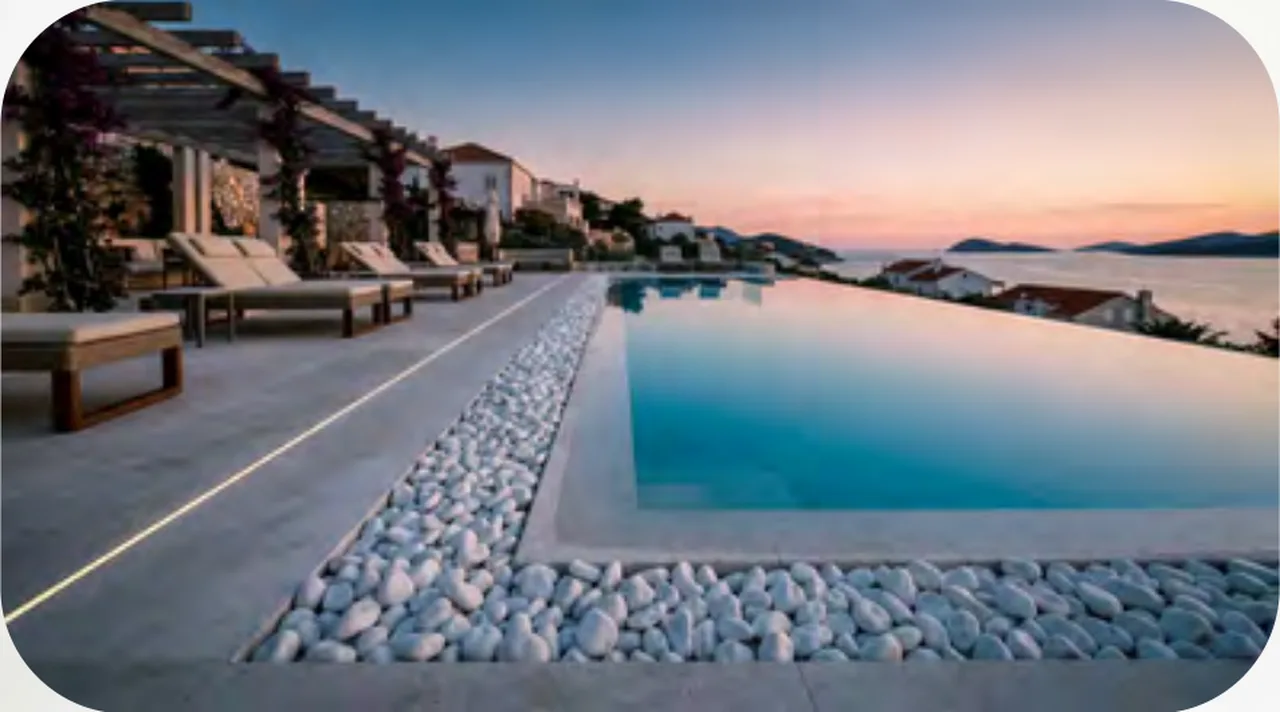
The best polished pebbles for pools are dense, through-coloured stones — black basalt for contrast bands, quartzite for bright white surrounds — ordered washed in 20–30 mm for coping inlays and 30–50 mm for waterline bands, with fines under 1%. At a 40 mm laying depth one tonne covers 15–17 m², so a 20 ft container of 24–27 tonnes finishes 360–450 m² of pool surround.
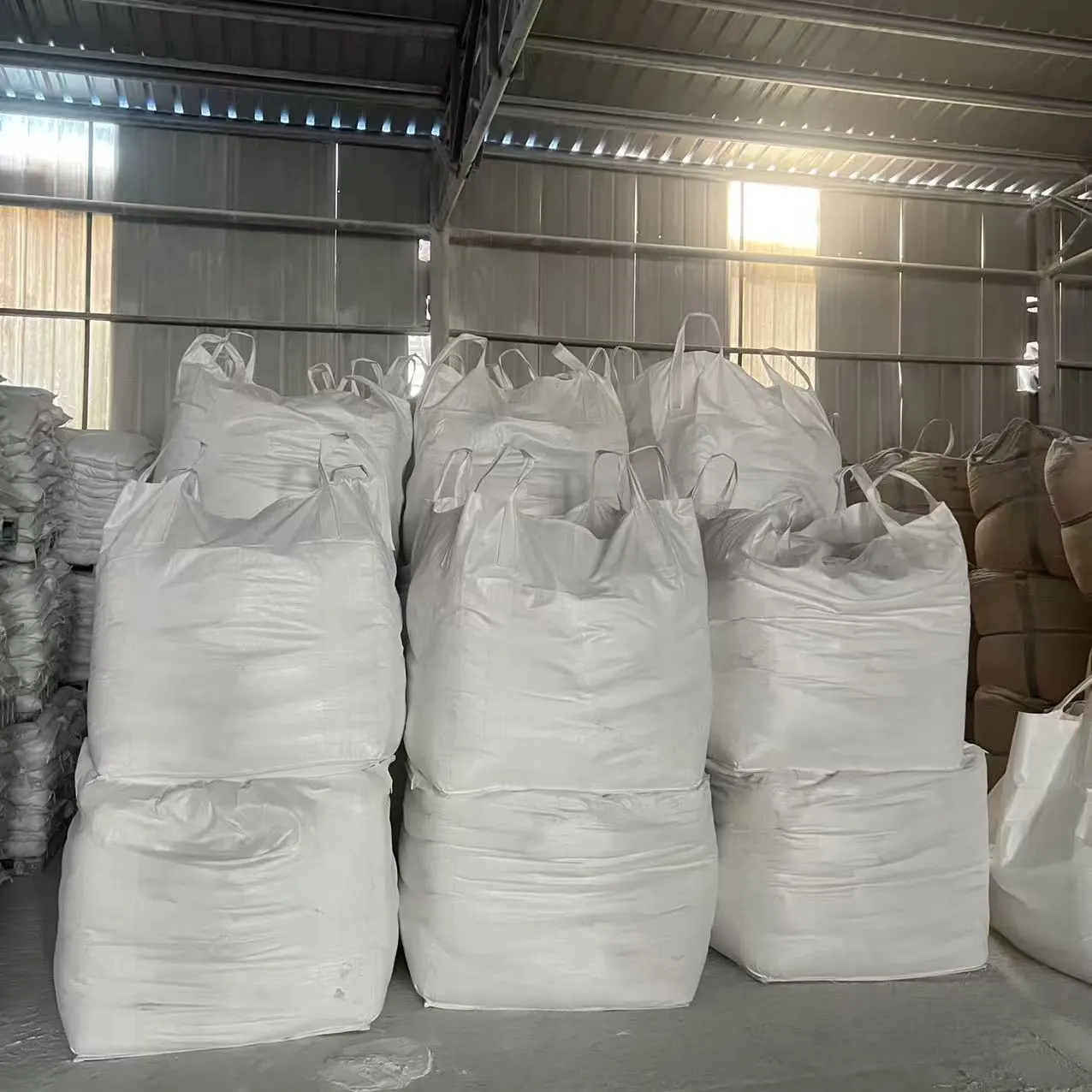
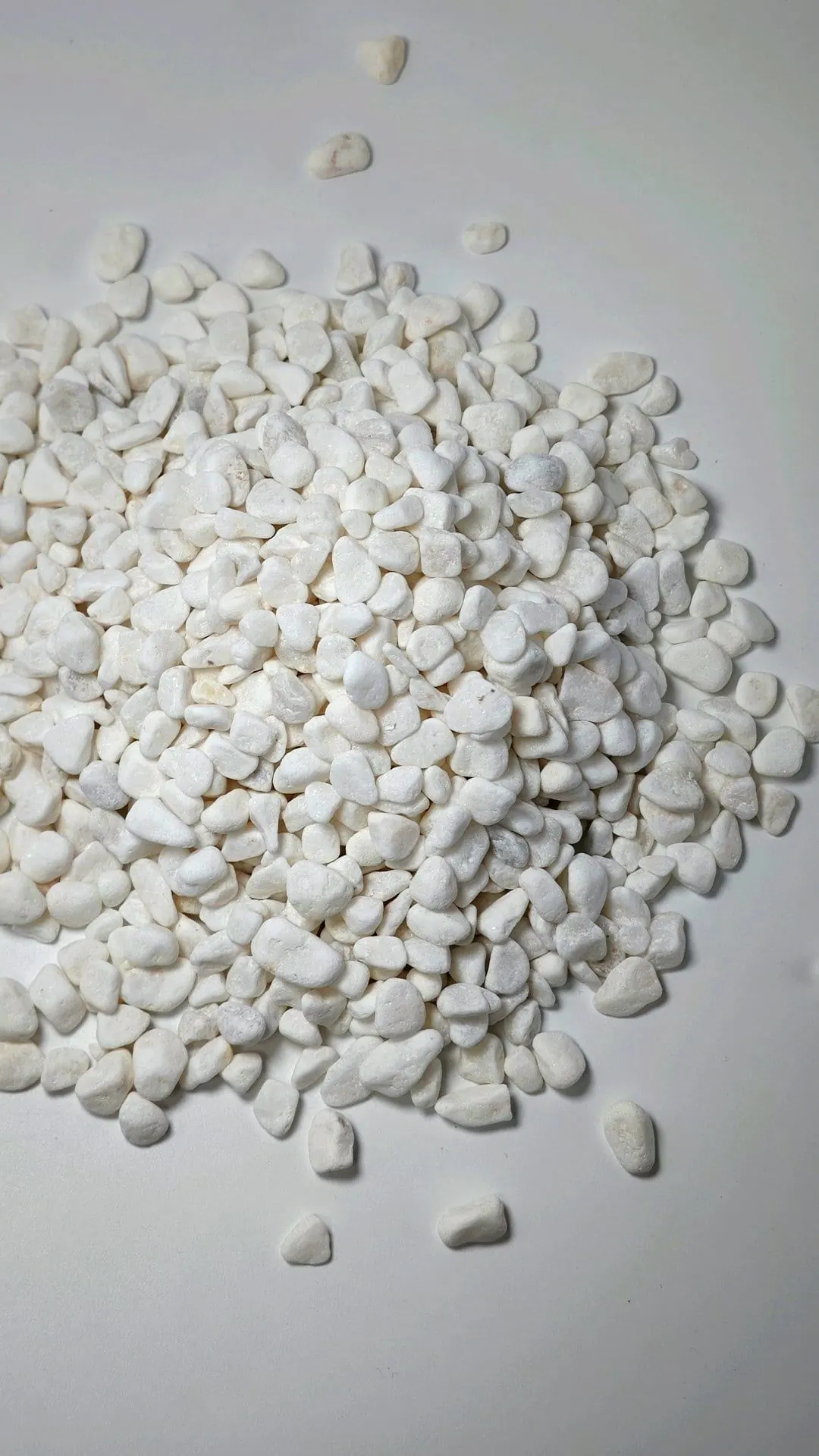
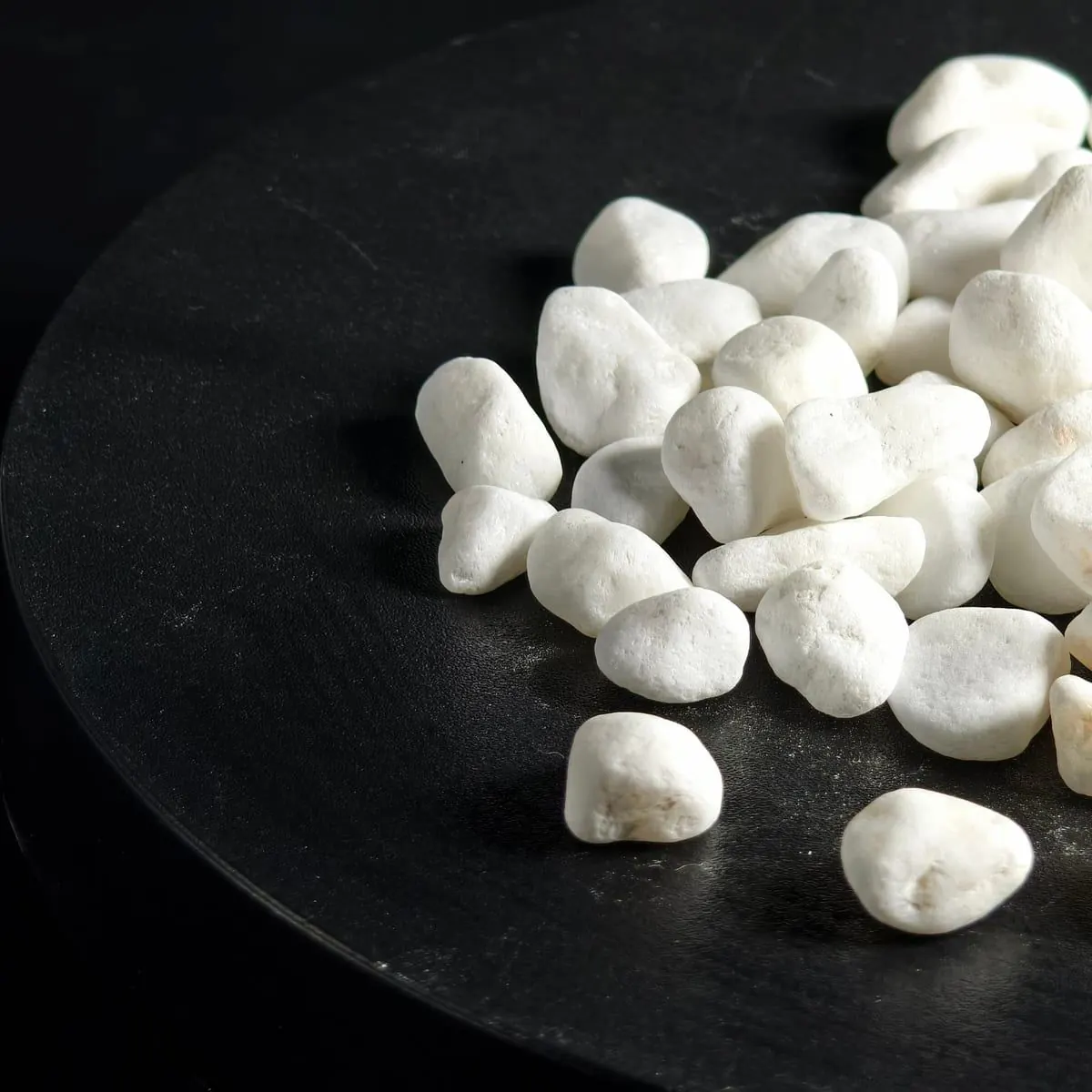
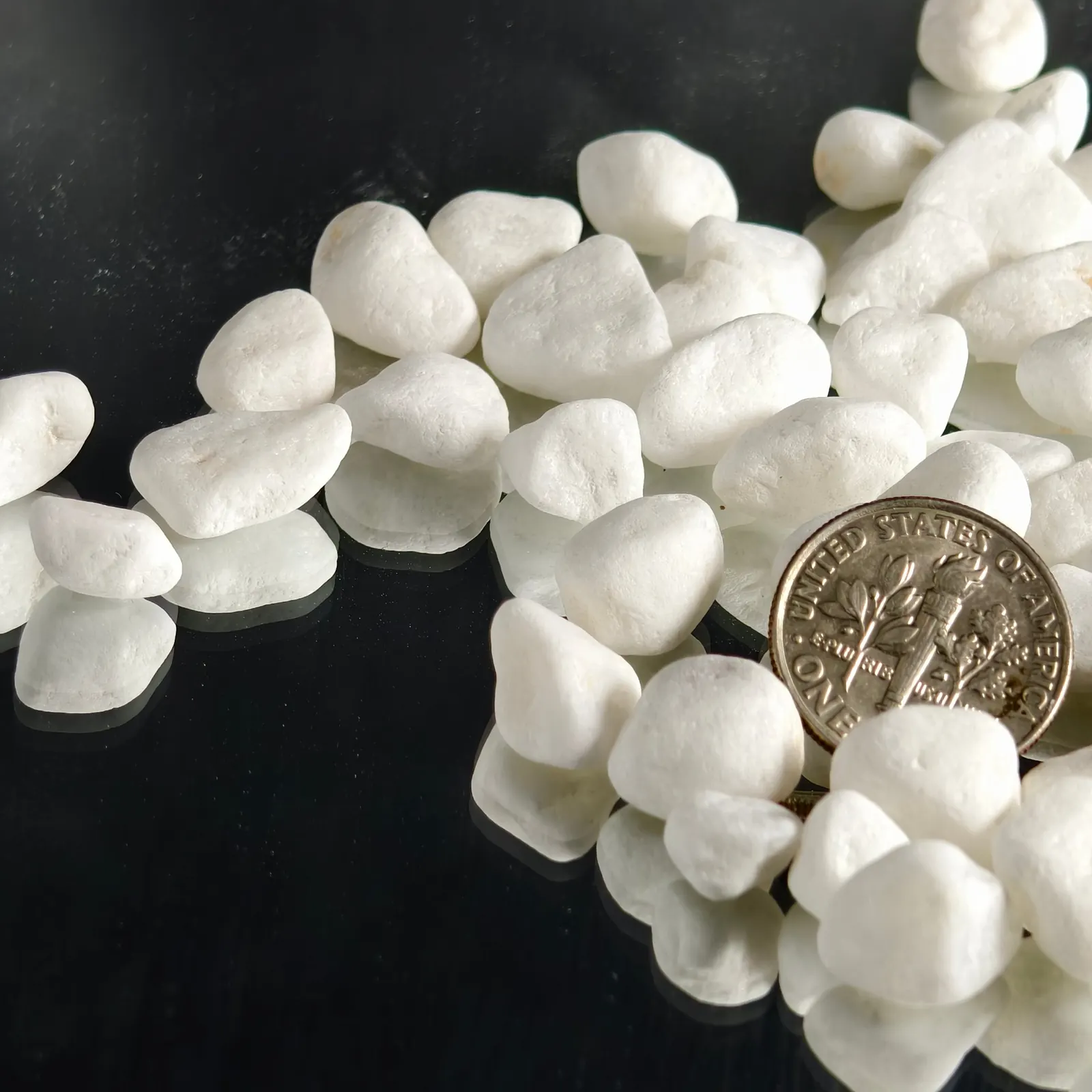
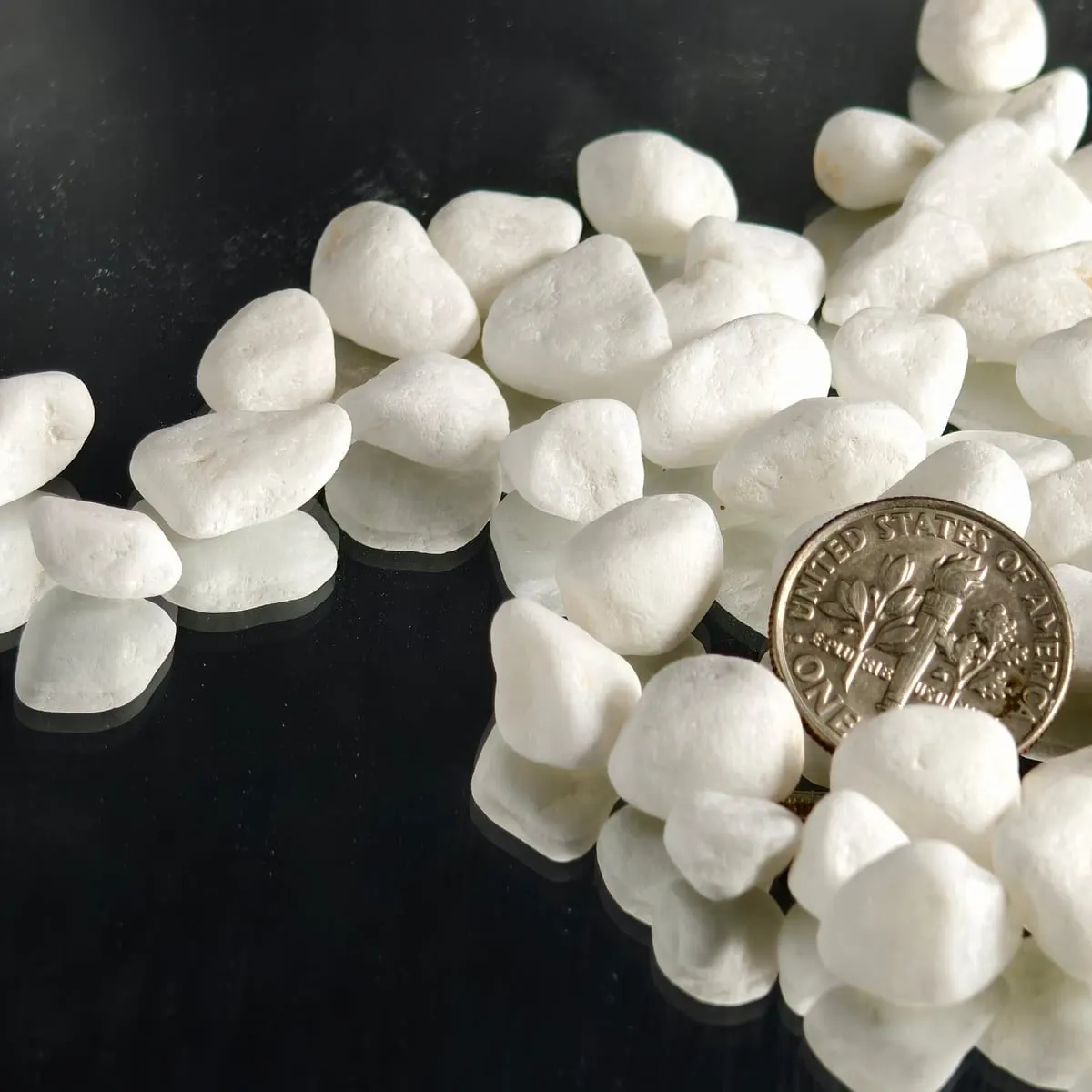
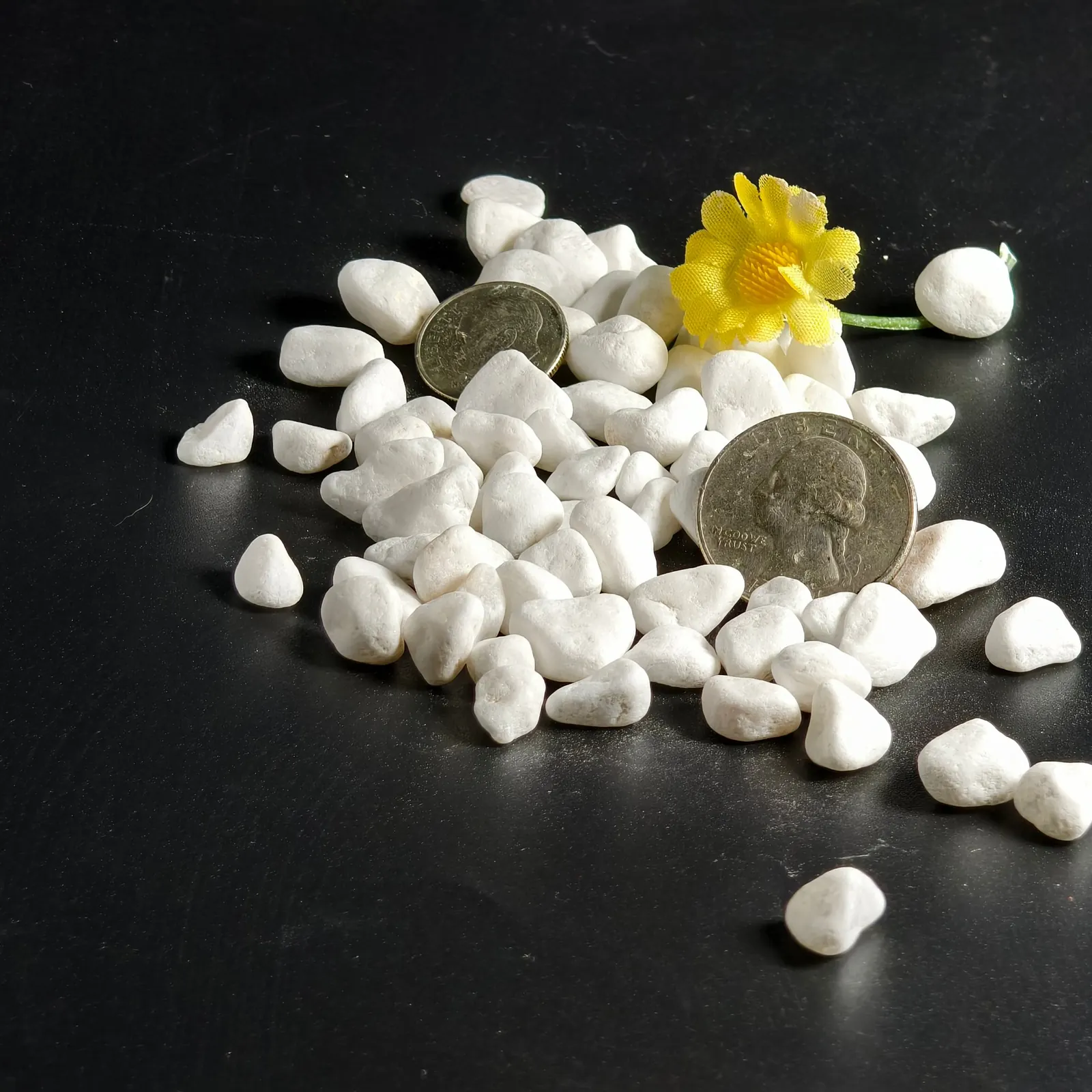
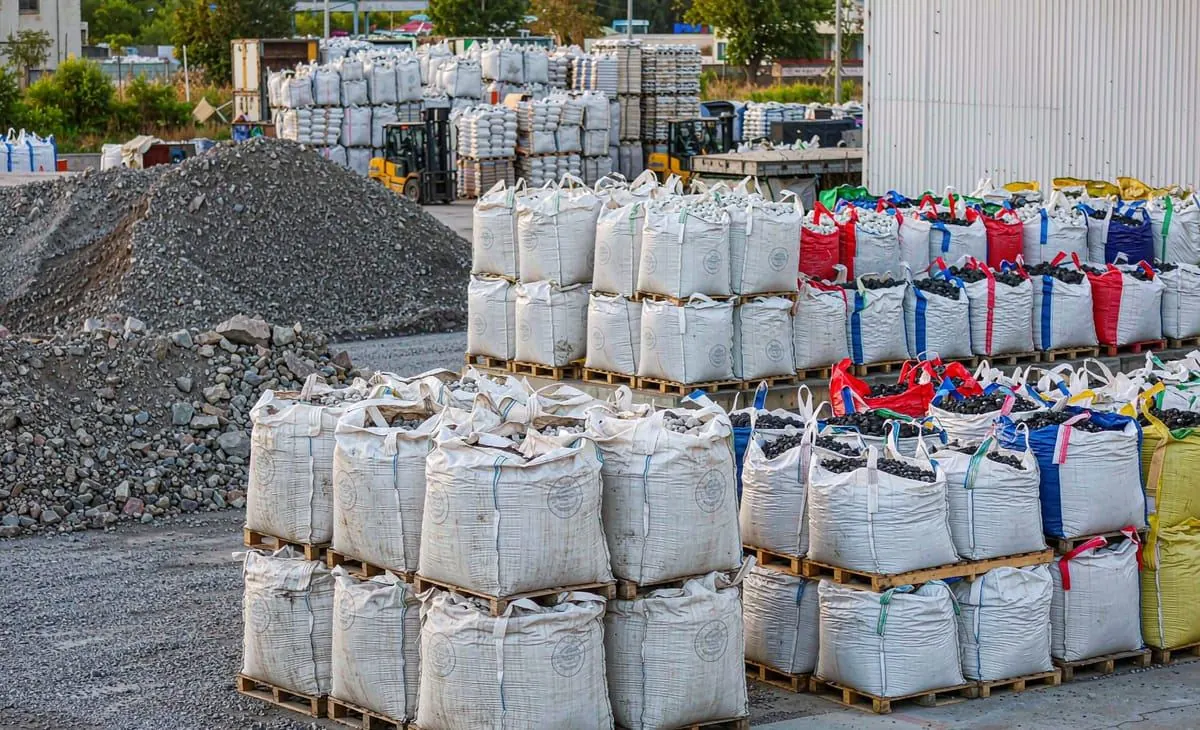
White pebbles ship in bulk in three formats — loose, one-tonne jumbo bags and 20–25 kg retail bags. A 20 ft container carries 24–27 tonnes, which is 24–27 jumbo bags or about 1,200–1,350 twenty-kilogram bags. This guide covers bag-to-tonne conversion, packaging cost, contamination control and the purchase-order lines that keep a bulk white order clean.
Garden gravel for sale is best bought direct from a washing and processing plant or an export supplier rather than a retail bag aisle: specify the grade (6–10, 10–20 or 20–40 mm), demand a washed product with a stated fines limit and moisture basis, and order by the 20 ft container (24–27 t) — the normal minimum and the cheapest per tonne.
Natural river pebbles run at 1.5–1.7 tonnes per cubic metre laid loose, so budget 45–51 kg per square metre at a 30 mm depth, 60–68 kg at 40 mm and 75–85 kg at 50 mm — one tonne covers 12–22 m², a 20 kg bag covers a quarter to half a square metre, and a full 20 ft container covers 360–600 m² depending on depth.
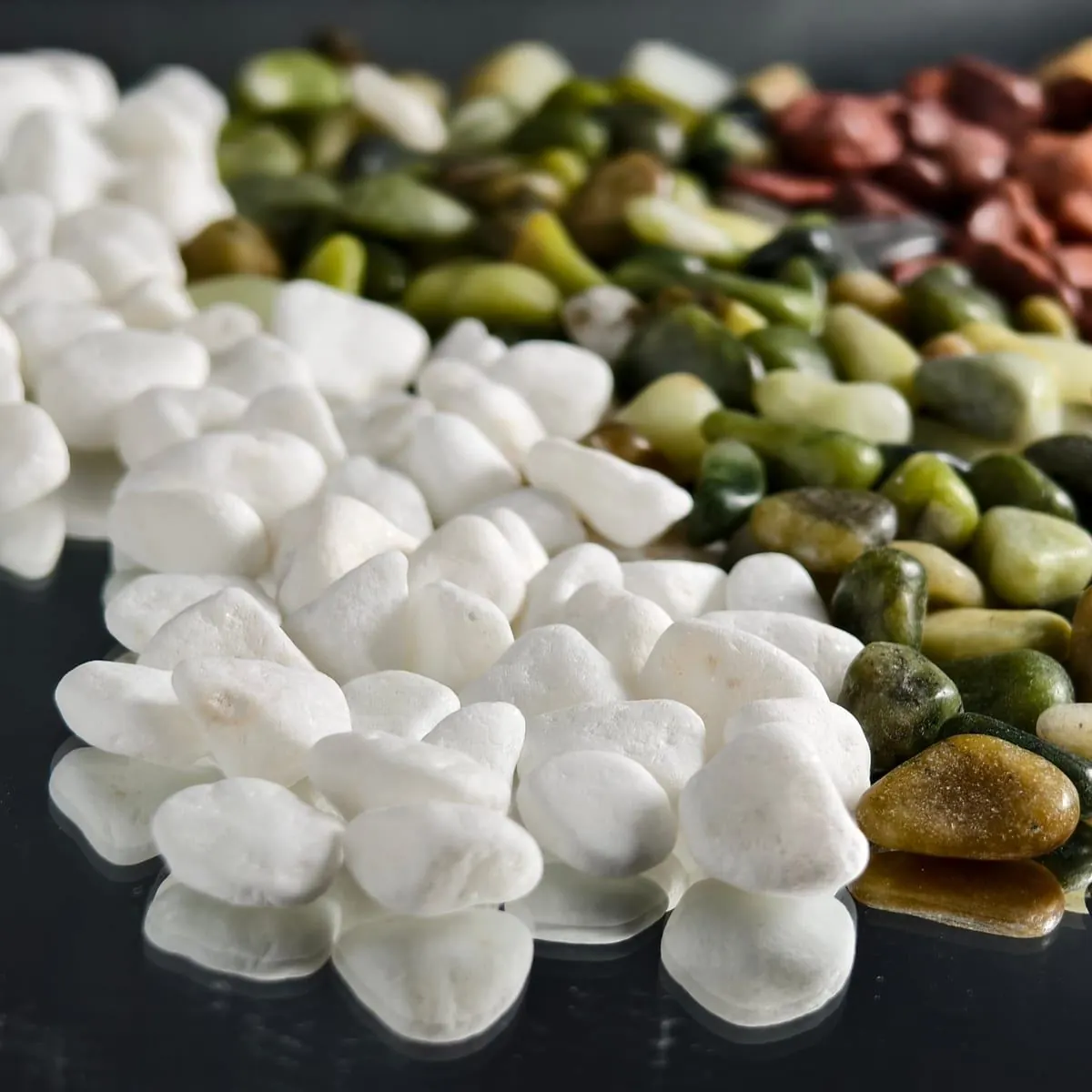
The best mixed color pebbles for flower beds are washed, inert granite, quartz or basalt chips in a 6–20 mm range, laid 25–40 mm deep at a 50–60 / 25–35 / 5–15 colour ratio within one rock family. One tonne covers about 15–21 m² at that depth and a 20 ft container holds 24–27 tonnes, enough for several hundred square metres of beds.
Decorative pebbles run at 1.5–1.7 tonnes per cubic metre: budget 45–51 kg per square metre at a 30 mm depth, 60–68 kg at 40 mm and 75–85 kg at 50 mm — so one tonne covers 12–22 m², a 20 kg bag covers roughly a quarter to half a square metre, and a full 20 ft container covers 360–600 m² depending on depth.
The best decorative gravel for flower beds is washed, inert, 6–20 mm stone laid 30–50 mm deep: about 60–68 kg per square metre at 40 mm, one tonne covering 15–17 m², and a full 20 ft container (24–27 t) mulching roughly 380–450 m² of bed.
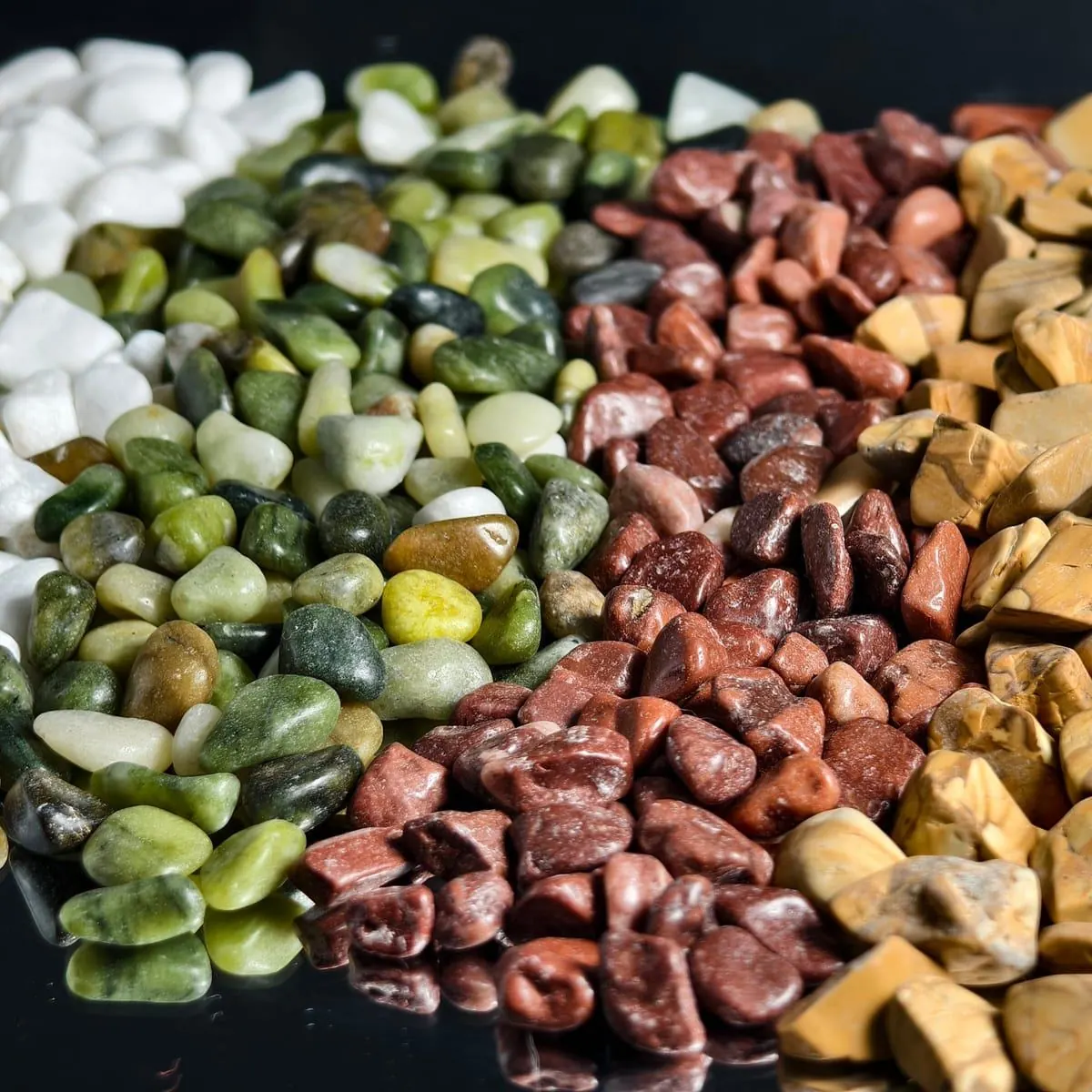
You choose garden pebbles by fixing the colour family and rock type first, then the size band (10–20 mm for paths, 20–40 mm for beds, 40–75 mm for edges), then the finish. A 20 ft container holds about 24–27 tonnes, covering roughly 1,400–2,000 m² at a 40 mm depth, so order by tonnage rather than by bag.
Polished pebbles run about 40–48 kg per square metre at 20–30 mm, 56–64 kg at 30–40 mm and 72–80 kg at 40–50 mm, laid one stone deep. See coverage per tonne, stones per square metre, a worked 120 m² order and how to choose the right grade.
The best garden gravel for a dry river bed is rounded, washed, inert stone — granite, quartz or basalt — graded in three bands (10–20 / 20–40 / 40–75 mm). One tonne covers about 12–15 m² at a 50 mm depth and a 20 ft container holds 24–27 tonnes, enough for roughly 130–140 running metres.
White pebbles have no single per-tonne price — whiteness grade, size band and freight (60–80% of landed cost) set the number. See coverage per tonne, why the cheapest quote rarely costs least over five years, and which grades suit a dry river bed.
Mixed color pebbles have no single per-ton price — a mix is a recipe of separately screened colour fractions plus blending labour. See why a mix can cost more than one colour, how the white fraction hides cost cuts, and how to check a mixed quote fairly.
Natural pebbles have no single per-tonne price — it depends on rock, colour, size band and wash — but a 20 ft container holds 24–27 tonnes, one tonne covers about 15–17 m² at 40 mm, and freight is 60–80% of landed cost. See how to convert bag and jumbo prices and compare quotes fairly.
Decorative pebbles have no single per-tonne price — it depends on rock, colour, size, finish and freight (60–80% of landed cost). See how to convert bag and jumbo prices, coverage per tonne, and how to compare supplier quotes fairly.
A 20 kg bag of garden pebbles holds about 0.013 m³ — enough to cover roughly 0.3 m² at 40 mm. Here is the bag-to-tonne-to-square-metre maths, why 20 kg, 25 kg and 50 lb bags are the same product in different wrappers, and how to turn a bag price into a price per ton you can actually compare.
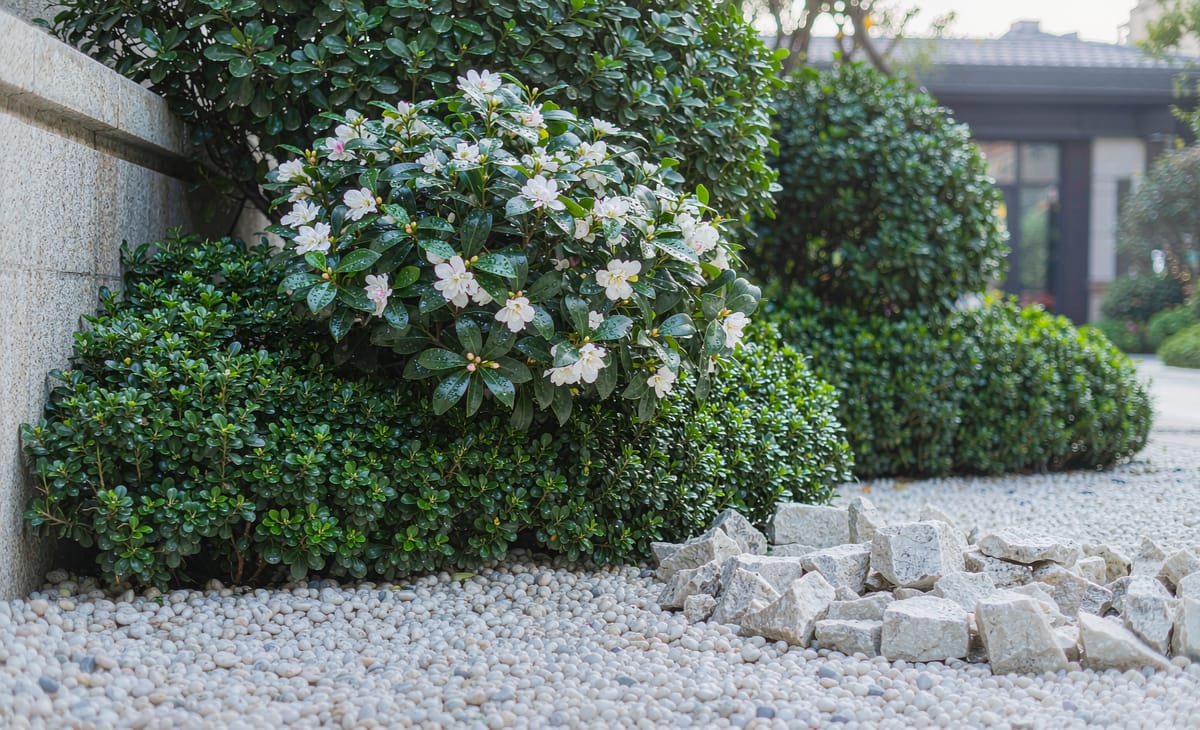
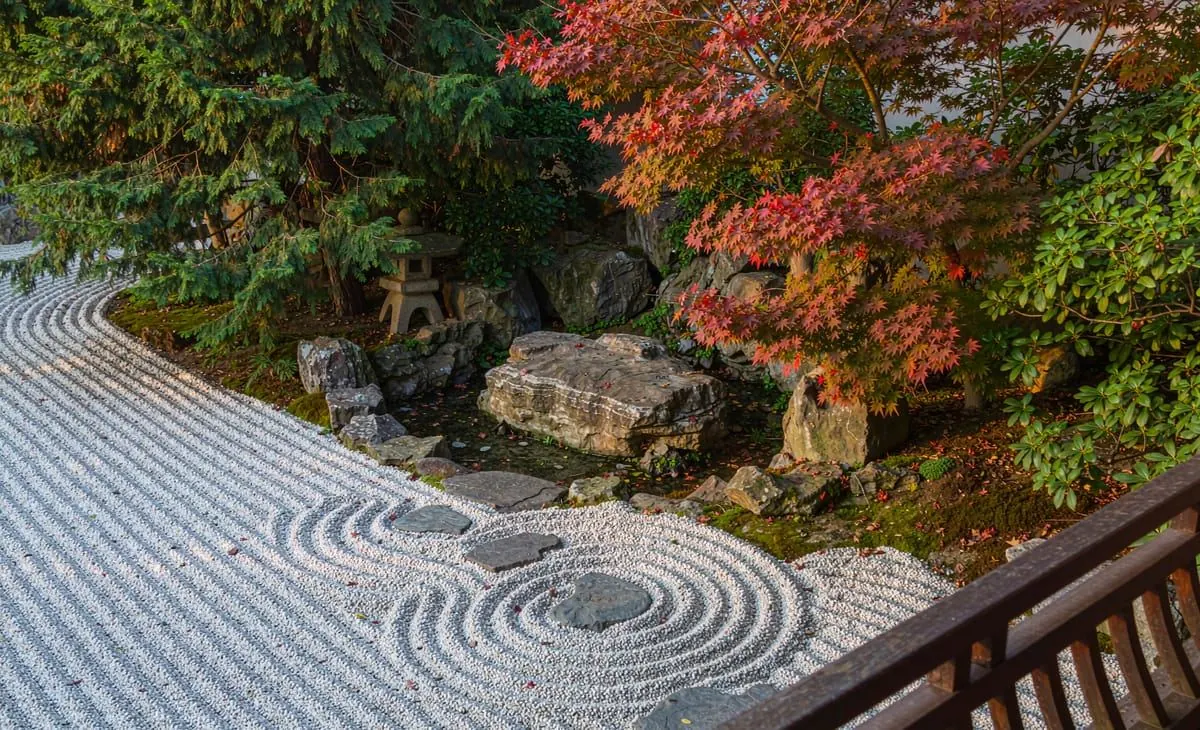
The best gravel for a Japanese garden is a washed, rounded, single-stone 6–10 mm or 10–20 mm grade in a light granite or quartz — fine enough to rake into karesansui patterns yet stable underfoot. Around a pool, the same rounded, inert gravel works if it is smooth, non-slip and free of lime that would leach into chlorinated water.
You lay polished pebbles by clearing and levelling the base, laying a permeable weed membrane, fixing a rigid edge, then dry-setting a 30–40 mm layer and lightly compacting. One tonne covers about 12–18 m² at a 40 mm depth, and a 20 ft container holds about 24–27 tonnes — enough for 1,400–2,200 m². Keep them in near-view beds and displays rather than driveways, where the gloss coat wears and the round stones roll.
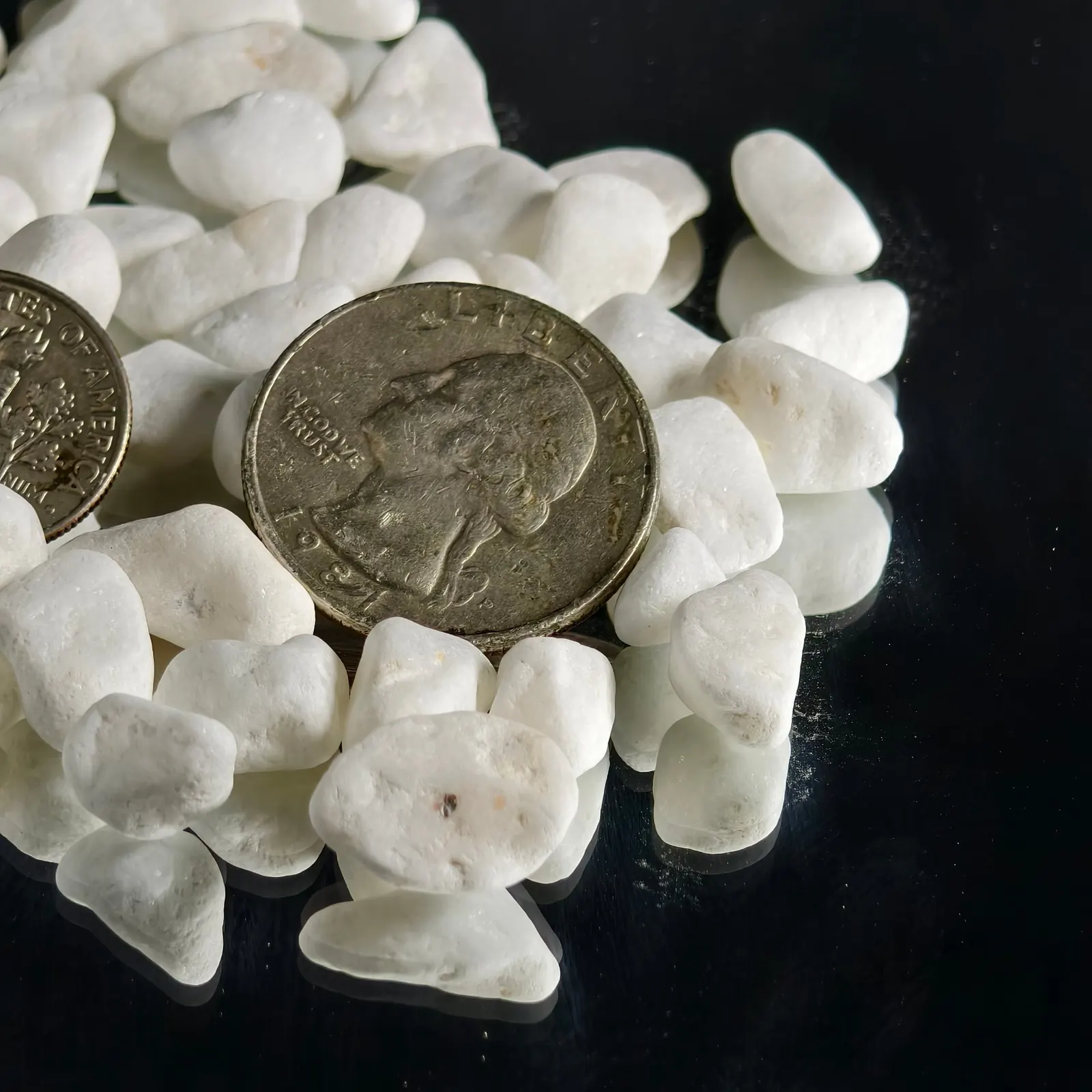
A white pebbles manufacturer selects and sorts stone rather than making it, so whiteness is a measured grade — L* and yellowness b* — not a promise. Verify the numbers behind the sample, screen out soft carbonate blending, and plan around a 24–27 tonne container MOQ, with the whitest grades needing 25–50 tonne production runs.
The MOQ for garden gravel is normally one 20 ft container — about 24–27 tonnes loose-loaded, or roughly 960–1,080 × 25 kg bags — but the figure that actually restricts most buyers is the minimum per size grade. A standard 10–20 mm path grade may open at a 5–10 tonne trial, while a colour-sorted decorative blend usually needs a full 20–27 tonne production batch.
A natural pebbles manufacturer does not make stone — it dredges river pebble and washes, screens and colour-sorts it. Ask about the deposit, the recovery rate for your size band, the 5–10 tonne run minimum per size and colour, and the 24–27 tonne container that sets the commercial MOQ.
A reliable decorative pebbles manufacturer washes, grades and colour-matches stone in its own plant rather than reselling mixed stock: expect a minimum order of about one 20 ft container (roughly 24–27 tonnes), a production lead time of 15–30 days, and a retained wet reference sample per lot for consistent reorders.
Garden pebbles for sale at wholesale level are bought factory-direct by the container — 24–27 tonnes in a 20 ft container across two or three adjacent size grades, quoted FOB per tonne. This guide compares the four buying channels, shows how to judge a wholesale listing before you enquire, and sets out how to structure a first order from sample to full container.
You lay mixed color pebbles by clearing and levelling the area, laying a permeable weed membrane, dry-setting each colour zone in a 30–40 mm layer, and lightly compacting. One tonne covers about 12–18 m² at a 40 mm depth, and a 20 ft container holds about 24–27 tonnes — enough for 1,400–2,200 m².
The best gravel for a dry river bed is a 10–20 mm washed, rounded stone in an inert rock such as granite or quartz: it reads as a natural stream, stays put, and one tonne covers about 12–15 m² at a 50 mm depth. A 20 ft container holds about 24–27 tonnes, enough for a long residential creek.
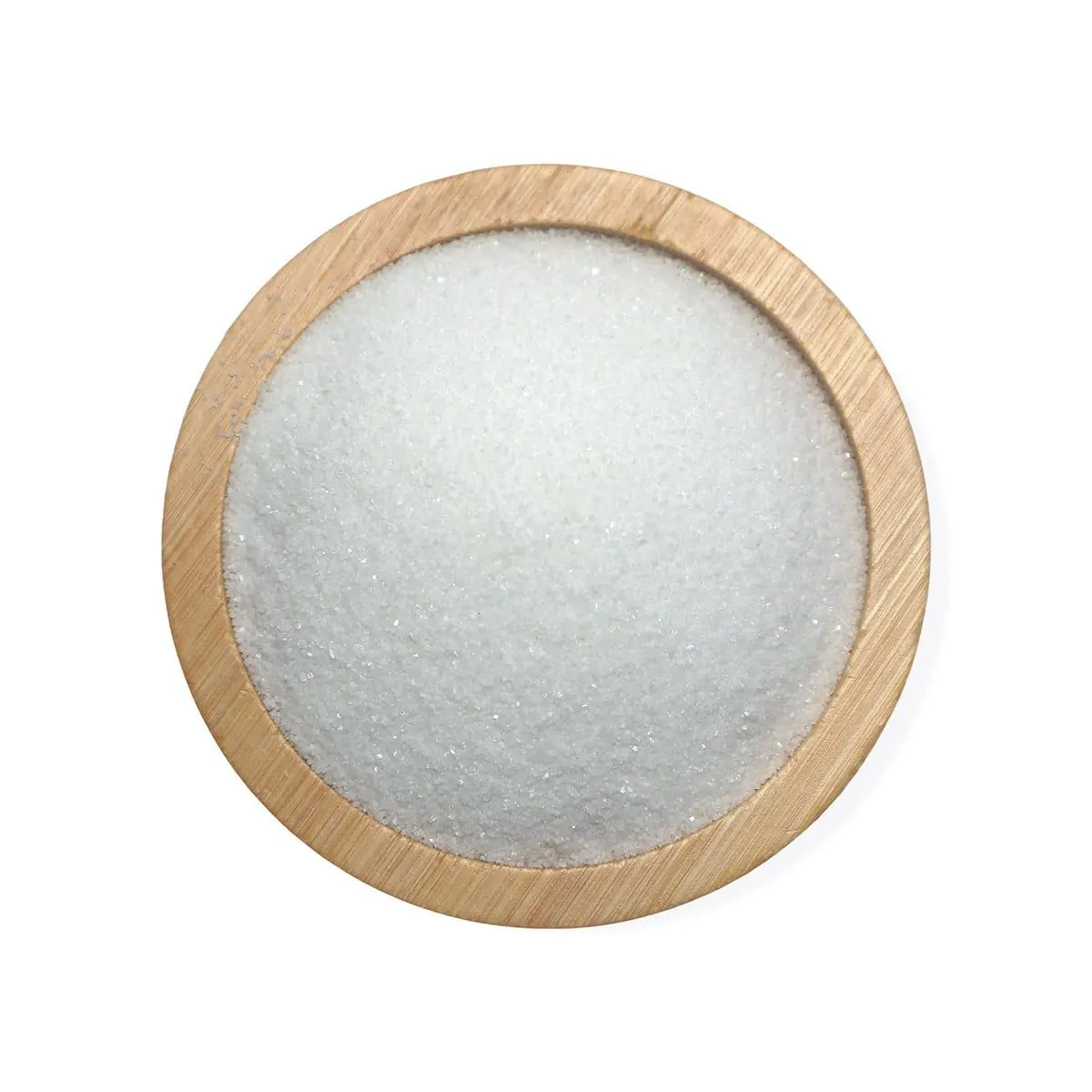
The MOQ for white sand is normally one 20 ft container — about 24–27 tonnes loose-loaded, or 960–1,080 × 25 kg bags — but the number that actually restricts a buyer is the minimum per whiteness grade. Standard off-white grades start at a 3–5 tonne trial, while top L*92+ low-iron grades usually require a 25–50 tonne production batch, because every extra point of whiteness is bought with rejected material.
The best polished pebbles for a water feature are through-polished — never waxed or resin-coated — 20–40 mm inert stone such as black basalt or grey granite, laid as a waterline band and spillway accent rather than across the whole submerged bed. One tonne covers about 12–14 m² at 50 mm, and a 20 ft container holds 24–27 tonnes.
The typical MOQ for decorative sand is one 20 ft container, about 24–27 tonnes when loose-loaded, but the minimum that actually affects a buyer is the per-grain-band and per-colour sub-minimum, which is usually far lower. Most suppliers also accept a 3–5 tonne trial or a 10–12 tonne partial at a small premium, and will mix two or three bands and colours inside a single container rather than insisting on a full band per load.
The best garden gravel for a water feature depends on the layer: 20–40 mm washed rounded stone as ballast at 50–75 mm depth (75–120 kg/m²), 8–16 mm washed inert gravel as bog-filter media at 300 mm depth (450–480 kg/m²), and 10–20 mm for the visible edge band. Gravel is not a liner bedding material — this guide explains the three grades, the quantities, zen-garden framing and the purchase order wording that keeps them apart.
The best white pebbles for a water feature are 10–20 mm or 20–40 mm washed, rounded white granite or quartz stones in a tumbled finish that gives a clean, bright pool-edge or stream-bed look. One tonne covers about 12–15 m² at a 50 mm depth, and a 20 ft container holds about 24–27 tonnes.
The best mixed colour pebbles for a water feature are 20–40 mm tumbled, washed, through-coloured granite or basalt blended to a stated ratio — 50–60% dominant tone, 25–35% secondary, 5–15% per accent — laid one stone deep at 60–68 kg per m², with 24–27 tonnes in a 20 ft container. Approve the blend under water, never on a dry bench.
The best natural pebbles for a water feature are 20–40 mm washed, rounded inert stones—granite or quartz—in a natural tumbled (unpolished) finish that gives an authentic river-bed look. One tonne covers about 12–15 m² at a 50 mm depth, and a 20 ft container holds about 24–27 tonnes.
The best decorative pebbles for a water feature are 10–20 mm washed, rounded inert stones—granite, quartz or glass—polished or colour-washed so the colour holds underwater. One tonne covers about 12–15 m² at a 50 mm depth, and a 20 ft container holds about 24–27 tonnes.
The best garden pebbles for a water feature are 30–60 mm tumbled, washed, inert granite or basalt laid one stone deep: about 75–100 kg per m² at that single-layer depth, and 24–27 tonnes fills a 20 ft container. Approve the colour under water, never on a dry bench, and keep anything under 20 mm out of standing water.
The best decorative gravel for a water feature is a 10–20 mm washed, rounded inert stone (granite or quartz): it stays put, will not tint the water, and one tonne covers about 12–15 m² at a 50 mm depth. Plan bulk buys by container and depth, and keep limestone out of fish ponds.
Buying wood grain stone wholesale means ordering by the container direct from a processing source, against per-size-class minimums and a written loading plan. This guide explains how the wholesale channel is structured, how volume price tiers work, which size classes make a resale-ready assortment, how to split and pack a mixed container, and how to plan MOQ, lead times and reorders for distribution.
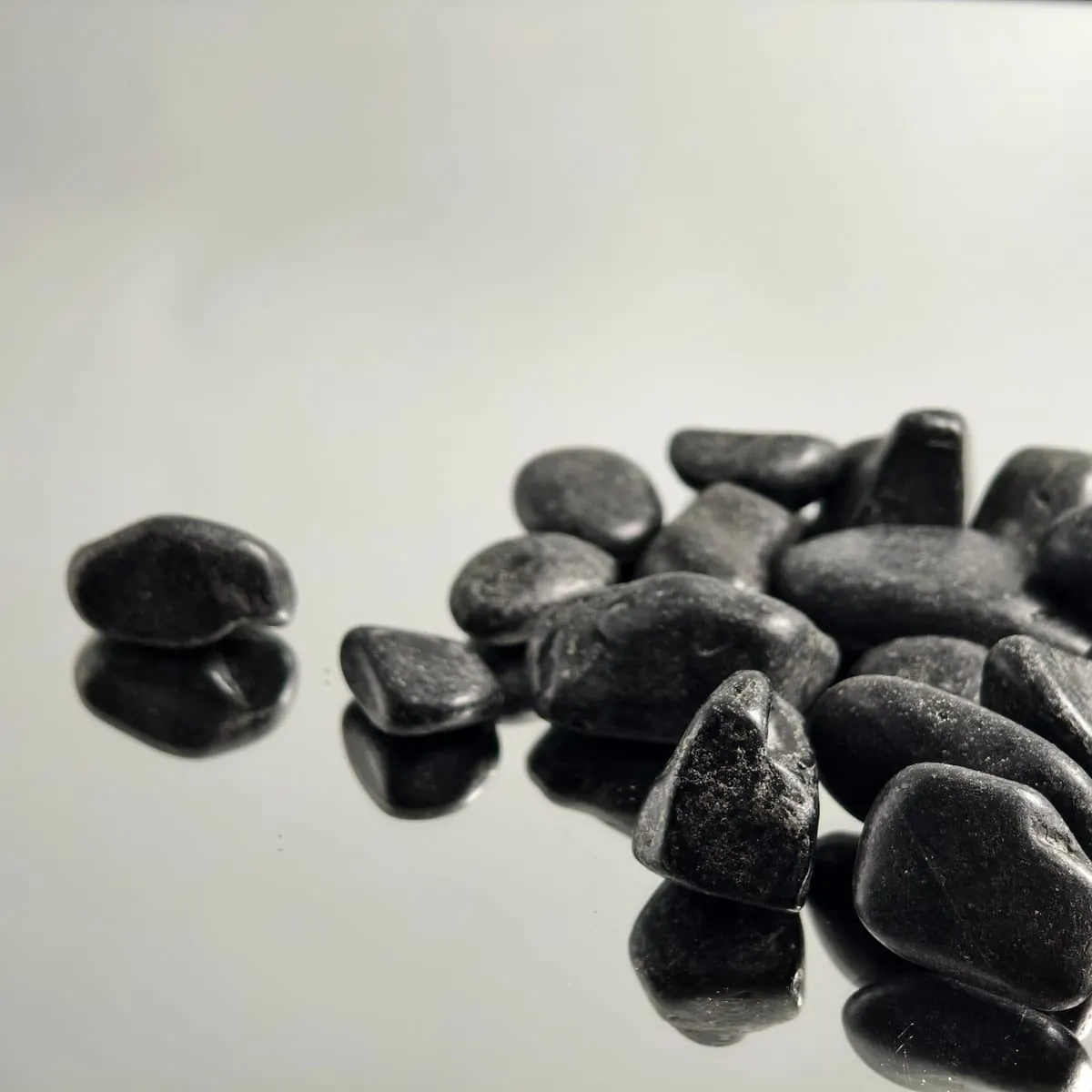
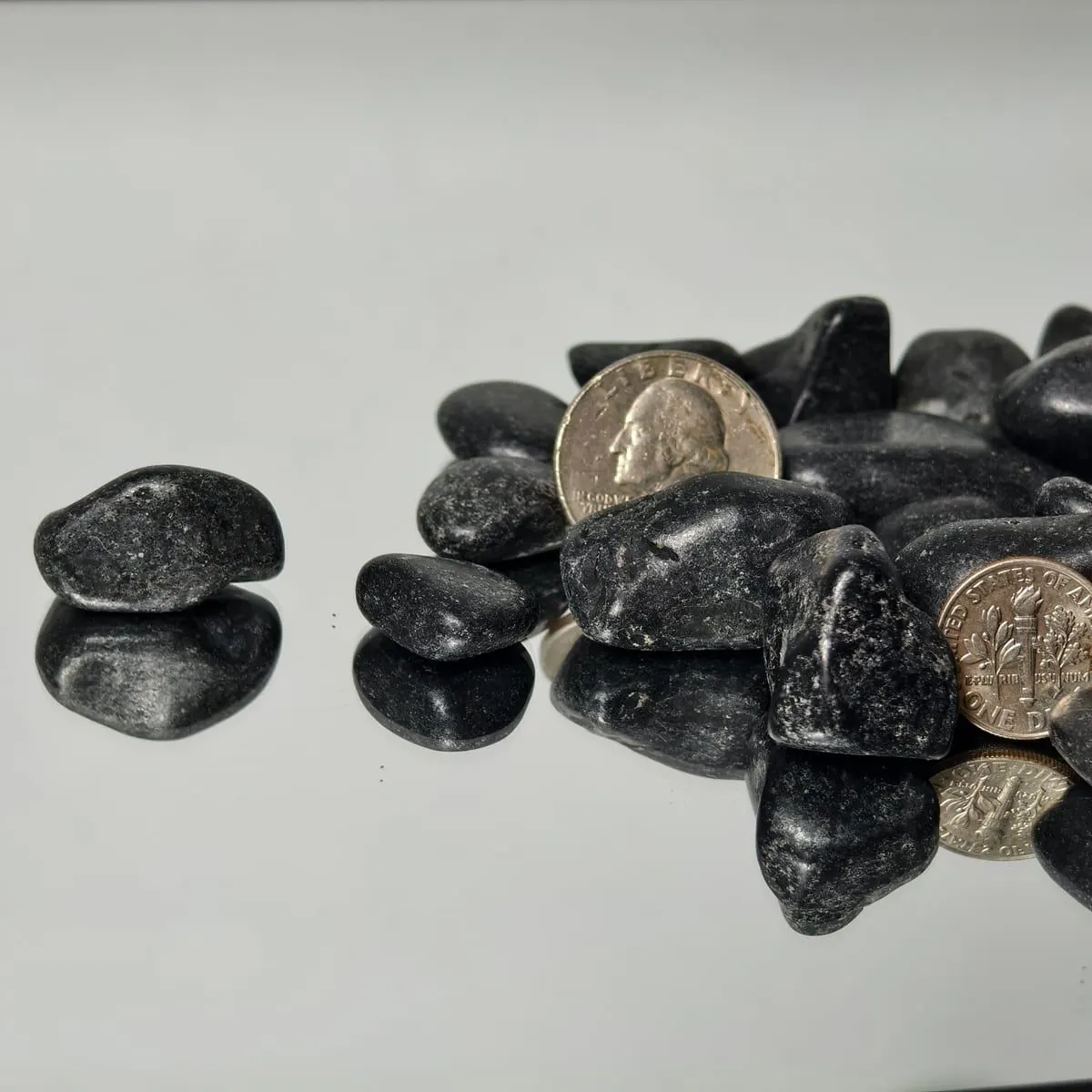
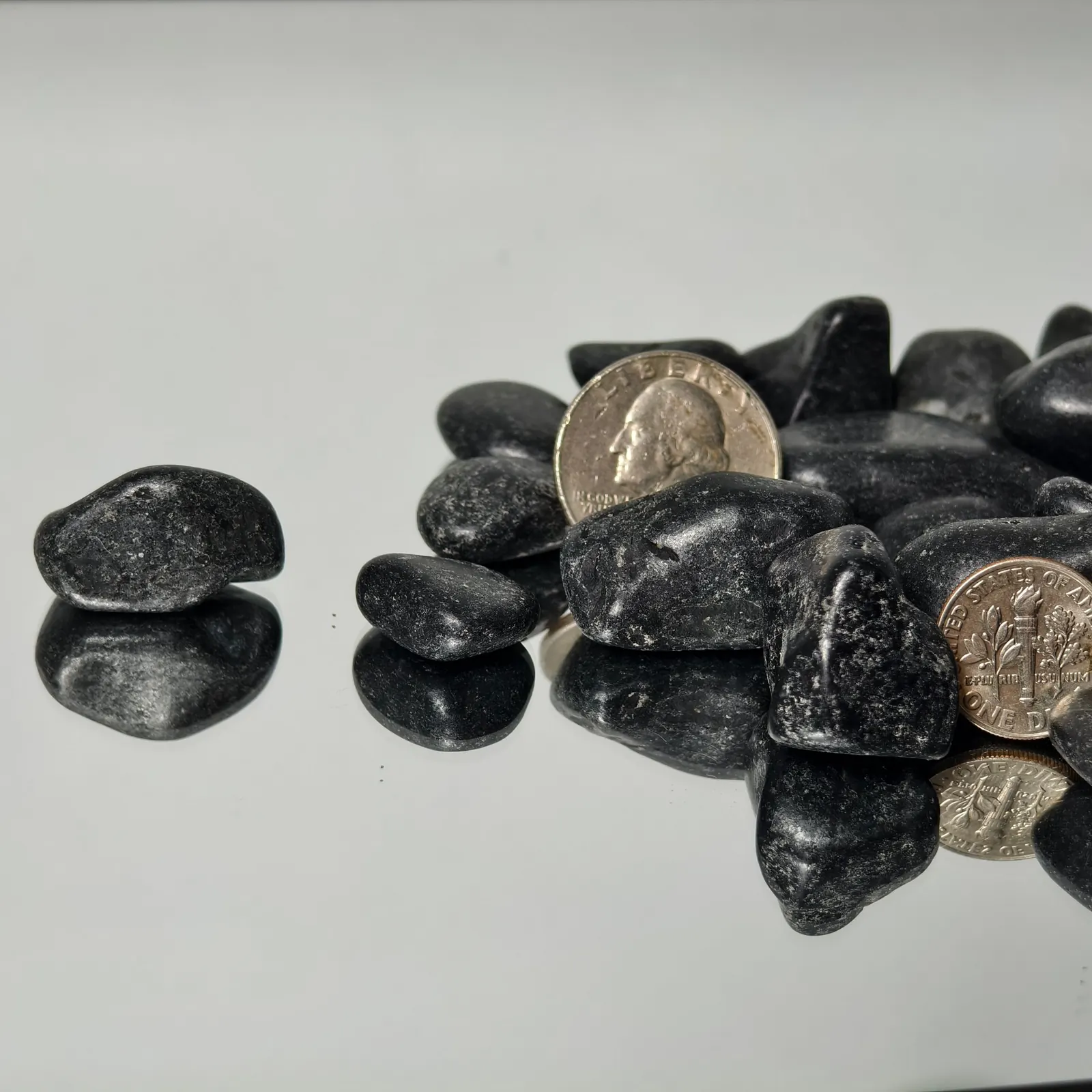
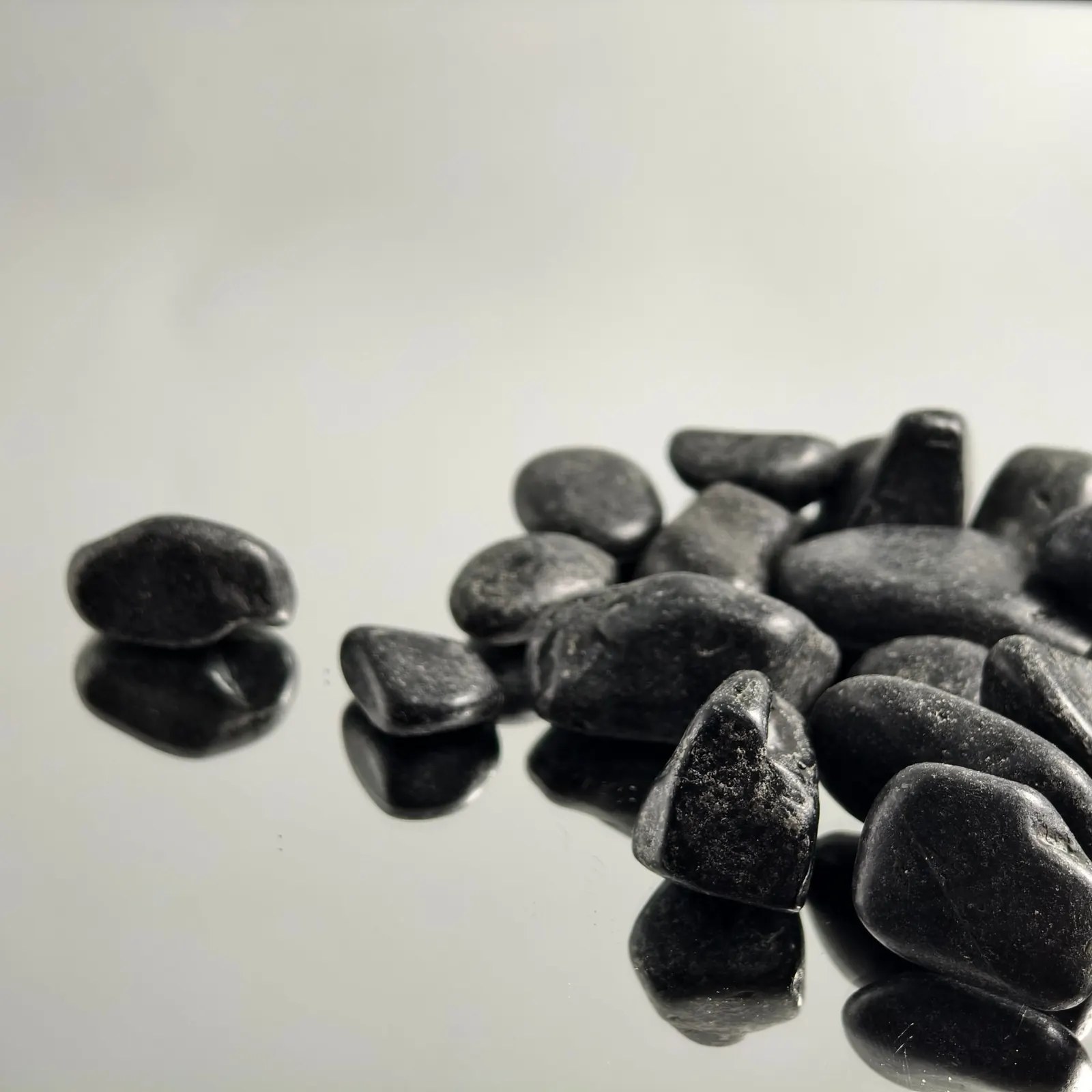
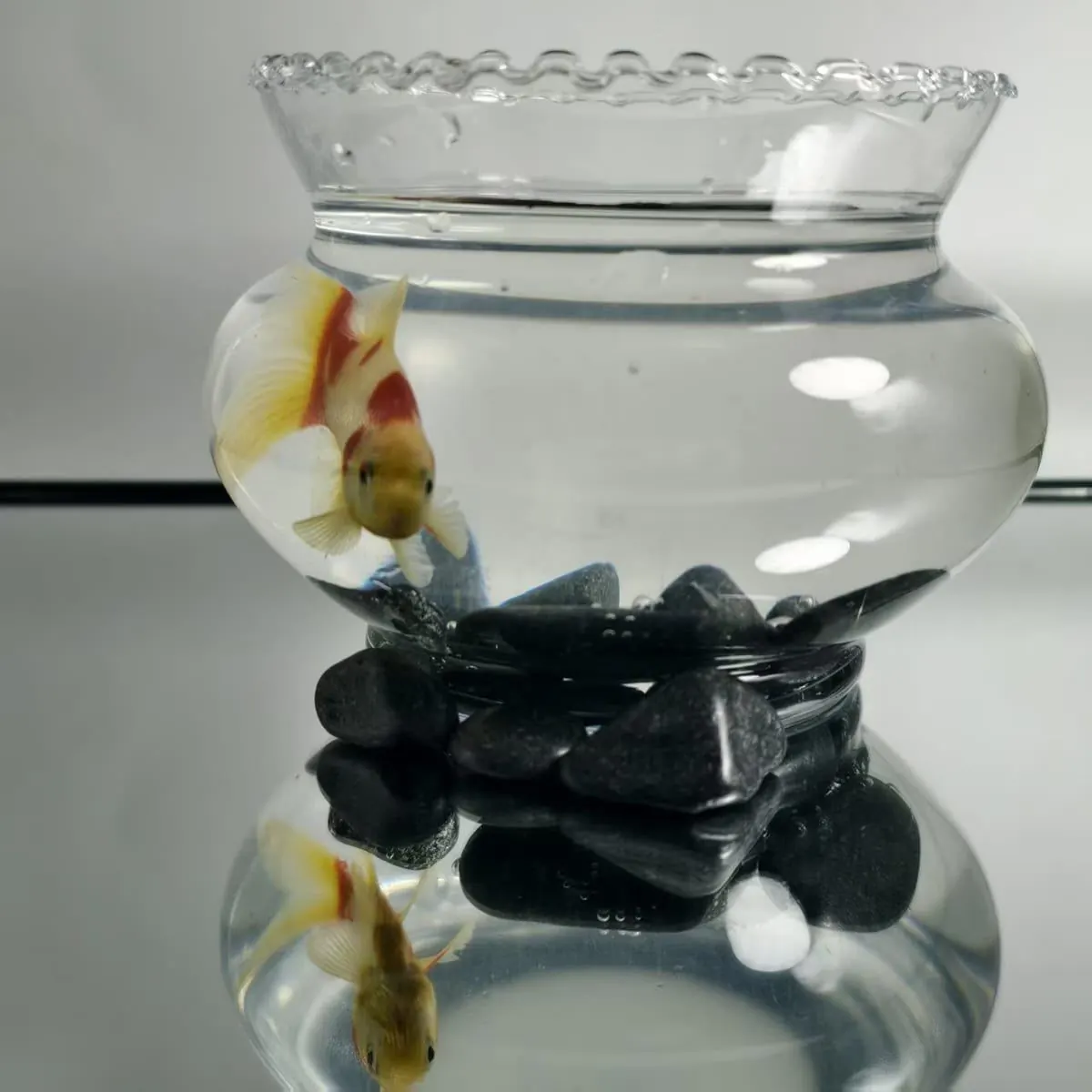
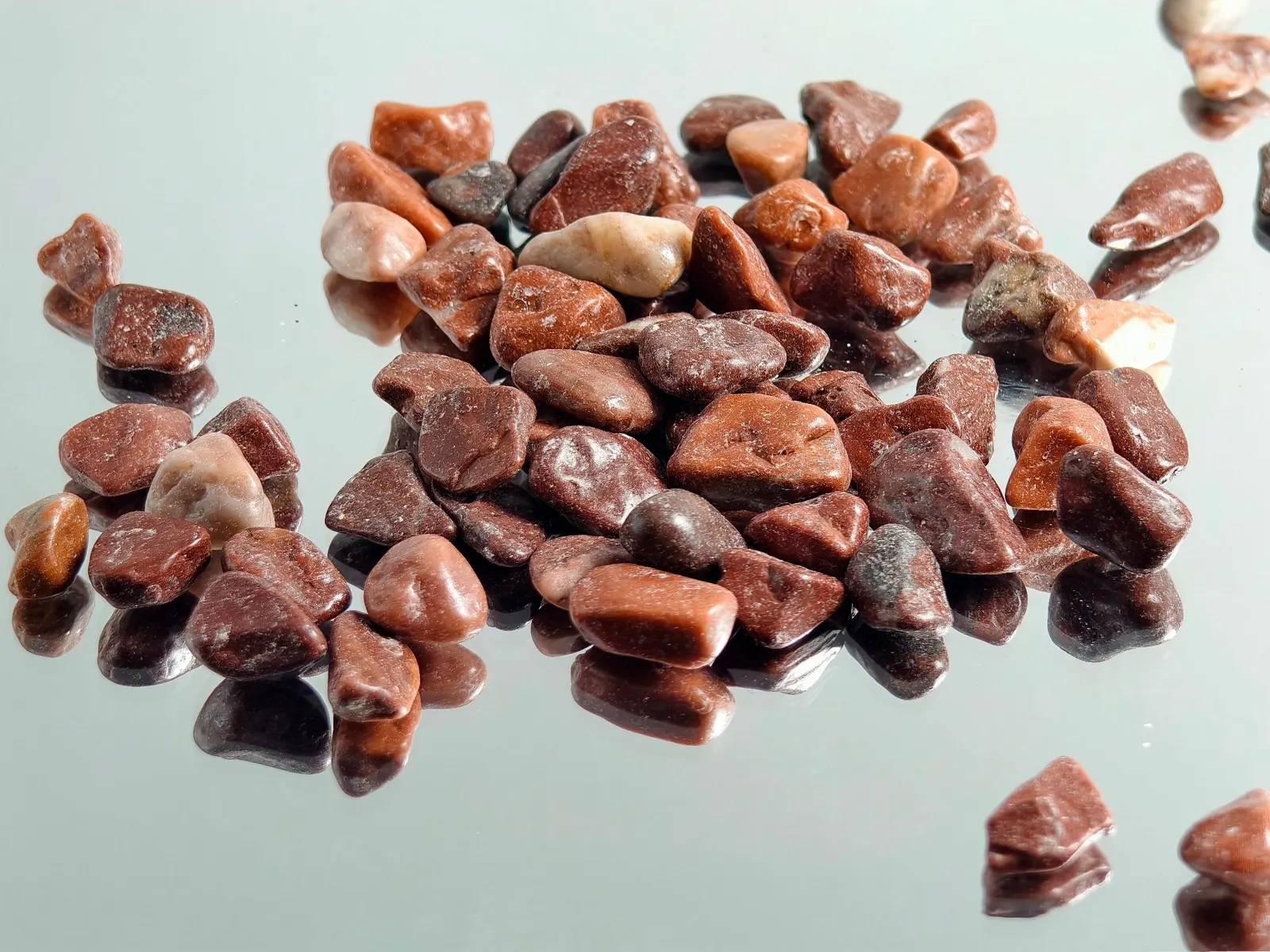
Real black pebbles are natural basalt or dense river stone with the colour through the body of the stone; the alternatives sold as black pebbles — dyed light stone, coated pebbles, black glass and rubber — put the colour only on the surface. This guide shows how to tell them apart, where each alternative still wins, and what to write into the purchase order.
The price of landscape gravel per ton is set by the grade you buy, not by the tonne alone: a washed 10–20 mm single-size grade costs more per tonne than a broad graded run, freight is charged per container against a 24–27 tonne payload, and the real comparison happens in cost per square metre of covered surface. This guide converts the per-tonne figure into numbers you can actually compare.
Buying landscape stone wholesale means specifying the stone by type, dimension and finish before price, then budgeting freight as the largest share of the delivered cost. A 20 ft container of dense cut stone holds about 24–27 tonnes, flagstone at 30 mm covers roughly 12–15 square metres per tonne, and boulders are sold by weight and fill the container by volume. Order from one production lot to keep the look consistent across the project.
The price of sand per tonne is set by the sieve cut and the reject rate, not by the tonne alone: a narrow 0.3–1 mm grade costs more per tonne than a wide 0–2 mm run from the same deposit, and moisture caps how many saleable tonnes fit in a weight-limited 20 ft container of 24–27 tonnes. The minimum order quantity starts at one container, and this guide turns both into numbers you can negotiate with.
The price of white gravel per tonne is set by the colour grade and the reject rate, not by the tonne alone: a bright, tightly screened limestone or marble chip costs more than a grey run of the same rock, and freight dominates the delivered figure. One 20 ft container holds about 24–27 tonnes, a 20 mm layer needs roughly 30–34 kg per square metre, and one tonne covers about 30–33 square metres at that depth.
The price of white sand per tonne is a graded price, not a commodity quote: a washed decorative grade, a low-iron silica grade, filter sand and play sand sit on different price ladders, and freight dominates the delivered figure. One 20 ft container holds about 24–27 tonnes, a 20 mm layer needs 30–34 kg per square metre, and one tonne covers roughly 30–33 square metres at that depth.
The best polished pebbles for a garden pathway are through-polished 10–20 mm stone used as inlay bands, edging and resin-bound accents — not as a loose wearing surface. This guide covers where polished pebbles work on a path, hotel landscaping zones, coverage per square metre and bulk order checks.
The price of decorative sand is quoted on a delivered basis rather than one flat ex-works rate: a 20 ft container of washed, graded decorative sand holds about 24–27 tonnes, and the material cost moves with grain band, colour, washing quality and freight. Most buyers should budget in cost per square metre at the specified depth instead of chasing a single per-tonne number, because sand is heavy, low-value per tonne and freight-driven.
The best garden gravel for a garden pathway is washed 10–20 mm sub-angular stone laid loose 30–40 mm deep, about 45–50 kg per square metre, or a self-binding 0–14 mm gravel compacted to 60–75 mm for a firm, trolley-friendly surface. This guide explains the difference, hotel landscaping routes, coverage per square metre, purchase order wording and bulk MOQ.
The best white pebbles for a garden pathway are washed, tumbled 10–20 mm stones in a single bright white tone, laid 40–50 mm deep — about 60–68 kg per square metre at 40 mm. This guide covers why white suits a path, size selection, hotel landscaping use, coverage and bulk order checks.
The best mixed color pebbles for a garden pathway are washed, tumbled 10–20 mm stones blended from two to four tones of one rock family, with the dominant tone at 50–60%, laid 40–50 mm deep — about 60–68 kg per square metre at 40 mm. This guide covers tone ratio design, blend consistency along a long path, hotel landscaping use, coverage and bulk order checks.
The best natural pebbles for a garden pathway are washed, tumbled 10–20 mm stones in a single natural tone, laid 40–50 mm deep — about 60–68 kg per square metre at 40 mm. This guide covers why the matte natural finish beats polished stone on a walked surface, size selection, hotel landscaping use, coverage and bulk order checks.
The best decorative pebbles for a garden pathway are washed, tumbled 10–20 mm stones or 6–10 mm resin-bound decorative pebbles, laid 40–50 mm deep in a rigid-edged bed over a compacted base with a geotextile membrane — about 60–68 kg per square metre at 40 mm. This guide covers finish classes, size bands, hotel landscaping routes, coverage per square metre, edge details and bulk MOQ.
The best garden pebbles for a garden pathway are washed, tumbled 10–20 mm rounded pebbles laid 40–50 mm deep in a rigid-edged bed over a compacted base with geotextile — about 60–68 kg per square metre at 40 mm. This guide covers why shape decides the spec, size bands, hotel landscaping routes, coverage per square metre, edge details and bulk MOQ.
The best decorative gravel for a garden pathway is washed 10–20 mm sub-angular to angular crushed stone laid 30–40 mm deep between a rigid edge restraint over a compacted base with geotextile — about 45–50 kg per square metre at 30 mm. This guide covers size and shape underfoot, hotel landscaping routes, coverage per square metre and per running metre, the edge details where paths fail, and bulk MOQ, packing and pre-shipment checks.
A wood grain stone price per ton is built from tone and layer quality, piece size and thickness class, edge finish, selection basis and packing — not from a single market rate. This guide explains what the material is, which factors move the per-ton price, how to compare quotes honestly per square metre, quantity arithmetic for containers and borders, how to vet a wood grain stone supplier, and what a contractor-grade specification covers.
Black pebbles are sold by the tonne and shipped in 20–25 kg bags, one-tonne jumbo bags or loose in a lined 20 ft container that carries about 24–27 tonnes. Manufacture sits in China, where basalt is quarried, crushed, washed and screened. A first order usually starts at one container with two or three size bands, and washed 20–40 mm black pebbles give roughly 13 m² of cover per tonne at 50 mm depth.
Black small pebbles (3–12 mm graded) are bought in bulk as 25 kg woven bags or one-tonne FIBCs, with a standard 20 ft container loading about 24–27 tonnes. Wholesale FOB pricing depends on grade, wash quality and volume, and a first order normally starts at 10–20 tonnes per size band. Always confirm the stone is through-coloured basalt, not a coated aggregate, before you quote or commit.
Landscape stone in bulk is bought in two currencies: by the tonne for granular grades and by the piece for accent and feature stone. A 20 ft container carries about 24–27 tonnes of granular stone, an 8–16 mm topping laid 40 mm thick needs roughly 56–64 kg per square metre, and a landscape stone price per ton is built from rock type, size band, surface treatment, washing and packing. This guide covers the two selling bases, how per-ton pricing works, size classes from feature boulders down to toppings, quantity arithmetic for both currencies, supplier vetting, and what a contractor-grade specification covers.
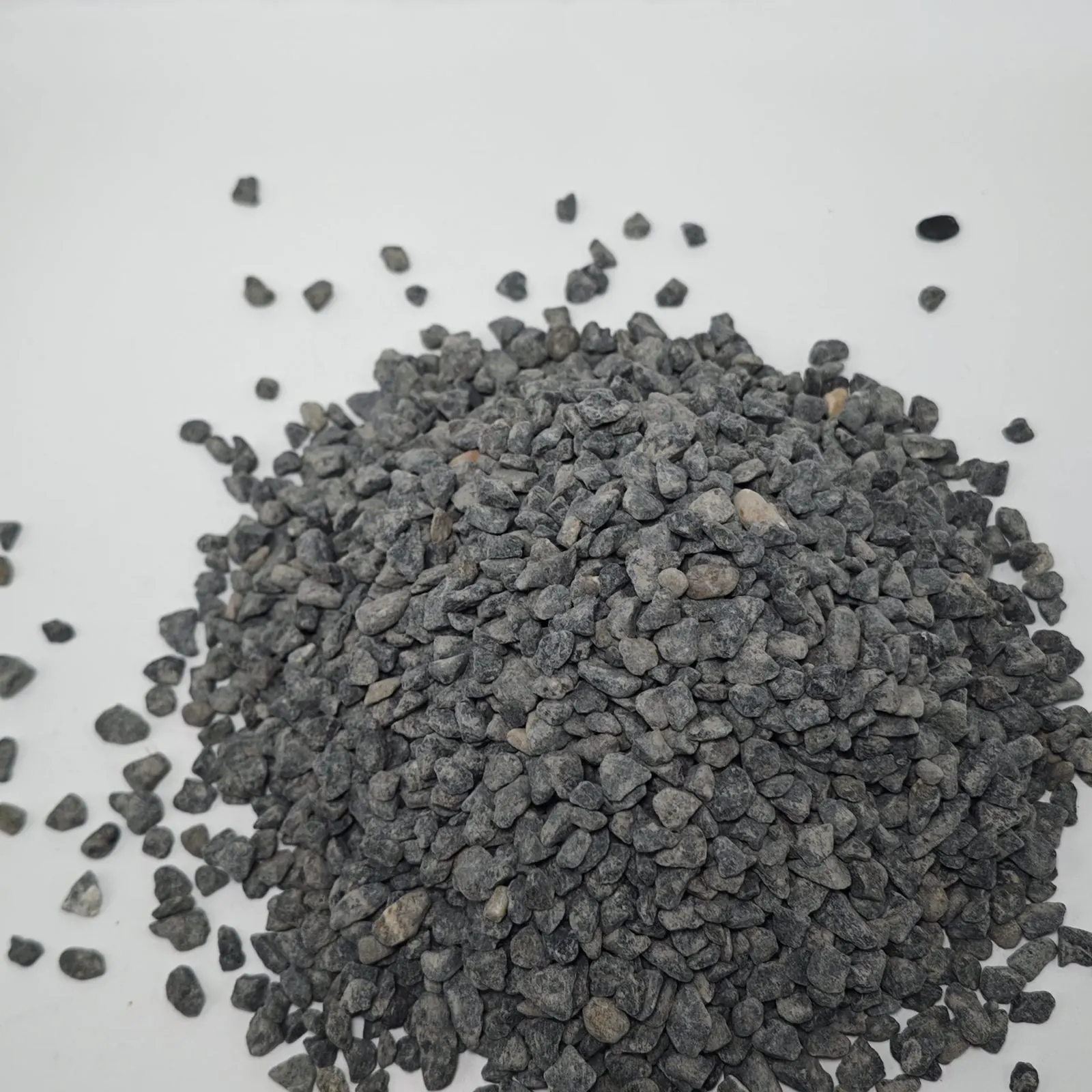
Landscape gravel in bulk is bought by function first and by grain band second: decide whether the gravel has to dress a bed, carry a wheel or move water, then fix the band, the fines limit and the packing. Crushed gravel runs at roughly 1.4–1.6 tonnes per cubic metre, a 30 mm dressing needs about 42–48 kg per square metre, and one 20 ft container carries about 24–27 tonnes. This guide covers what makes landscape gravel a separate trade category, the washed versus as-dug decision, size bands by function, coverage and drainage arithmetic per linear metre, how to vet a landscape gravel manufacturer, and what a contractor-grade specification should contain.
White gravel in bulk is bought by grain band and by weight: crushed white stone runs at roughly 1.4–1.6 tonnes per cubic metre, a 50 mm dressing needs about 70–80 kg per square metre, and one 20 ft container carries about 24–27 tonnes — which at that density is only 16–19 cubic metres, so the container fills by weight long before it fills by volume. This guide covers the three base stones behind white gravel and why they decide hardness, acid resistance and soil pH, the grain bands and where each belongs, coverage and container arithmetic, how to vet a white gravel manufacturer, packing and pre-shipment inspection, and the cost factors behind a wholesale quotation.
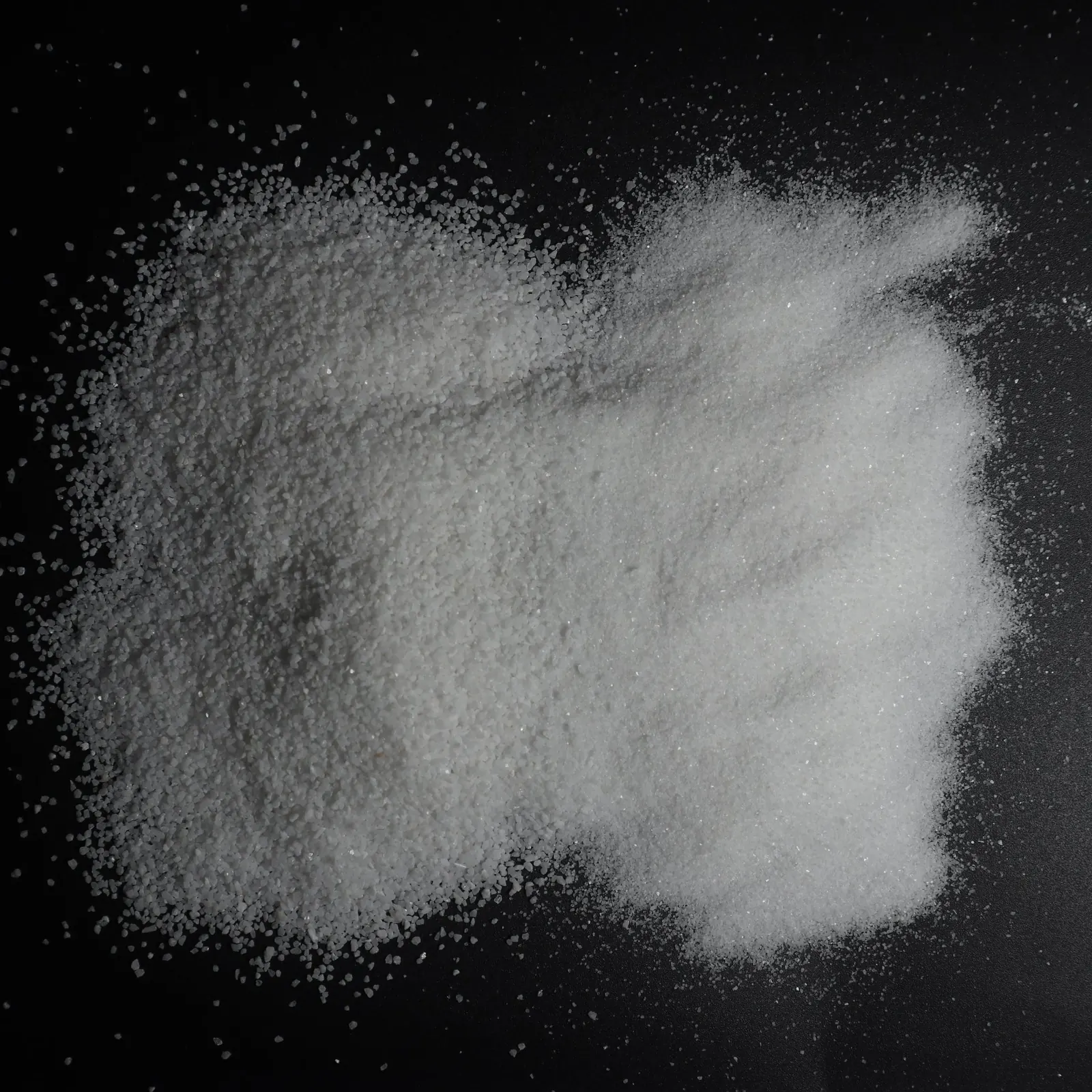
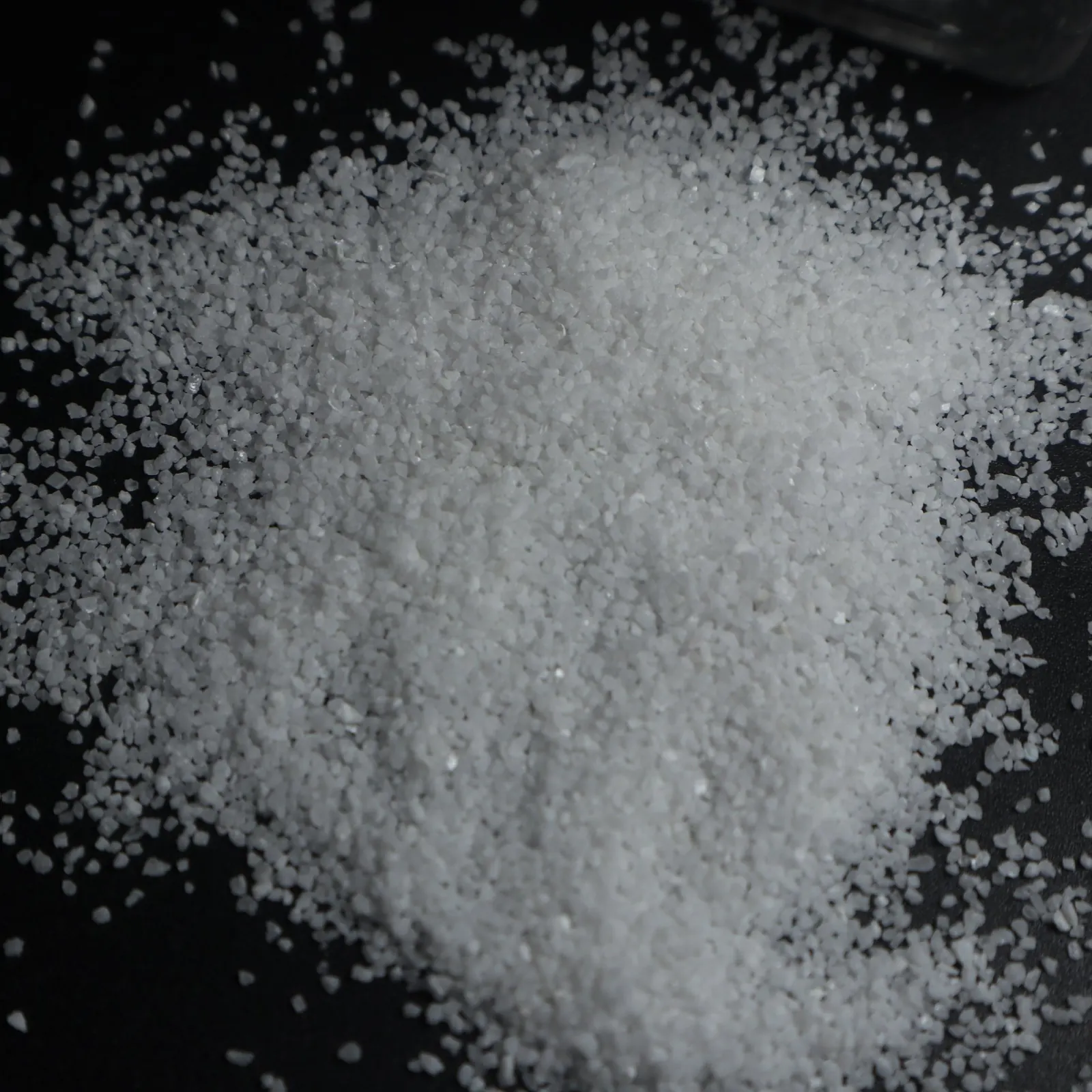
White sand in bulk is washed, graded sand whose defining commercial property is its brightness and low iron content, not merely how white it looks in a photograph. Loose bulk white sand weighs about 1.5–1.7 tonnes per cubic metre, a 20 mm decorative layer needs roughly 30–34 kg per square metre, and one 20 ft container holds about 24–27 tonnes loose, or 1,200–1,350 × 20 kg bags. This guide covers the bulk white-sand grades, coverage arithmetic, how to vet a white sand manufacturer, packing and moisture control, pre-shipment inspection, and the cost factors behind a wholesale quotation.
To buy decorative sand in bulk, fix the grain size band first (0.1–0.8 mm for craft and display, 0.3–1 mm for raked zen planes, 1–2 mm for garden topping and paving joints, 2–4 mm for coarse decorative work), then buy by weight: washed sand runs at about 1.5–1.6 tonnes per cubic metre, a 20 mm dressing needs roughly 30–34 kg per square metre, and one 20 ft container carries about 24–27 tonnes loose, or 1,200–1,350 × 20 kg bags. This guide covers grain and colour grades, how to vet a decorative sand manufacturer, moisture and packing control, coverage arithmetic and the cost factors that move a wholesale quotation.
To buy sand in bulk, pick the grade for the job first — sharp or coarse sand for bedding and drainage, horticultural sand for soils, play sand for safe surfaces, washed building sand for mortar — then order by the tonne. Loose bulk sand weighs about 1.5–1.7 tonnes per cubic metre, a 20 mm top dressing needs roughly 30–34 kg per square metre, and one 20 ft container holds about 24–27 tonnes loose or 1,200–1,350 × 20 kg bags. This guide covers the bulk grades, coverage arithmetic, how to vet a sand manufacturer, packing and delivery options, and the cost factors behind a wholesale quotation.
The best polished pebbles for commercial landscaping are tumble-polished river pebbles with a factory gloss coating, screened to 10–20 mm for planters and water-feature bases, 20–40 mm for lobby and atrium displays, and 40–60 mm for large decorative planes. Allow roughly 1.5–1.7 tonnes per cubic metre and about 24–27 tonnes per 20 ft container. This guide covers where polished pebbles earn their place, the size bands worth quoting, the coating-wear reality, driveway use and bulk buying from a polished pebbles supplier.
The best white pebbles for commercial landscaping are washed, uncoated, near-white river or marble pebbles screened into a tight band: 8–16 mm for paths and water-feature surrounds, 20–40 mm for beds and borders, and 40–75 mm for wide decorative planes. Allow 60–80 kg per square metre at 40 mm depth and about 24–27 tonnes per 20 ft container. This guide covers whiteness grades and the grey-undertone trap, why white pebbles yellow or go green and how to stop it, the size bands worth quoting, an enforceable specification, driveway use and bulk buying from a white pebbles supplier.
The best garden gravel for commercial landscaping is washed, angular or sub-angular stone screened into a single tight band: 10–20 mm for paths and planted beds, 20–40 mm for driveways and general surfaces, and 40–75 mm for drainage, swales and wide low-maintenance zones. This guide covers how gravel differs from pebbles, which size band suits which job, a specification you can enforce on a purchase order, coverage per square metre, and buying garden gravel in bulk from a supplier.
The best natural pebbles for commercial landscaping are washed, through-coloured river pebbles with no dye or coating, screened into a tight band: 20–40 mm for beds, borders and tree pits, 40–75 mm for wide decorative planes and dry river features, and 2–6 mm washed rounds for resin-bound driveways and paths. This guide covers how to prove a pebble is genuinely natural, the size and shape bands, a specification you can enforce, coverage per square metre and bulk buying from a natural pebbles supplier.
The best decorative pebbles for commercial landscaping are washed, colour-sorted pebbles chosen by finish first: matte natural or lightly tumbled 20–40 mm for beds and borders, 40–75 mm for wide decorative planes, and resin-bound or grid-stabilised 10–20 mm wherever vehicles or trolleys pass. This guide covers finish selection, colour families, driveway use, coverage per square metre, MOQ, packing and the pre-shipment checks that keep a phased scheme consistent.
The best mixed color pebbles for commercial landscaping are washed, pre-blended 20–40 mm or 40–75 mm pebbles that combine two to four tones so batch variation reads as part of the design. This guide covers why a blend beats a single colour on large areas, how to set the tone ratio, driveway use, coverage per square metre, MOQ, packing and the pre-shipment checks that keep a phased scheme consistent.
The best decorative gravel for commercial landscaping is washed angular crushed stone: 14–20 mm for beds and borders, 20–40 mm for driveways and service routes, and 6–10 mm for resin-bound surfaces. This guide covers size bands, driveway specification, coverage per square metre, MOQ, packing and the checks to run before a container ships.
The best garden pebbles for commercial landscaping are washed, colour-sorted 20–40 mm pebbles for entrances and borders, 40–75 mm for low-traffic decorative beds, and 10–20 mm for fine Japanese-style work. This guide covers size bands, driveway specification, coverage per square metre, batch consistency, pre-shipment checks, MOQ, packing and landed cost.
The best black pebbles for a zen garden are washed, through-coloured black basalt: 8–16 mm angular black granite for raked gravel planes and 20–40 mm sub-rounded black pebbles for path edges, step surrounds and pond margins. This guide covers size choice, laying depth, coverage per square metre, MOQ and bulk container buying, and quality checks before shipment.
The best black pebbles for a Japanese garden are washed, through-coloured black basalt: 8–16 mm angular black granite for raked beds and 10–20 mm or 20–40 mm sub-rounded black pebbles for stream beds, pond margins and moss boundaries. This guide covers size choice, laying method, coverage per square metre, pool and water-feature use, and bulk container buying.
For a dry river bed the best black pebbles are washed 20–40 mm sub-rounded or polished black river pebbles for the main channel, with 40–60 mm stone along the banks, laid 50–75 mm deep. This guide covers grades, coverage per square metre, flower-bed use, and how to buy black pebbles by the tonne without colour drift.
The best black pebbles for a garden pathway are washed 10–20 mm or 20–40 mm sub-rounded black river pebbles laid 30–40 mm deep over a compacted, weed-membraned base. This guide covers size choice, how to lay black pebbles so the path stays put, coverage per square metre, hotel-resort use, and bulk container buying.
Washed black basalt in a tight size band is the reliable answer for commercial landscaping, because black is the most unforgiving colour there is: dust, oversize stone and batch drift all show first on a black bed. This guide covers basalt versus dyed and polished black pebbles, the clauses to write into a purchase order, what changes when the same stone goes on a driveway, and the pre-shipment checks that keep a container from failing on site.
Japanese gardens need tight, deliberately chosen size bands — 8–16 mm for raked gravel, 20–40 mm for stream beds, 40–80 mm for upright accent stone — while commercial landscapes run on written specifications. This guide gives the size chart, the sieve and wash tolerances to write into a purchase order, and the checks that stop a container failing on site.
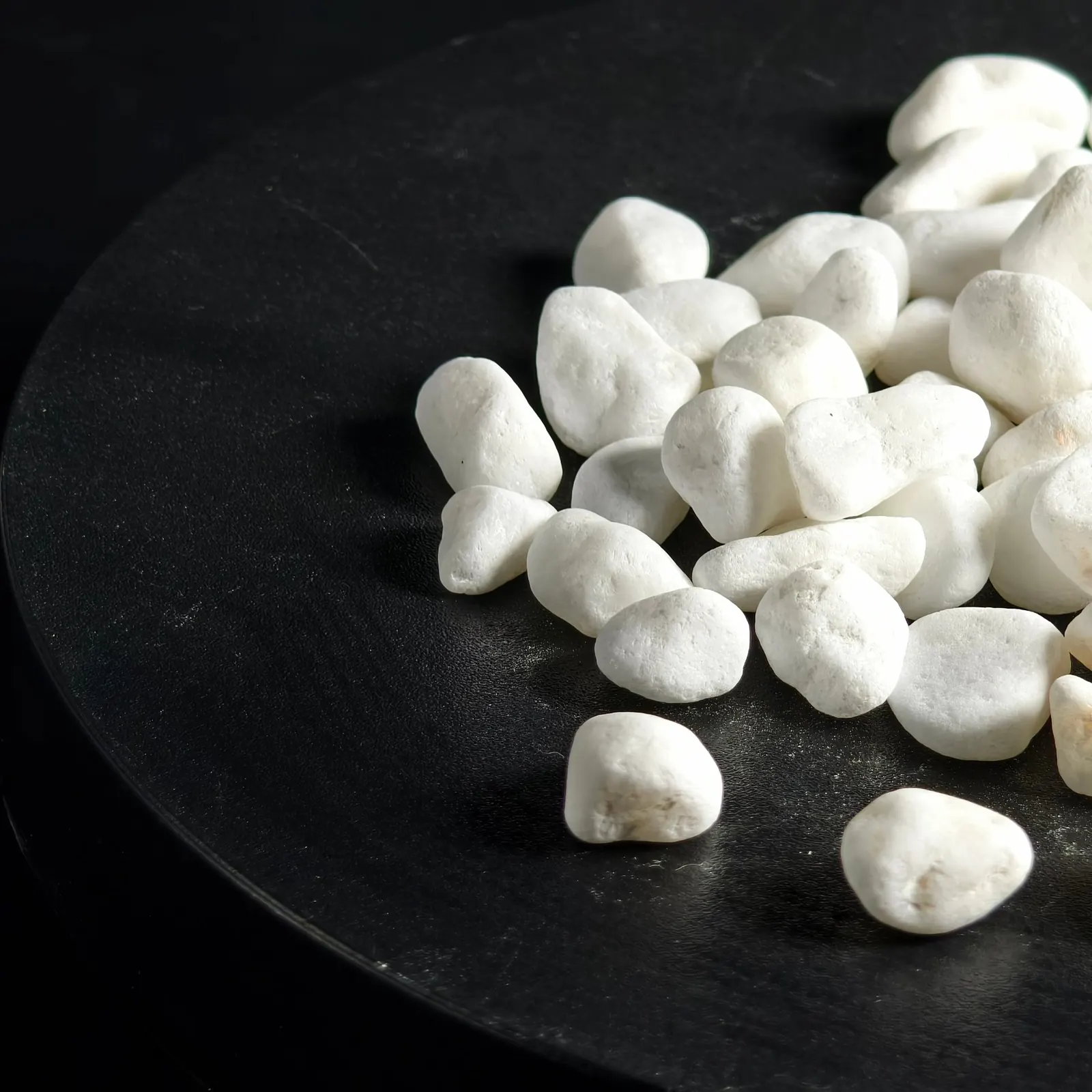
White pebbles laid at 50 mm need about 75 kg per square meter — roughly 13 m² per tonne. This guide gives contractors and importers the coverage mathematics at every depth, the base preparation and geotextile specification that stops migration, the laying sequence that keeps white stone looking white, and how much area one 20ft container actually covers.
Importers who buy landscaping stone container by container pay for flexibility with price volatility, peak-season allocation and batch drift. This guide explains how to structure an annual supply agreement for pebbles and gravel — forecast commitments, price adjustment windows, capacity reservation, packaging lock-ins and payment-term progression — and what to trade in return so the supplier actually honours it.
Pool surrounds are the most demanding environment decorative pebbles ever face: barefoot traffic, chlorinated or salt water, heat and constant splashing. This guide explains which specifications matter when buying pool pebbles in bulk — size grading, dust content, rounded shapes, colour stability — and how pool builders and distributors size and pack orders that perform on site.
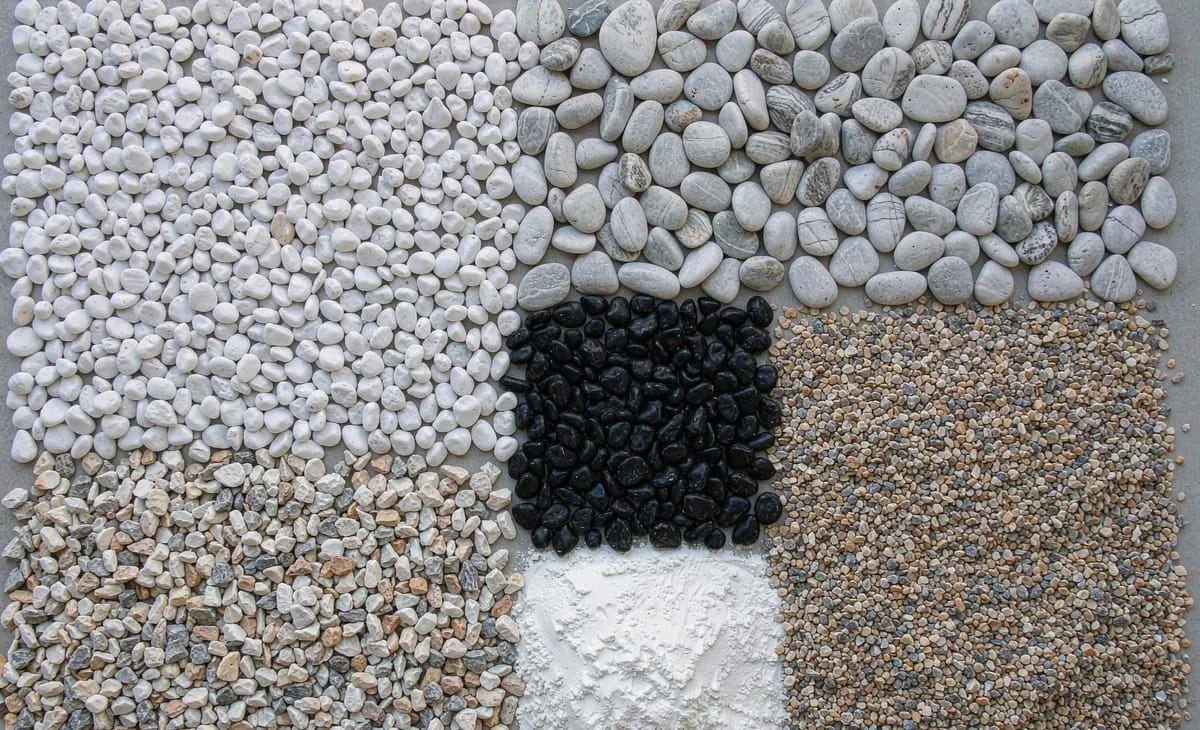
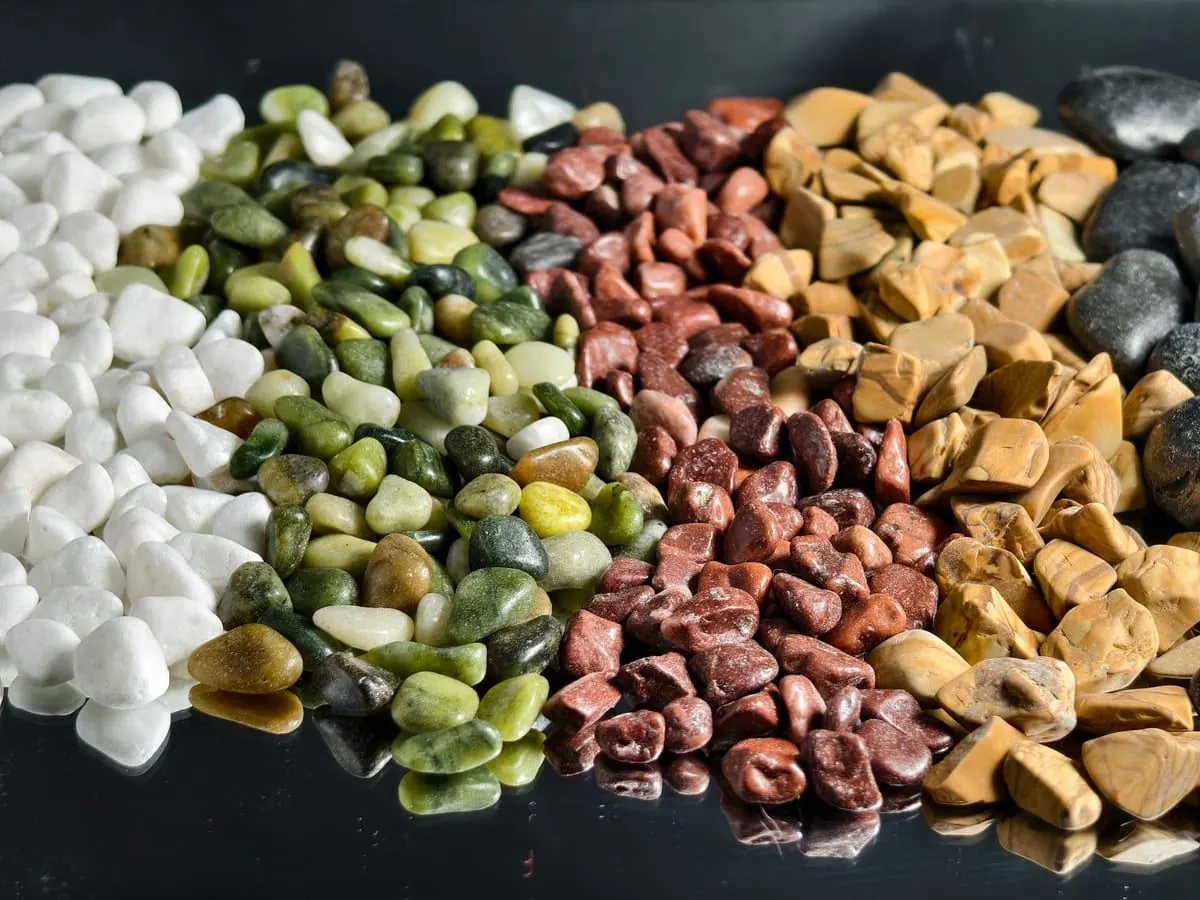
Pebbles, gravel and sand are three different businesses inside one stone import. This guide compares origin, processing, coverage math and price positioning for each — and shows wholesalers and landscape contractors how to combine all three into a product mix that maximises container utilisation and shelf turnover.
The first container of white pebbles looked perfect; the second one shifted shade and your best retail customer noticed. This guide explains how professional importers manage the sample process — from requesting representative samples to sealing a golden sample in the contract — and which spec tolerances keep batch-to-batch consistency under control across repeat orders.
Decorative pebbles and landscaping stone enter the United States under HS heading 2517, where most natural, unwrought stone clears at a zero general duty rate — but classification, FDA bamboo-treatment rules for wood packaging and customs bonds still decide whether your container clears smoothly. Here is what a US importer should line up before the vessel sails.
White pebbles are the most colour-sensitive product in the landscaping stone trade, and the most common place for a first container to go wrong. Here is a practical vetting sequence — samples, video audit, references and a structured trial order — that separates real quarries and processors from trading desks and re-baggers.
The same container of pebbles can be priced FOB or CIF and land at your warehouse at two different numbers. Here is what each term transfers, where destination charges hide, and how container loading limits decide your real cost per tonne.
Your FOB price is only part of the story. Here is how to build a landed cost per tonne for pebbles, gravel and sand — freight, duty, port charges, inland drayage, and the hidden lines that quietly turn a good-looking import into a loss.
Decorative stone is a seasonal business — order too late and your container arrives after the selling window closes. A month-by-month planning guide for importers in North America, Europe, Australia and the Middle East.
Color drift, dust, off-size pebbles and chipped surfaces are all visible before a container is sealed — and almost impossible to fix after arrival. A practical quality control checklist for decorative pebble importers.
How the packing you choose changes freight cost per tonne, unloading time and retail readiness — a practical comparison for pebble importers and wholesale distributors.
From sample approval to container loading and documents — the complete import process for wholesale pebble stone buyers, written from the supplier side.
Why two pebble quotes can differ by 40% — color, grading, polishing, packing and freight all move the number. Here is how to read a pebble stone quotation like a professional buyer.
 SWME TRADE