 SWME TRADE
Garden Landscaping
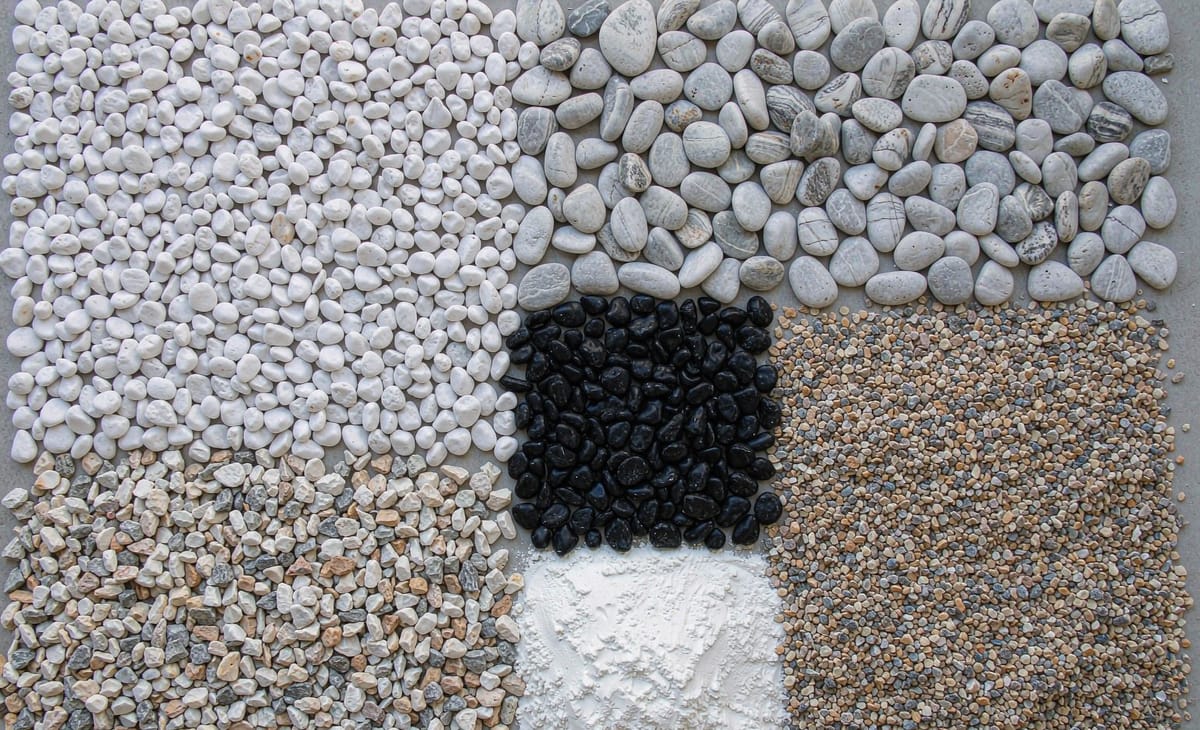
Garden landscaping brings together every stone category: ground cover for beds and borders, gravel for paths, …
SWME TRADE · Blog
The MOQ for garden gravel is normally one 20 ft container — about 24–27 tonnes loose-loaded, or roughly 960–1,080 × 25 kg bags — but the figure that actually restricts most buyers is the minimum per size grade. A standard 10–20 mm path grade may open at a 5–10 tonne trial, while a colour-sorted decorative blend usually needs a full 20–27 tonne production batch.
Published · By Gardenstone Editorial Team · Educational article from the SWME TRADE team
The MOQ for garden gravel is normally one 20 ft container — about 24–27 tonnes loose-loaded, or roughly 960–1,080 × 25 kg bags. The figure that actually restricts most buyers, though, is the minimum per size grade: a standard 10–20 mm path grade may open at a 5–10 tonne trial, while a colour-sorted decorative blend usually needs a full 20–27 tonne production batch.
That gap is not a negotiating stance. Garden gravel is produced in graded runs, not poured from a single bin: every size band and every colour sort is a separate screening, washing and bagging slot at the plant. A mill will not open a dedicated run for a few tonnes of one grade, so the smallest commercial order is set by the run, not by the box.
This article sets out the different minimums hidden behind a garden gravel quotation, how bagged stock changes the number, how to reach a container with two or three grades, and what a realistic first order looks like for a distributor, contractor or landscape reseller.
Garden gravel is sold by size band, and each band is a separate production run. The common garden grades are 6–10 mm (fine raking and pot-top dressing), 10–20 mm (the standard path and bed-topping grade), and 20–40 mm (drainage layers, driveway topping and heavier ground cover). A 40 mm minus blend is yet another run.
Each run carries a fixed setup cost — screen changes, wash-cycle purge, and the rejected material at the edges of the tolerance — so the plant sets a per-grade minimum that recovers it. Standard single grades typically open at 5–10 tonnes; a colour-sorted or blended decorative grade, which needs extra screening and a matched reference sample, usually carries the full 20–27 tonne batch minimum.
Ask for the minimum against the specific grade, not against "garden gravel" in general. A quote that states one MOQ for the whole line is either a single grade or is applying the top grade's minimum to everything — both are worth clarifying before you commit a container and a delivery window.
Yes, almost always. Garden gravel ships three ways: loose-loaded in the container, in one-tonne jumbo (FIBC) bags, or in 25 kg retail-style woven bags — and bagged formats add a packing minimum on top of the material minimum.
Plain 25 kg stock bags have almost no run minimum, but printed private-label bags normally start at 500–1,000 pieces per design and per size, because the print plates are made for that run. A 20 ft container of 25 kg bags holds roughly 960–1,080 bags, so a private-label order of 1,000 bags is effectively a full-container commitment before any grading minimum is counted.
Bagged gravel also costs more per tonne than loose or jumbo loading: you pay for the bags, the filling line, and the freight allocated to a format that is lighter per cubic metre than loose stone. Convert every bagged quote to cost per square metre at your laying depth before comparing it with bulk, and confirm whether the price is on an oven-dry or as-shipped moisture basis.
Mixed loading is the standard way distributors and contractors reach a container payload while keeping each grade small. A 25-tonne box might carry 12 tonnes of 10–20 mm path grade, 8 tonnes of 20–40 mm drainage grade and 5 tonnes of colour-sorted decorative blend — three products, one freight bill, each grade ordered near the bottom of its own minimum rather than at the top.
Two rules make it work. First, write the order grade by grade, with its own sieve range and a sealed wet reference sample, so inspection happens line by line instead of hoping the average passes. Second, bag or palletise each grade separately and label it — a mixed container that arrives with three unlabelled grades is a site problem, not a saving.
Expect the smallest line in the mix to carry a modest upcharge, because a 5-tonne run of a decorative grade still consumes a production slot. That upcharge is usually cheaper than a second container, and it becomes negotiable when the same mix repeats across shipments: a standing quarterly blend is worth more to a plant than a one-off split.
Keep the number of grades in one box to three or fewer. Every extra grade adds a sample approval, a sieve check and one more chance of a tone mismatch between lines — and the whole point of buying garden gravel in one shipment is that the tones were matched at the plant, not reconciled on site.
Treat the full 20 ft container — 24–27 tonnes for garden gravel at roughly 1.5–1.7 tonnes per cubic metre loose — as the commercial unit, and a part load as a qualification step rather than a supply model. Ocean LCL is charged on revenue tonnage, the greater of volume and weight, and dense stone pays for weight it is not using in volume. The per-tonne freight on a part load commonly lands at 1.5–2.5 times the full-container rate.
For an unproven grade, open with a 3–5 tonne trial in one-tonne jumbo bags: enough to lay a real area, check the colour against a sealed wet reference in daylight, confirm the grade rakes or beds as expected, and see how it behaves after rain. A trial of that size also exposes the two failure modes that matter — dust that greys the surface, and a grain spread so wide the finish looks streaky.
Then convert the trial into a specification. Take the sealed sample from the trial lot, not from a sample room, and make the next container measured against it: same sieve curve, same dust ceiling, same moisture limit. This is the single cheapest protection against receiving a second container that is technically in grade but visibly different from the first.
Write the minimum and the grade on the same line. A purchase order that says "garden gravel, 25 tonnes, MOQ as agreed" leaves room to ship the grade that fills the box most easily, which is rarely the grade you specified.
A workable clause set for garden gravel covers: size band as a sieve range with tolerances, fines and dust limits, colour or blend reference, moisture maximum on an oven-dry basis, packing format and count (including whether bags are printed or stock), the per-grade sub-minimum inside the container, price validity of 30–60 days with any freight-index adjustment capped, and a sealed wet 1 kg reference signed by both parties.
Add the inspection mechanics: three random samples drawn from different pallets or jumbo bags, checked wet against the sealed reference in daylight, sieve analysis on the same draw, and loading photographs sent before the container seals. For a blended decorative grade, ask for the sample to be taken from the production lot rather than the finished-goods floor — the floor sample is the best the plant can do, not the average of what you will receive.
Finally, agree what happens if a lot misses the grade. Replacement, a price adjustment or rejection at destination are all acceptable outcomes; silence is not. On a product where the whole appeal is a consistent colour and a clean size band, the remedy clause is part of the specification, not boilerplate.
The MOQ for garden gravel is normally one 20 ft container — about 24–27 tonnes loose-loaded, or roughly 960–1,080 × 25 kg bags. The tighter practical limit is the per-grade minimum: a standard 10–20 mm path grade can open at a 5–10 tonne trial, while a colour-sorted decorative blend usually requires a full 20–27 tonne production batch because of the separate screening and washing run it consumes.
A 20 ft container of 25 kg bags holds roughly 960–1,080 bags, which is about 24–27 tonnes of garden gravel at a loose density of 1.5–1.7 tonnes per cubic metre. In one-tonne jumbo (FIBC) bags the same container holds 24–27 bags. Bagged stock costs more per tonne than loose or jumbo loading because of the bags, the filling line and the freight allocated to that format.
Yes, but expect a premium. A 3–5 tonne trial in one-tonne jumbo bags is a normal opening order for a new grade, and a 10–12 tonne part container is sometimes available. Part loads cost more per tonne because LCL freight is charged on weight for a dense cargo, so fixed handling and documentation costs are spread over fewer tonnes — commonly 1.5–2.5 times the full-container freight rate per tonne.
Yes, with the right grade and construction. Angular crushed garden gravel locks together better than rounded pebbles on slopes and walking surfaces, which is why 10–20 mm is the standard path grade and 20–40 mm suits drainage layers and driveway topping. For a driven surface, the gravel should be bound with a stabilising grid or resin rather than laid loose, and the end use should be stated in the enquiry so the sieve range and dust limit are set for the application.
“Over 13,000 ASTM standards operate globally. Defined and set by us, they improve the lives of millions every day. Combined with our innovative business services, they enhance performance and help everyone have confidence in the things they buy and use.”
ASTM International, “About ASTM Overview” — official page
Garden landscaping brings together every stone category: ground cover for beds and borders, gravel for paths, …
Pathways combine the functional and decorative sides of landscaping stone: the surface must stay stable underf…
Stone-topped flower beds replace mulch with a permanent surface: stones suppress weeds when laid over membrane…
Commercial landscaping is the volume end of the stone trade: office parks, public spaces, housing developments…
Everflorae — Artificial Plants & Trees
From the same supplier group, Everflorae supplies UV-stable artificial trees, palms and green walls that pair with stone — one source for hotels, resorts, malls and Japanese gardens.
Send your product, specification and destination — our sales team will prepare a quotation.