 SWME TRADE
Zen Garden
Zen gardens reduce the landscape to three materials: raked sand or fine gravel for water and openness, selecte…
SWME TRADE · Blog
The MOQ for white sand is normally one 20 ft container — about 24–27 tonnes loose-loaded, or 960–1,080 × 25 kg bags — but the number that actually restricts a buyer is the minimum per whiteness grade. Standard off-white grades start at a 3–5 tonne trial, while top L*92+ low-iron grades usually require a 25–50 tonne production batch, because every extra point of whiteness is bought with rejected material.
Published · By Gardenstone Editorial Team · Educational article from the SWME TRADE team
The MOQ for white sand is normally one 20 ft container — about 24–27 tonnes loose-loaded, or 960–1,080 × 25 kg bags. The number that actually constrains a buyer, though, is the minimum per whiteness grade: standard off-white starts at a 3–5 tonne trial, while top L*92+ low-iron grades usually need a 25–50 tonne production batch.
That gap is not a sales tactic. White sand is a graded product, not a single commodity, and the grade ladder is built by removing material: the whiter the target, the more tonnes of raw sand are washed, scrubbed and colour-sorted to produce one tonne that meets the specification. A mill will not open a wash-and-sort run for ten tonnes of its best grade, so the top of the ladder quietly carries the biggest order minimum.
This article sets out the four different minimums hiding behind a white sand quotation, how to read a per-bag price, how to reach a container payload with two or three grades, and what a realistic first order looks like for a distributor or landscape contractor.
White sand is specified on three numbers, not on the word "white": lightness (L* on the CIE scale, where 100 is perfect white), yellowness (b*, lower is cleaner), and iron oxide content, usually expressed as a maximum Fe2O3 percentage. A grade sold as L*88 with Fe2O3 under 0.10% is a different product from L*94 with Fe2O3 under 0.03%, even though both arrive in identical bags.
Each step up the ladder raises the rejection rate. Iron staining in sand is not a surface film that rinses off — it is in the grain and in the clay fraction around it, so removing it means more scrubbing, more water, longer residence time, and discarding the grains that will not come clean. A grade that needs 60–70% of the feed to be rejected cannot be produced in small runs at a sane cost, which is exactly why its batch minimum is the highest on the price sheet.
Ask for the grade by number and by test method, and ask which grade the quoted MOQ applies to. A supplier who quotes one MOQ for the whole product line is either selling a single grade or applying the top grade's minimum to everything — both are worth clarifying before you plan a container.
A white sand quote usually contains four separate minimums, and buyers who conflate them get surprised late. Separating them is the fastest way to find out which one is actually blocking a smaller order.
The first is the production batch minimum — the tonnage a mill will put through one wash-and-sort run for a given grade, typically 25–50 tonnes for premium white and 10–25 tonnes for standard off-white. The second is the packaging run minimum: plain 25 kg woven bags have almost no minimum, but printed private-label bags usually start at 500–1,000 pieces per design and per size, because the print cylinders are made for that run.
The third is the container minimum, which is the number most quotes quote: 24–27 tonnes in a 20 ft container, weight-limited long before the box is full. The fourth is the price-break minimum: material rates normally step at one container, three to five containers, and ten or more, and what changes between steps is usually the packing, sorting and freight allocation rather than the sand itself.
A practical consequence: if your private-label bag minimum is 1,000 pieces and your container takes 1,000 bags of 25 kg, the bag run and the container are the same order. Order 400 bags and you either pay a plate charge or accept a stock bag — both are legitimate, but they belong in the enquiry, not in the invoice.
No — a part container is almost always dearer per tonne, and on white sand the gap is wide enough to change a buying decision. Ocean LCL is charged on revenue tonnage, which is the greater of cubic metres and weight, and sand runs at roughly 1.5–1.7 tonnes per cubic metre loose. A heavy, low-value cargo like sand therefore pays for weight it is not using in volume, and the per-tonne freight on a part load commonly lands at 1.5–2.5 times the full-container rate.
The arithmetic is blunt. A 20 ft container moving 25 tonnes spreads one fixed freight figure across 25 tonnes. Move 8 tonnes in an LCL lot and the same fixed costs — origin handling, consolidation, destination devanning, documentation — are spread across 8 tonnes. The sand did not get more expensive; the freight per tonne did.
There is a second penalty that buyers rarely price in: moisture. Sand is sold on an oven-dry basis in a well-written contract, but shipped as-is. At 6% moisture, a 25-tonne container carries about 1.5 tonnes of water — water you paid freight on and water that will cake in retail bags. If your grade needs drying rather than simple washing, that is another dedicated run, and another reason the minimum sits where it does.
So treat the full container as the commercial unit and the part load as a qualification step, not a supply model. If you genuinely cannot absorb 24–27 tonnes yet, buy the trial in jumbo bags and accept the premium knowingly.
Mixed loading is how most distributors and contractors reach a container payload while keeping each grade small. A 25-tonne box might carry 12 tonnes of L*90 premium, 8 tonnes of standard off-white and 5 tonnes of fine raking grade — three products, one freight bill, and each grade ordered near the bottom of its own minimum rather than at the top.
Two rules make it work. First, write the order grade by grade, with its own whiteness target, sieve range and sealed wet sample, so inspection can be done line by line instead of hoping the average is acceptable. Second, bag or palletise each grade separately and label it — a mixed container that arrives with three unlabelled grades is a site problem, not a saving.
Expect the smallest line in the mix to carry a modest upcharge, because a 5-tonne run of a premium grade still consumes a production slot. That upcharge is usually cheaper than a second container, and it is negotiable when the same mix repeats across several shipments: a standing quarterly blend is worth more to a mill than a one-off split.
Keep the number of grades in one box to three or fewer. Every additional grade adds a separate sample approval, a separate sieve check and one more chance of a colour mismatch between lines — and the whole point of buying white sand in one shipment is that the tones were matched at the plant, not on site.
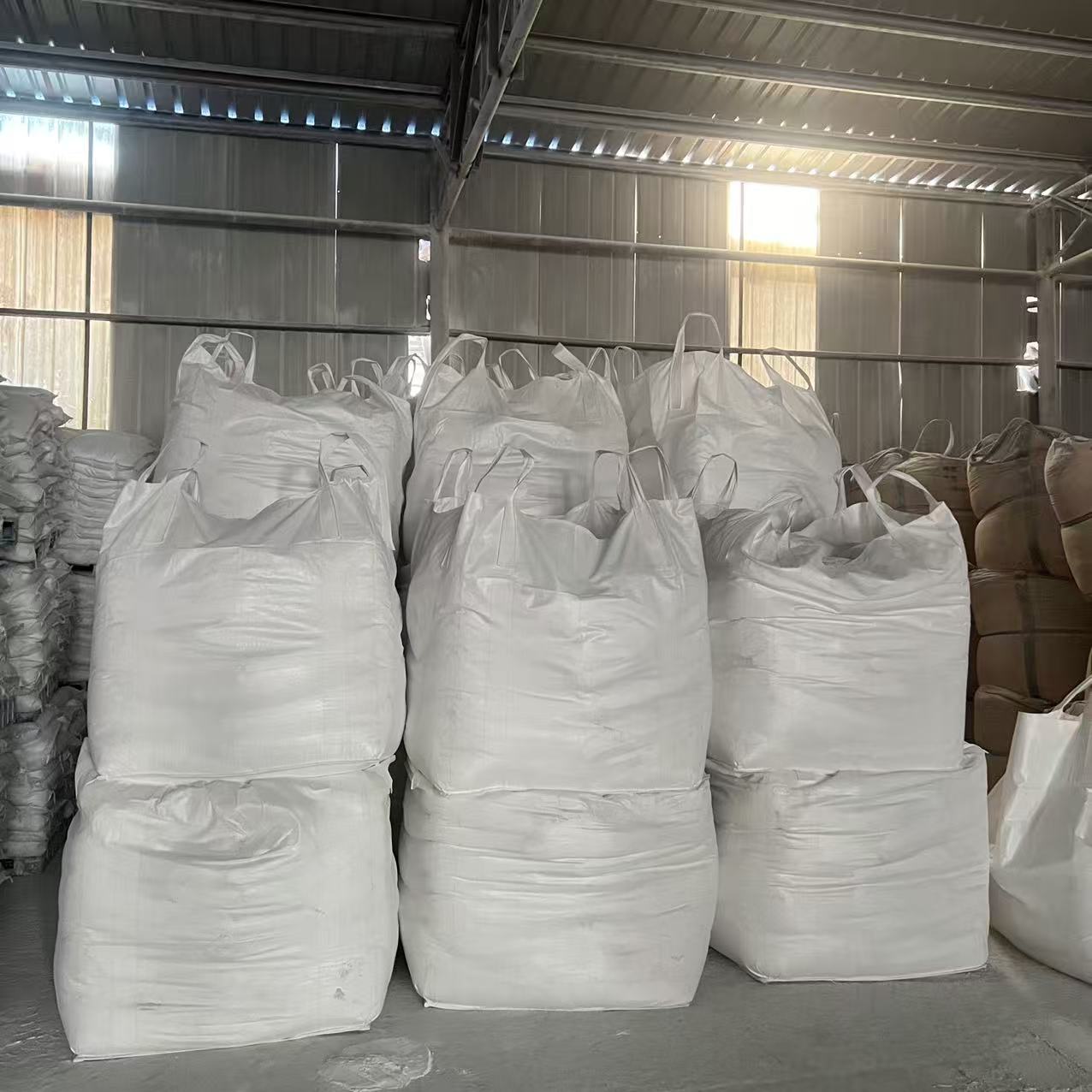
Size the first order from sell-through, not from the container. A 20 ft container of 25 kg bags holds roughly 960–1,080 bags; in one-tonne jumbo bags it holds 24–27 bags. If your business moves 300–400 retail bags a month, one container is about three months of stock — a sensible first full order, provided the grade is already proven.
For an unproven grade, start with a 3–5 tonne trial in jumbo bags: enough to lay a real area, check the colour against a sealed wet reference in daylight, confirm the sand rakes or beds as expected, and see how it behaves after a rain. A trial of that size is also enough to expose the two failure modes that matter — dust that turns the surface grey, and a grain spread so wide that the finish looks streaky.
Then convert the trial into a specification. Take the sealed sample from the trial lot, not from a sample room, and make the next container measured against it: same L*, same sieve curve, same moisture ceiling. This is the single cheapest protection against receiving a second container that is technically in grade but visibly different from the first.
For a contractor with a dated project rather than a stock position, work backwards instead: tonnage from the drawn area at the specified depth, plus 5–10% for settlement and touch-up, then check whether that number is closer to a mixed container than to a part load. It usually is.
Write the minimum and the grade on the same line. A purchase order that says "white sand, 25 tonnes, MOQ as agreed" gives a supplier room to ship the grade that fills the box most easily, which is rarely the grade you specified.
A workable clause set for white sand covers: whiteness stated as L* and b* with the test method, maximum Fe2O3, grain size as a sieve range with tolerances, fines and dust limits, moisture maximum on an oven-dry basis, packing count and bag type (including whether bags are printed or stock), the per-grade sub-minimum inside the container, price validity of 30–60 days with any freight-index adjustment capped, and a sealed wet 1 kg reference signed by both parties.
Add the inspection mechanics: three random samples drawn from different pallets or jumbo bags, checked wet against the sealed reference in daylight, sieve analysis on the same draw, and loading photographs sent before the container seals. For a premium grade, ask for the sample to be taken from the production lot rather than the finished-goods floor — the floor sample is the best the plant can do, not the average of what you will receive.
Finally, agree what happens if a lot misses the grade. Replacement, a price adjustment or rejection at destination are all acceptable outcomes; silence is not. On a product where the whole premium is colour, the remedy clause is part of the specification.
The MOQ for white sand is normally one 20 ft container, about 24–27 tonnes loose-loaded, or 960–1,080 × 25 kg bags. The tighter limit is usually the per-grade minimum: standard off-white grades can start at a 3–5 tonne trial, while premium L*92+ low-iron grades typically require a 25–50 tonne production batch because of the material rejected during washing and colour sorting.
A 25 kg bag of white sand is priced as the per-tonne material rate for its whiteness grade, plus packing, plus the freight allocated to that format. Bagged sand therefore always costs more per tonne than jumbo bags or loose loading, and premium low-iron grades cost more per tonne than standard off-white. Convert every quote to cost per square metre at your laying depth before comparing, and confirm whether the price is on an oven-dry or as-shipped moisture basis.
Yes, but expect a premium. A 3–5 tonne trial in one-tonne jumbo bags is a normal opening order for a new grade, and a 10–12 tonne part container is sometimes available. Part loads cost more per tonne because LCL freight is charged on weight for a dense cargo, so fixed handling and documentation costs are spread over fewer tonnes — commonly 1.5–2.5 times the full-container freight rate per tonne.
Yes, with different grades. Fine, uniform white sand in the 0.3–1 mm band is the standard raking grade for zen and Japanese dry gardens because it holds a crisp line. Play and recreation use needs a coarser, dust-controlled grade and a bounded area, since fine white sand migrates under wind and foot traffic and shows tracking. State the end use in the enquiry so the sieve range and dust limit are set for the application rather than for the photo.
“Over 13,000 ASTM standards operate globally. Defined and set by us, they improve the lives of millions every day. Combined with our innovative business services, they enhance performance and help everyone have confidence in the things they buy and use.”
ASTM International, “About ASTM Overview” — official page
Zen gardens reduce the landscape to three materials: raked sand or fine gravel for water and openness, selecte…
Japanese garden design uses stone as its structural vocabulary: larger stones placed as islands and mountains,…
Garden landscaping brings together every stone category: ground cover for beds and borders, gravel for paths, …
Hotel and resort landscapes are commercial projects with residential finish quality: large areas, premium appe…
Everflorae — Artificial Plants & Trees
From the same supplier group, Everflorae supplies UV-stable artificial trees, palms and green walls that pair with stone — one source for hotels, resorts, malls and Japanese gardens.
Send your product, specification and destination — our sales team will prepare a quotation.