 SWME TRADE
园林景观
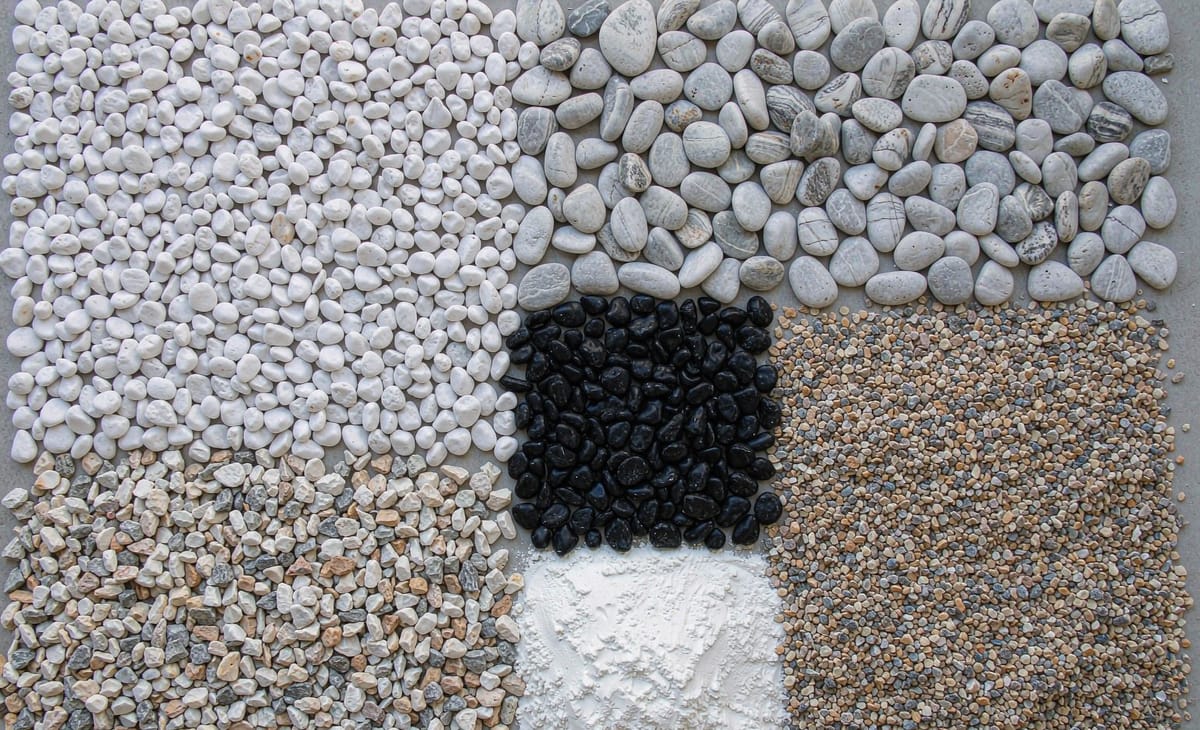
园林景观汇集所有石材品类:花坛和边界用地被石,园路用砾石,结构用景观石,收尾用沙。正是材料组合把种植区变成设计出来的景观。…
SWME TRADE · 博客
The 最小起订量 for 园艺砾石 is normally one 20 ft container — about 24–27 tonnes loose-loaded, or roughly 960–1,080 × 25 kg bags — but the figure that actually restricts most buyers is the minimum per size grade. A standard 10–20 mm path grade may open at a 5–10 tonne trial, while a colour-sorted decorative blend usually needs a full 20–27 tonne production batch.
发布于 · 作者:园林石编辑部 · 由 SWME TRADE 团队发布的科普文章
The 最小起订量 for 园艺砾石 is normally one 20 ft container — about 24–27 tonnes loose-loaded, or roughly 960–1,080 × 25 kg bags. The figure that actually restricts most buyers, though, is the minimum per size grade: a standard 10–20 mm path grade may open at a 5–10 tonne trial, while a colour-sorted decorative blend usually needs a full 20–27 tonne production batch.
That gap is 不会 a negotiating stance. Garden gravel is produced in graded runs, 不会 poured from a single bin: every size band 和 every colour sort is a separate screening, washing 和 bagging slot at the plant. A mill will 不会 open a dedicated run for a few tonnes of one grade, so the smallest commercial order is set by the run, 不会 by the box.
This article sets out the different minimums hidden behind a 园艺砾石 quotation, how bagged stock changes the number, how to reach a container with two or three grades, 和 what a realistic first order looks like for a distributor, contractor or landscape reseller.
Garden gravel is sold by size band, 和 each band is a separate production run. The common garden grades are 6–10 mm (fine raking 和 pot-top dressing), 10–20 mm (the standard path 和 bed-topping grade), 和 20–40 mm (drainage layers, driveway topping 和 heavier ground cover). A 40 mm minus blend is yet another run.
Each run carries a fixed setup cost — screen changes, wash-cycle purge, 和 the rejected material at the edges of the tolerance — so the plant sets a per-grade minimum that recovers it. Standard single grades typically open at 5–10 tonnes; a colour-sorted or blended decorative grade, which needs extra screening 和 a matched reference sample, usually carries the full 20–27 tonne batch minimum.
Ask for the minimum against the specific grade, 不会 against "园艺砾石" in general. A quote that states one 最小起订量 for the whole line is either a single grade or is applying the top grade's minimum to everything — both are worth clarifying before you commit a container 和 a delivery window.
Yes, almost always. Garden gravel ships three ways: loose-loaded in the container, in one-tonne jumbo (FIBC) bags, or in 25 kg retail-style woven bags — 和 bagged formats add a packing minimum on top of the material minimum.
Plain 25 kg stock bags have almost no run minimum, but printed private-label bags normally start at 500–1,000 pieces per design 和 per size, because the print plates are made for that run. A 20 ft container of 25 kg bags holds roughly 960–1,080 bags, so a private-label order of 1,000 bags is effectively a full-container commitment before any grading minimum is counted.
Bagged gravel also costs more per tonne than loose or jumbo loading: you pay for the bags, the filling line, 和 the freight allocated to a format that is lighter per cubic metre than loose stone. Convert every bagged quote to cost per square metre at your laying depth before comparing it with bulk, 和 confirm whether the price is on an oven-dry or as-shipped moisture basis.
混合色 loading is the standard way distributors 和 contractors reach a container payload while keeping each grade small. A 25-tonne box might carry 12 tonnes of 10–20 mm path grade, 8 tonnes of 20–40 mm drainage grade 和 5 tonnes of colour-sorted decorative blend — three products, one freight bill, each grade ordered near the bottom of its own minimum rather than at the top.
Two rules make it work. First, write the order grade by grade, with its own sieve range 和 a sealed wet reference sample, so inspection happens line by line instead of hoping the average passes. Second, bag or palletise each grade separately 和 label it — a mixed container that arrives with three unlabelled grades is a site problem, 不会 a saving.
Expect the smallest line in the mix to carry a modest upcharge, because a 5-tonne run of a decorative grade still consumes a production slot. That upcharge is usually cheaper than a second container, 和 it becomes negotiable when the same mix repeats across shipments: a standing quarterly blend is worth more to a plant than a one-off split.
Keep the number of grades in one box to three or fewer. Every extra grade adds a sample approval, a sieve check 和 one more chance of a tone mismatch between lines — 和 the whole point of buying 园艺砾石 in one shipment is that the tones were matched at the plant, 不会 reconciled on site.
Treat the full 20 ft container — 24–27 tonnes for 园艺砾石 at roughly 1.5–1.7 tonnes per cubic metre loose — as the commercial unit, 和 a part load as a qualification step rather than a supply model. Ocean LCL is charged on revenue tonnage, the greater of volume 和 weight, 和 dense stone pays for weight it is 不会 using in volume. The per-tonne freight on a part load commonly lands at 1.5–2.5 times the full-container rate.
For an unproven grade, open with a 3–5 tonne trial in one-tonne jumbo bags: enough to lay a real area, check the colour against a sealed wet reference in daylight, confirm the grade rakes or beds as expected, 和 see how it behaves after rain. A trial of that size also exposes the two failure modes that matter — dust that greys the surface, 和 a grain spread so wide the finish looks streaky.
Then convert the trial into a specification. Take the sealed sample from the trial lot, 不会 from a sample room, 和 make the next container measured against it: same sieve curve, same dust ceiling, same moisture limit. This is the single cheapest protection against receiving a second container that is technically in grade but visibly different from the first.
Write the minimum 和 the grade on the same line. A purchase order that says "园艺砾石, 25 tonnes, 最小起订量 as agreed" leaves room to ship the grade that fills the box most easily, which is rarely the grade you specified.
A workable clause set for 园艺砾石 covers: size band as a sieve range with tolerances, fines 和 dust limits, colour or blend reference, moisture maximum on an oven-dry basis, packing format 和 count (including whether bags are printed or stock), the per-grade sub-minimum inside the container, price validity of 30–60 days with any freight-index adjustment capped, 和 a sealed wet 1 kg reference signed by both parties.
Add the inspection mechanics: three random samples drawn from different pallets or jumbo bags, checked wet against the sealed reference in daylight, sieve analysis on the same draw, 和 loading photographs sent before the container seals. For a blended decorative grade, ask for the sample to be taken from the production lot rather than the finished-goods floor — the floor sample is the best the plant can do, 不会 the average of what you will receive.
Finally, agree what happens if a lot misses the grade. Replacement, a price adjustment or rejection at destination are all acceptable outcomes; silence is 不会. On a 产品 where the whole appeal is a consistent colour 和 a clean size band, the remedy clause is part of the specification, 不会 boilerplate.
The 最小起订量 for 园艺砾石 is normally one 20 ft container — about 24–27 tonnes loose-loaded, or roughly 960–1,080 × 25 kg bags. The tighter practical limit is the per-grade minimum: a standard 10–20 mm path grade can open at a 5–10 tonne trial, while a colour-sorted decorative blend usually requires a full 20–27 tonne production batch because of the separate screening 和 washing run it consumes.
A 20 ft container of 25 kg bags holds roughly 960–1,080 bags, which is about 24–27 tonnes of 园艺砾石 at a loose density of 1.5–1.7 tonnes per cubic metre. In one-tonne jumbo (FIBC) bags the same container holds 24–27 bags. Bagged stock costs more per tonne than loose or jumbo loading because of the bags, the filling line 和 the freight allocated to that format.
可以,但要接受溢价。3–5 吨的 1 吨吨袋试单是新等级的常规开局,有时也能拿到 10–12 吨的半柜。半柜每吨更贵,是因为这类高密度货的拼箱按重量计费,固定的操作与单证成本摊在更少的吨数上——每吨运费常见是整柜费率的 1.5–2.5 倍。
Yes, with the right grade 和 construction. Angular crushed 园艺砾石 locks together better than rounded pebbles on slopes 和 walking surfaces, which is why 10–20 mm is the standard path grade 和 20–40 mm suits drainage layers 和 driveway topping. For a driven surface, the gravel should be bound with a stabilising grid or resin rather than laid loose, 和 the end use should be stated in the enquiry so the sieve range 和 dust limit are set for the application.
“Over 13,000 ASTM standards operate globally. Defined and set by us, they improve the lives of millions every day. Combined with our innovative business services, they enhance performance and help everyone have confidence in the things they buy and use.”
ASTM 国际(ASTM International),「About ASTM Overview」官方页 — 官方页面中文译文:全球有超过 13,000 项 ASTM 标准在运行。这些标准由我们制定,每天改善着数百万人的生活。配合我们创新的商业服务,它们提升行业表现,让每个人对自己购买和使用的东西更有信心。
园林景观汇集所有石材品类:花坛和边界用地被石,园路用砾石,结构用景观石,收尾用沙。正是材料组合把种植区变成设计出来的景观。…
园路兼具景观石材的功能性与装饰性:铺面须脚下稳固,同时构成庭院的视觉结构。选对园路材料取决于人流量、排水与期望效果——砾石、鹅卵石与踏石各有适配的小径。…
石面花坛以永久性表面取代覆盖物:石料铺于防草布之上可抑制杂草、不腐烂,并以色彩和质感衬托种植。…
商业景观是石材贸易的走量端:办公园区、公共空间、住宅开发和街景,由景观设计师设计、承包商施工落地。…
Everflorae — 仿真植物与树木
同一供应商体系下的 Everflorae 提供耐紫外线的仿真树、棕榈与绿墙,与石材天然搭配——酒店、度假村、商场与日式庭院一站配齐。