 SWME TRADE
Garden Landscaping
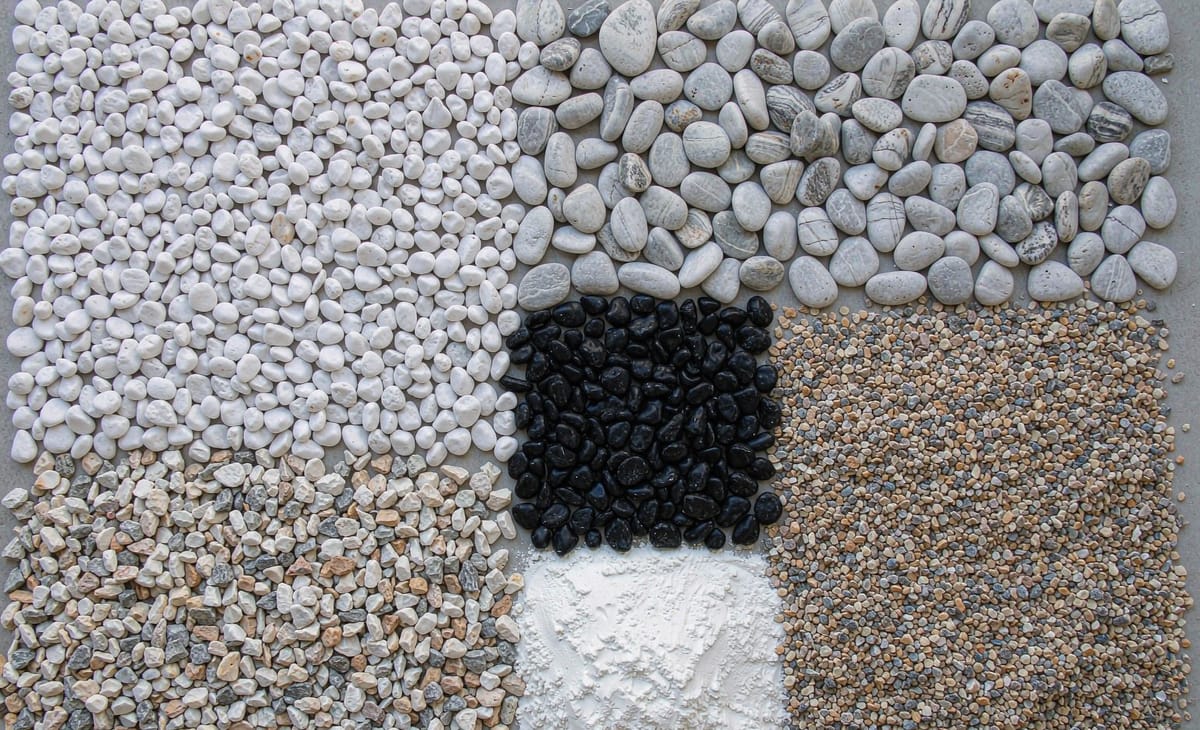
Garden landscaping brings together every stone category: ground cover for beds and borders, gravel for paths, …
SWME TRADE · Blog
Garden gravel for sale is best bought direct from a washing and processing plant or an export supplier rather than a retail bag aisle: specify the grade (6–10, 10–20 or 20–40 mm), demand a washed product with a stated fines limit and moisture basis, and order by the 20 ft container (24–27 t) — the normal minimum and the cheapest per tonne.
Published · By Gardenstone Editorial Team · Educational article from the SWME TRADE team
Garden gravel for sale is best bought direct from a washing and processing plant or an export supplier rather than a retail bag aisle. Specify the grade (6–10, 10–20 or 20–40 mm), demand a washed product with a stated fines limit and moisture basis, and order by the 20 ft container (24–27 t) — the normal minimum and the cheapest per tonne.
Read 'garden gravel for sale' as a specification, not a single SKU. A credible listing names the rock family (granite, quartz or basalt), the grade band, the wash quality and the moisture basis before price is even discussed. Set those four and a container of graded gravel will cover a long run of beds and paths that ages as one consistent surface instead of three neighbours that drift apart.
Two very different things hide behind the same phrase. A garden-centre bag of 20–25 kg is a retail convenience: you pay for the bag, the print, the pallet and the handling, and you receive around 0.015 m³ of stone. A bulk 'for sale' listing from a processor is a specification and a container, priced per tonne, where ocean freight and local haulage usually take 60–80% of the landed cost.
For a landscaper, contractor or importer the second is the only number that scales. Decide early whether you need under a tonne (bags) or a project volume (bulk), because the buying route, the documents and the price per covered square metre are completely different. A single pallet of bags is also typically two to four times the per-tonne cost of the same grade in a jumbo bag.
Garden gravel is graded by top size. A 6–10 mm chip is the fine topdressing around alpines, succulents and tight plantings; 10–20 mm is the general-purpose bed and pathway grade; 20–40 mm is the coarser border, drainage and dry-river-bed grade. Stay inert — granite, quartz or basalt — and avoid carbonate rock near acid-loving plants (the vinegar-drop test fizzes on limestone or marble).
Coverage is bulk density times depth: graded gravel runs about 1.5–1.7 tonnes per cubic metre, so at a 20 mm depth one tonne covers roughly 30–34 kg per m² and about 16–20 m² per tonne; at 50 mm depth one tonne covers about 12–15 m². A 20 ft container holds 24–27 tonnes — weight-limited, not volume-limited — so it fills on weight long before it is full. See the [garden gravel](https://www.gardenstoneexport.com/products/garden-gravel/) range for current grades and blend options.
A manufacturer here means a washing and processing plant that owns the screens, the wash deck and the stockpiles; a trader resells product they never touched. Buying from the plant usually wins on three points: a tighter, documented grade (oversize and undersize tolerances plus a stated fines limit), a consistent supply you can re-order against a sealed sample, and a lower price because there is no middle margin.
The trade-off is service: a plant sells by the container and expects a specification, not a vague 'some gravel please'. If you need mixed SKUs, private-label bags or consolidated logistics, a trader can earn their margin — but require the same evidence (Certificate of Analysis, loading photos, a wet sealed sample) and treat any seller who cannot show it as a pass. For repeated contract supply, the manufacturer relationship is the more durable one.
Four documents separate a real supplier from a listing. Ask for a Certificate of Analysis (grade, oversize/undersize, fines, moisture basis), dated loading photos next to a scale reference, a wet sealed sample taken at loading, and a pro-forma that names the Incoterm and the port. No sample, no CoA and no Incoterm is the single biggest red flag in this trade.
Confirm inertness for planting or water use with the vinegar-drop test, and confirm the wash quality yourself: a properly washed product has fines near 1% and a clean, even look when wet, which is exactly how the stone is judged in daylight. Specify all of this on the purchase order with a validity window of 30–60 days, because gravel quotes move with freight and fuel.
Convert area into tonnes before you ask for a price. At 1.5–1.7 t/m³ and your chosen depth, budget 30–34 kg per m² at 20 mm or 50–80 kg per m² at 40 mm, add 5–10% for edges and settlement, then divide by the 24–27 t a container carries. On dense stone, ocean freight and local haulage usually take 60–80% of the landed cost, so the Incoterm moves the number more than a small grade difference.
Price per tonne therefore tells you little on its own; price per covered square metre installed is the honest comparison. Pin the variables that make two quotes comparable — rock type, grade bands with tolerances, fines limit, moisture basis, Incoterm and port, and a 30–60 day validity — and the apparent 'cheap' bag or 'cheap' FOB quote will often invert once freight is added.
Buy on the container, not the bag, for any project volume: MOQ is normally one 20 ft container (24–27 t), and mixing up to three grades in that one container costs no extra ocean freight. Require a wet sealed sample at loading and loading photos, hold the edge with a rigid restraint on site, and keep the sample so every replenishment matches the original within an agreed tolerance.
Lock the price with a written validity of 30–60 days and, where possible, a freight cap tied to a shipping index, because the single largest cost is the voyage, not the stone. Our [garden gravel](https://www.gardenstoneexport.com/products/garden-gravel/) catalogue lists current grades and blend options so you can spec the bands on one order and re-order against a sealed sample for years.
Buy direct from a washing and processing plant or an export supplier rather than a retail aisle: specify the grade (6–10, 10–20 or 20–40 mm), demand a washed product with a stated fines limit and moisture basis, and order by the 20 ft container (24–27 t), which is the normal MOQ and the cheapest per tonne.
There is no single price: the rock type, the grade band, the wash quality, the moisture basis and — above all — the Incoterm and freight usually set 60–80% of the landed cost. Compare quotes per covered square metre installed, not per tonne, with identical grade, fines and moisture specs and a 30–60 day validity window.
For repeated or contract supply, the processing plant usually wins: tighter documented grades, consistent re-orderable stock against a sealed sample, and no middle margin. A trader can help with mixed SKUs, private-label bags or consolidated logistics, but require the same CoA, loading photos and wet sealed sample before you commit.
About 24–27 tonnes. Dense gravel is weight-limited rather than volume-limited, so the container fills on weight long before it is full; that is also why mixing two or three adjacent grades in one order costs no extra ocean freight.
“Trade Map provides comprehensive global trade data for over 230 economies, with monthly, quarterly and yearly updates using official reported data and mirror data techniques.”
ITC Trade Map, trademap.org — official page
Garden landscaping brings together every stone category: ground cover for beds and borders, gravel for paths, …
Pathways combine the functional and decorative sides of landscaping stone: the surface must stay stable underf…
Stone-topped flower beds replace mulch with a permanent surface: stones suppress weeds when laid over membrane…
Everflorae — Artificial Plants & Trees
From the same supplier group, Everflorae supplies UV-stable artificial trees, palms and green walls that pair with stone — one source for hotels, resorts, malls and Japanese gardens.
Send your product, specification and destination — our sales team will prepare a quotation.