 SWME TRADE
Flower Beds
Stone-topped flower beds replace mulch with a permanent surface: stones suppress weeds when laid over membrane…
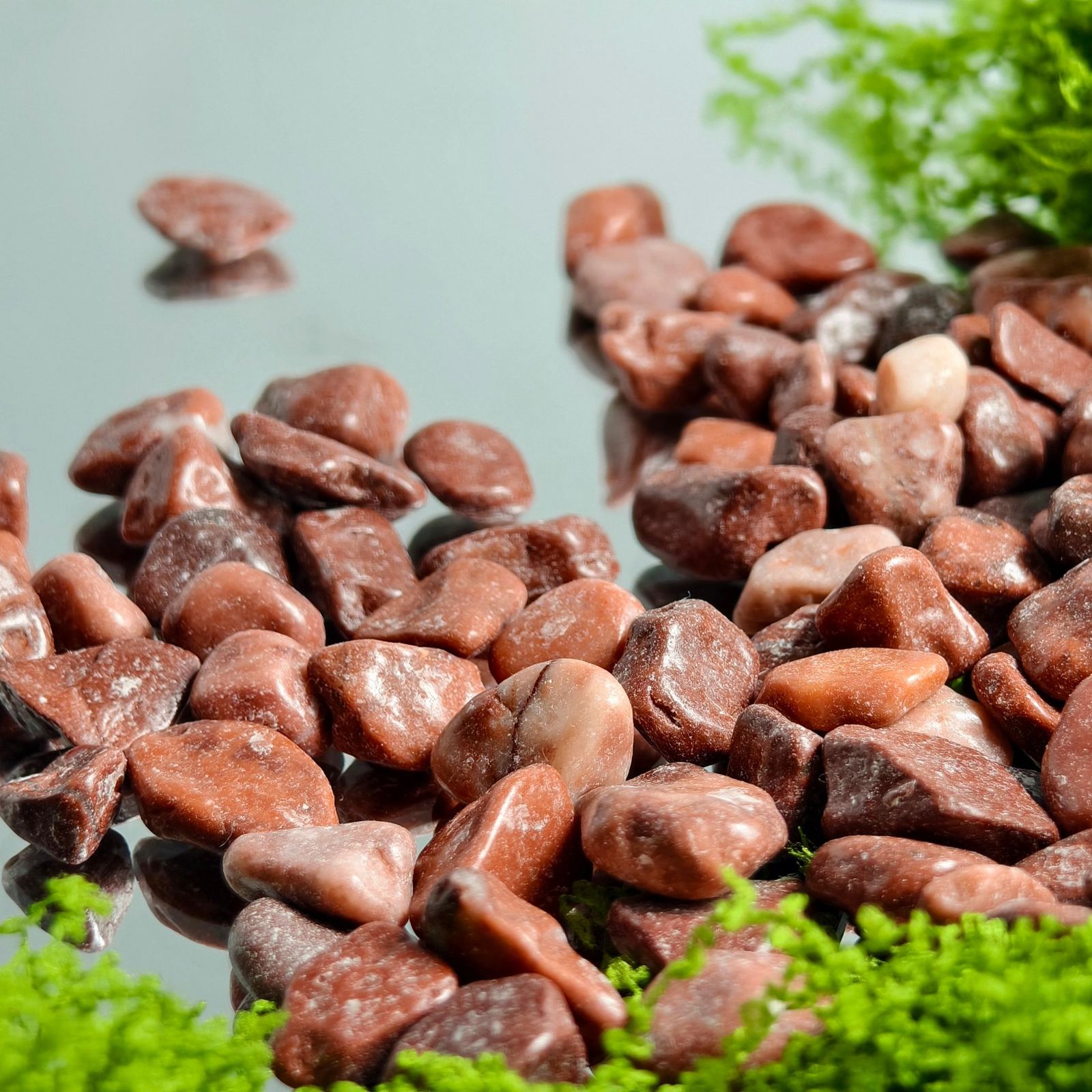
SWME TRADE · Blog
The best decorative gravel for flower beds is washed, inert, 6–20 mm stone laid 30–50 mm deep: about 60–68 kg per square metre at 40 mm, one tonne covering 15–17 m², and a full 20 ft container (24–27 t) mulching roughly 380–450 m² of bed.
Published · By Gardenstone Editorial Team · Educational article from the SWME TRADE team
The best decorative gravel for flower beds is washed, chemically inert stone graded 6–20 mm and laid 30–50 mm deep. At the standard 40 mm depth that is roughly 60–68 kg per square metre, so one tonne covers 15–17 m² and a full 20 ft container of 24–27 tonnes mulches about 380–450 m² of planted bed.
Read the phrase as a specification with three non-negotiables before colour: cleanliness (washed, fines near 1%), chemistry (inert granite, quartz or basalt) and grading (a tight 6–10 mm or 10–20 mm band, not crusher run). Colour and shape come after, because a gravel mulch that crusts with fines or leaches lime into the root zone fails no matter how good it looks in the supplier photo.
Use a 6–10 mm band for beds viewed up close and around shallow-rooted perennials, and a 10–20 mm band for larger beds, borders and commercial plantings where the stone must read from a distance. Depth follows the band: lay the 6–10 mm grade 25–40 mm deep and the 10–20 mm grade 40–50 mm deep, so the layer is thick enough to block light to weed seedlings without burying plant crowns.
Keep a 50–75 mm bare collar of soil around every stem and crown. Gravel piled against a stem holds moisture against the bark and invites rot, which is the most common planting failure on freshly graveled beds — the stone itself is never the problem, the detailing at the plant is.
Inert rock — granite, quartz, basalt — is safe around every planting, including acid-loving species such as azalea, camellia and heather. Carbonate stone (limestone, marble) slowly leaches calcium and nudges the root zone alkaline over a season or two. One field test settles it: a drop of vinegar on the stone fizzing means carbonate, and means keep it away from acid-loving beds.
Ask for washed product with a fines limit. Unwashed crusher dust settles between the stones, and the first serious rain turns it into a grey crust that seals the surface, sheds water into the path instead of the root zone and makes the whole bed look tired within a year. Specify fines near 1% and that failure mode disappears at source.
Gravel mulch arithmetic runs at a bulk density of 1.5–1.7 tonnes per cubic metre. At 30 mm depth budget 45–51 kg per square metre (one tonne covers 19–22 m²), at 40 mm budget 60–68 kg per square metre (one tonne covers 15–17 m²), and at 50 mm budget 75–85 kg per square metre (one tonne covers 12–13 m²). Add 5–10% for edges, curves and first-season settlement.
Containers close the order. Dense stone fills a 20 ft container on weight long before it looks full: 24–27 tonnes at the 40 mm depth mulches roughly 380–450 m² of bed. Because the load is weight-limited, mixing two adjacent bands — say 6–10 mm for the display beds and 10–20 mm for the borders — costs no extra ocean freight and is the normal way to fill the last tonnes of the order.
Bark is cheap per bag and expensive per decade. Organic mulch needs topping up once or twice a year, fades to grey within a season, washes off slopes in heavy rain and — worst of all on borders — draws nitrogen out of the topsoil as it decomposes. Decorative gravel is laid once, holds its colour for years, sheds splash-back onto foliage during downpours and keeps the root zone cooler and better drained in summer.
Over a ten-year horizon the stone usually wins on cost even at wholesale import prices, because the comparison is one delivered container against a decade of repeated bark purchases and labour. The honest caveats: gravel costs more up front, needs a permeable weed membrane underneath, and annual maintenance is a 5–10% top-up rather than a full re-mulch.
Wholesale decorative gravel for sale is quoted per tonne, FOB or CIF a named port, with an MOQ of one 20 ft container (24–27 tonnes). Make quotes comparable by pinning the variables that move the number: rock type and colour, the exact grain-size band with oversize and undersize tolerances, a fines limit for washed product, moisture on a dried-weight basis, bag or jumbo-bag packing, and a 30–60 day quote validity.
Judging stone from a dry photo is how importers get surprised. Require a wet sealed sample taken at loading and photographed beside a scale reference, plus loading photos of the actual container — gravel is sold wet in daylight. Our decorative gravel range lists the current grades, bands and packing options so the 6–10 mm and 10–20 mm bands can be specified on a single purchase order.
Two installation details carry the bed for a decade: a permeable weed membrane under the stone, and a rigid restraint (steel edging, set stone or timber) holding both borders so the gravel cannot creep into the lawn. Resin-binding a flower-bed mulch is unnecessary and usually regretted — a bed should be raked, weeded and topped up, not sealed shut.
Annual care is light: rinse silt off after heavy rain, re-level footprints and dips, hand-weed the few seedlings that root in accumulated dust, and order the 5–10% top-up against the wet sealed sample kept from the original loading so the refreshed stone matches the existing bed. Replenishing from a different quarry without a sample reference is how a bed ends up visibly two-tone.
Use a 6–10 mm band for beds seen up close and around perennials, and a 10–20 mm band for larger borders and commercial plantings. Both sizes suppress weeds and shed splash-back; anything above 20 mm reads as rubble in a planted bed and anything below 6 mm crusts with fines.
Lay 6–10 mm gravel 25–40 mm deep and 10–20 mm gravel 40–50 mm deep. At the typical 40 mm depth that is 60–68 kg per square metre, enough to block light to weed seedlings without burying plant crowns; keep a 50–75 mm bare collar around each stem.
Yes, provided the stone is washed and chemically inert, such as granite, quartz or basalt. Avoid carbonate stone like limestone near acid-loving plants because it slowly raises root-zone pH. A vinegar drop that fizzes on the stone identifies carbonate rock on the spot.
At a 40 mm depth budget 60–68 kg per square metre, so 100 m² needs about 6.0–6.8 tonnes, or roughly a quarter of a 20 ft container. Add 5–10% for edges and settlement, and remember a full 20 ft container of 24–27 tonnes covers about 380–450 m².
“Over 13,000 ASTM standards operate globally. Defined and set by us, they improve the lives of millions every day. Combined with our innovative business services, they enhance performance and help everyone have confidence in the things they buy and use.”
ASTM International, “About ASTM Overview” — official page
Stone-topped flower beds replace mulch with a permanent surface: stones suppress weeds when laid over membrane…
Garden landscaping brings together every stone category: ground cover for beds and borders, gravel for paths, …
Commercial landscaping is the volume end of the stone trade: office parks, public spaces, housing developments…
Everflorae — Artificial Plants & Trees
From the same supplier group, Everflorae supplies UV-stable artificial trees, palms and green walls that pair with stone — one source for hotels, resorts, malls and Japanese gardens.
Send your product, specification and destination — our sales team will prepare a quotation.