 SWME TRADE
Zen Garden
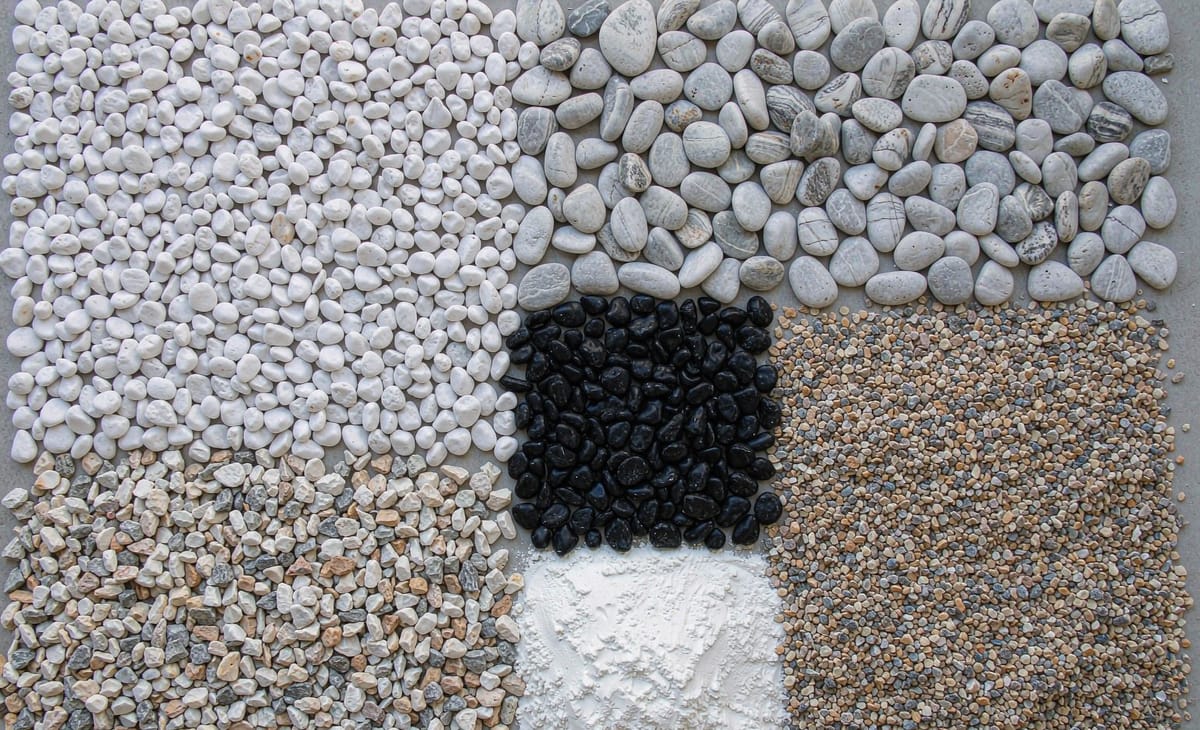
Zen gardens reduce the landscape to three materials: raked sand or fine gravel for water and openness, selecte…
SWME TRADE · Blog
Black small pebbles (3–12 mm graded) are bought in bulk as 25 kg woven bags or one-tonne FIBCs, with a standard 20 ft container loading about 24–27 tonnes. Wholesale FOB pricing depends on grade, wash quality and volume, and a first order normally starts at 10–20 tonnes per size band. Always confirm the stone is through-coloured basalt, not a coated aggregate, before you quote or commit.
Published · By Gardenstone Editorial Team · Educational article from the SWME TRADE team
Black small pebbles (3–12 mm graded) are bought in bulk as 25 kg woven bags or one-tonne FIBCs, with a standard 20 ft container loading about 24–27 tonnes. Wholesale FOB pricing depends on grade, wash quality and order volume rather than a fixed rate, and a first order normally starts at 10–20 tonnes per size band. Confirm the stone is through-coloured basalt, not a coated aggregate, before you quote or commit.
The channel works the same way as for larger pebble grades. At the bottom sits the basalt deposit; above it, processors that crush, wash and screen the rock into fine bands; above them, exporters that bag, palletise, document and load; and at the top, importers and garden-centre wholesalers that break containers down for local resale. For small grades the bagging and screening steps matter more than for coarse stone, because fine material needs tighter sieving and more careful dust removal to look clean on arrival.
In the trade, 'small' black pebbles means a graded band rather than a single dimension, and the band you choose decides where the stone can be used. The three workhorse grades are 3–5 mm, 5–8 mm and 8–12 mm. The 3–5 mm band reads as a fine, almost sand-like scatter and suits top dressing over pots, filling joints between pavers, and aquarium or terrarium substrate. The 5–8 mm band is the general all-rounder for zen and Japanese garden surfaces and water-feature bases. The 8–12 mm band carries a little more visual weight and works where the stone needs to stay put under light foot traffic.
The trap is the word 'small' itself, which is not a specification. Two suppliers can both ship 'small black pebbles' in bands that barely overlap. Write the millimetre range into the order, with a within-band percentage and an explicit oversize cap, so a 5–8 mm band cannot be quietly padded with 12 mm stone. On fine black grades, a few oversize pieces are far more visible than the same proportion would be in a 20–40 mm landscape grade, because there is nothing larger around them to blend into.
There is no single price per tonne, because fine black pebbles are built from the same six factors as coarser stone but weighted differently. Rock source and processing come first: washed, screened basalt is a different product from a coated aggregate, and washing fine material costs more per tonne than washing coarse, because there is more surface area to clean and more fines to remove. Size band is second — fine decorative grades need more screening passes and more bagging labour per tonne than coarse ones, so they usually price above a 20–40 mm band of the same rock.
Surface finish, packing format, order volume and delivery term close the list. Natural matte black costs less than tumbled or polished; bags cost more per tonne than jumbo bags, which cost more than loose lined-container loading; and freight on dense basalt is sold by weight, so it is always a real line item. Rather than chase a per-tonne number, compare suppliers on cost per square metre at your specified depth and packing — two quotes at the same per-tonne figure can differ by a wide margin once band, wash, packing and freight are normalised.
One price signal is worth watching: a fine black grade quoted far below comparable coarse black stone should prompt a question about colour source. Through-coloured basalt and pigment-coated aggregate look alike dry in a photo but behave nothing alike once wet or handled, so the low quote may be coating rather than rock. Establish the colour source before price is discussed.
Quantity is depth arithmetic, and small grades pack tighter than coarse ones. At a bulk density of roughly 1.6 tonnes per cubic metre for 5–8 mm stone, one tonne covers about 22 m² at 25 mm depth, roughly 11 m² at 50 mm, and around 7 m² at 75 mm. Add 5–10% for settlement and edge loss. For a 3–5 mm top-dressing layer you are normally working in shallow depths of 10–20 mm, so the tonnage per square metre drops sharply and a little material goes a long way.
A standard 20 ft container carries about 24–27 tonnes of bagged or loose small black pebbles, depending on packing density and whether the load is loose-lined or palletised. Palletised 25 kg bags are easier to handle and resell but use more of the container's volume for the pallets themselves, so a palletised box lands a little lighter than a loose one. A 40 ft box roughly doubles that, with the same density ceiling. Plan the container around two or three adjacent bands rather than one grade, so a first order tells you which size the project actually consumes.
Fine black pebbles ship in three formats, and the right one depends on the receiving yard. The 25 kg woven bag is the retail- and garden-centre-friendly unit; it is easy to merchandise and easy for end customers to carry, but it carries the highest bagging and material cost per tonne. The one-tonne FIBC is the project and municipal favourite: it slashes bagging labour and packaging per tonne, but it needs a forklift or telehandler on arrival. Loose lined-container loading is cheapest per tonne and least flexible once it lands, suited to buyers who will rebag or bulk-handle at their own site.
Dust is the packaging risk specific to fine grades. Under-washed small pebbles arrive with a pale film that reads as a grey haze across a black bed, so specify washed material with a stated fines limit and pack it so bags are not torn in transit. For export, polypropylene bags with an inner liner keep moisture out, and palletised loads should be stretch-wrapped and banded so a long sea voyage does not shuffle the stack. Mark every pallet and bag with the band, the lot number and the production date — on black stone, traceability is what lets you reject a drift at container two instead of on site.
Yes, within their grades. A 3–5 mm or 5–8 mm washed black basalt makes an excellent aquarium and terrarium substrate and a clean water-feature base, but only if it is sold as inert, thoroughly washed, and free of coating or dye — pigment or resin on a decorative grade is not something you want leaching into water. Ask the supplier for an inertness statement and a wash certificate for any grade going near fish or drinking-water features, and rinse on arrival as a routine step.
In zen and Japanese gardens, fine black basalt is the classic quiet surface: it holds rake lines, reads as a calm dark ground, and hides soil better than pale grades. For paver joints and between stepping stones, a 3–5 mm band fills gaps cleanly and stays put better than coarser loose stone. In all three uses the same rule applies — wet the stone before you judge it, because black shifts more between dry and wet than any other colour, and a dry sample is a poor predictor of the finished bed.
Write the order against numbers, not adjectives. A workable specification for small black pebbles covers seven lines: the nominal band in millimetres with a within-band percentage and an explicit oversize and undersize cap; washed, with a stated fines or dust limit; a colour-source statement naming through-coloured basalt rather than a coating; colour held as a sealed reference sample compared wet, with a maximum share of off-reference stones counted in random scoops; the packing format for each band; the quantity per band; and the delivery term, stated as FOB, CFR or delivered so the price basis is unambiguous.
Before shipment, keep the inspection short and repeatable: draw scoops from different pallets and compare them wet against the sealed reference; run a sieve check on material taken from the production line rather than a display pile; verify bag weights against the packing list; and photograph the loaded container with the shipment reference visible. Two clauses protect everything after that — lot retention, so a drift surfaces at container two instead of on site, and a documented breakage allowance. On fine black stone, the sealed wet sample held by both parties is the standard every future container gets measured against.
In the trade 'small' means a graded band, not a single size. The three common grades are 3–5 mm, 5–8 mm and 8–12 mm. The 3–5 mm band suits pot top dressing, paver joints and aquarium substrate; 5–8 mm is the all-rounder for zen and Japanese garden surfaces and water-feature bases; 8–12 mm carries more visual weight for light-traffic areas. Always write the millimetre range into the order with an oversize cap.
There is no single per-tonne figure. Fine black pebbles are priced from six factors: rock source and processing, whether the stone is washed and screened, the size band, the surface finish, the packing format, and the delivery term. Fine grades cost more per tonne than coarse ones because they need more screening and bagging labour, and bags cost more per tonne than jumbo bags or loose loading. Compare suppliers on cost per square metre at your specified depth rather than on unit price.
A standard 20 ft container carries about 24–27 tonnes of bagged or loose small black pebbles, depending on packing density and whether the load is loose-lined or palletised. Palletised 25 kg bags are easier to handle but use more volume for the pallets, so a palletised box lands slightly lighter than a loose one. A 40 ft box roughly doubles that capacity at the same density ceiling.
A 3–5 mm or 5–8 mm washed black basalt is a good aquarium and water-feature substrate, but only if it is sold as inert, thoroughly washed, and free of coating or dye. Pigment or resin on a decorative grade should not go near fish or drinking water. Ask the supplier for an inertness statement and a wash certificate for any grade used in aquariums or water features, and rinse the stone on arrival as a routine step.
“Trade Map provides comprehensive global trade data for over 230 economies, with monthly, quarterly and yearly updates using official reported data and mirror data techniques.”
ITC Trade Map, trademap.org — official page
Zen gardens reduce the landscape to three materials: raked sand or fine gravel for water and openness, selecte…
Water features are the most natural fit for river materials: water-worn pebbles and rocks around ponds, stream…
Japanese garden design uses stone as its structural vocabulary: larger stones placed as islands and mountains,…
Pathways combine the functional and decorative sides of landscaping stone: the surface must stay stable underf…
Everflorae — Artificial Plants & Trees
From the same supplier group, Everflorae supplies UV-stable artificial trees, palms and green walls that pair with stone — one source for hotels, resorts, malls and Japanese gardens.
Send your product, specification and destination — our sales team will prepare a quotation.