 SWME TRADE
 Garden Landscaping
Garden landscaping brings together every stone category: ground cover for beds and borders, gravel for paths, …
SWME TRADE · Blog
Pebbles, gravel and sand are three different businesses inside one stone import. This guide compares origin, processing, coverage math and price positioning for each — and shows wholesalers and landscape contractors how to combine all three into a product mix that maximises container utilisation and shelf turnover.
Published 2026-09-26 · Educational article from the SWME TRADE team
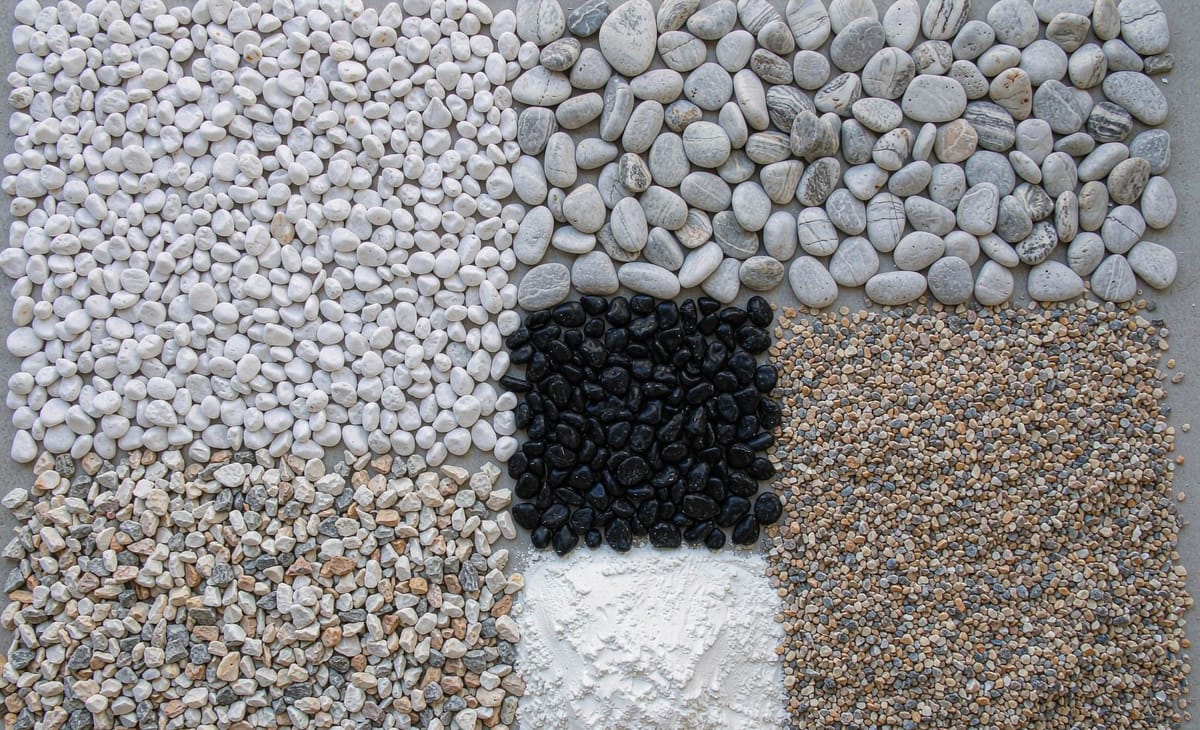
Importers new to the category often treat 'decorative stone' as one product line. In practice, pebbles, gravel and sand come from different sources, need different processing, ship at different densities and sell to partly different customers. Pebbles are natural river or beach stones, tumbled smooth by water and then washed, sieved into size grades and sorted by colour; the value is in the appearance, so labour goes into selection. Gravel and crushed stone are quarried rock — mechanically broken, screened and sometimes washed — where the value is in consistency of grading and the low cost per tonne. Sand is the finest fraction, produced by crushing or by natural deposition, and it sells on cleanliness and colour rather than on size.
The distinction matters commercially because each occupies a different shelf position. Pebbles are the premium decorative line that end customers pick up by the bag and photograph for social media; gravel is the volume line that fills driveways, drainage layers and large areas at the lowest cost per square metre; sand is the practical companion product used under pavers, in joints and in play areas. A distributor who stocks all three covers the whole project from sub-base to surface — and every additional line on the same container lowers your blended freight cost per kilogram.
Natural tumbled pebbles — white, black, mixed colour, polished or unpolished — command the highest price per tonne in the category because so much manual work sits behind each tonne: sorting by colour, removing flat or broken stones, washing off silt, and grading into tight size bands such as 20–30 mm or 30–50 mm. For a wholesaler, pebbles are the margin line: 20 kg bags of white pebbles retail at multiples of the equivalent weight of crushed gravel, and the same customer who buys one bag for a border often returns for more once the look is established.
The buying considerations are colour consistency, size-band accuracy and low dust content — which is exactly why the sample and pre-shipment inspection practices we cover elsewhere in this blog matter most at the pebble end of the range. Sourcing from a supplier who controls washing and hand-sorting in-house protects the appearance that justifies the premium price.
Crushed and quarried gravel — including white gravel and other decorative crushed stone — plays a different role: it wins on coverage. Because it is angular and packs tightly, and because the production cost per tonne is far lower than hand-sorted pebbles, gravel is the material contractors specify for large areas, French drains, driveway toppings and weed-suppressing mulch layers over membrane. A landscape contractor estimating a 500 m² commercial job will almost always convert the specification to gravel where the design allows, purely on cost per square metre.
For the importer, gravel's lower unit price is compensated by straightforward processing and forgiving tolerances. The checks that matter are grading consistency (does the 10–20 mm load actually sit in that band), wash quality, and colour stability across repeat shipments — a red gravel that shifts shade between containers will generate complaints even though every technical parameter is 'within spec'.
Sand looks like the boring line, but it completes the basket and carries its own economics. Decorative white sand sells into golf-path, playground, Zen-garden and terrarium applications; construction-grade sand sells under pavers and into jointing and rendering mixes. Buyers who add sand to a stone container typically find it is one of the easiest lines to move: it is light relative to bag count, it rarely faces colour disputes if it is clean, and it converts retail bag sales at garden centres because every pebble or gravel project consumes some sand at installation.
The specification points are simple but strict: wash quality (silt and clay content — a muddy sand will be rejected on site), gradation (fine vs coarse, and whether it is a natural rounded sand or a crushed angular sand), and colour. Natural white sand commands a premium; crushed limestone sand competes mostly on price. Confirm which one you are pricing before comparing supplier quotations.
Distributors get pricing questions wrong because the three materials have different bulk densities and coverage behaviour. As working figures: a rounded pebble laid at 50 mm covers roughly 10–12 m² per tonne; an angular gravel at the same depth covers nearer 12–14 m² because it interlocks; sand at a 25–30 mm bedding layer runs around 18–20 m² per tonne. These figures vary with the exact grading and moisture, so publish them to customers as indicative ranges — but always use the same assumptions when comparing supplier quotations, or the cheapest price per tonne will quietly be the most expensive price per square metre covered.
Container loading adds a second layer to the math. Dense materials like sand and fine gravel maximise weight before they maximise volume, while lighter, larger pebbles can cube out a 20ft container before reaching the weight limit. When you plan a mixed container, ask the supplier to propose the loading split — an experienced exporter will balance a container of pebbles and gravel so both weight and volume are used, and will give you the per-line tonnages for your customs documents.
Across the garden-distribution trade, a common pattern is to anchor the range on two or three pebble colours (white, black and one mixed or red option), carry one or two crushed gravels in the most popular local colour, and add a single clean sand as the companion SKU. That is enough to cover 80% of retail and contractor demand without tying working capital to slow shades. Depth of stock should follow turnover: pebble bags sell steadily year-round in most climates, while gravel moves in project waves that follow the construction season in your market.
For a first container, the practical advice is to weight the mix towards what your sales channel can move fastest and let the container do double duty: pebble bags for the garden-centre shelf, gravel in one-tonne jumbo bags for contractor customers, and sand in 20–25 kg bags as the add-on at the till. Discuss the split with your supplier before booking — packaging format, palletising and the weight limits covered in our FOB and loading guides all interact with how you split the tonnage between lines.
Landscaping pebbles are natural river or beach stones tumbled smooth by water and then washed, graded into size bands and hand-sorted by colour, which makes them the premium decorative option with the highest price per tonne. Gravel is quarried rock that has been mechanically crushed and screened, giving it angular shapes, tighter packing and a much lower cost per tonne — better suited to large areas, driveways and drainage layers.
As indicative ranges, one tonne of rounded pebbles laid at 50 mm depth covers roughly 10–12 m², angular gravel covers about 12–14 m² because it interlocks, and sand used as a 25–30 mm bedding layer covers around 18–20 m². Exact figures vary with grading and moisture, so use the same depth assumptions when comparing supplier quotations.
Yes — mixing product lines on one container lowers your blended freight cost per kilogram and gives customers a complete range from bedding sand to surface pebbles. Ask your supplier to propose the loading split: an experienced exporter will balance pebbles, gravel and sand so the container uses both its weight and volume limits, and will issue per-line tonnages for the packing list and customs documents.
Most distributors start with two or three pebble colours (typically white, black and one mixed shade), one or two crushed gravels in the most popular local colour, and a single clean decorative sand as the companion SKU. This covers the majority of retail and contractor demand while keeping working capital concentrated in the fastest-turning, highest-margin lines.
Garden landscaping brings together every stone category: ground cover for beds and borders, gravel for paths, …
Pathways combine the functional and decorative sides of landscaping stone: the surface must stay stable underf…
Commercial landscaping is the volume end of the stone trade: office parks, public spaces, housing developments…
Send your product, specification and destination — our sales team will prepare a quotation.