 SWME TRADE
Garden Landscaping
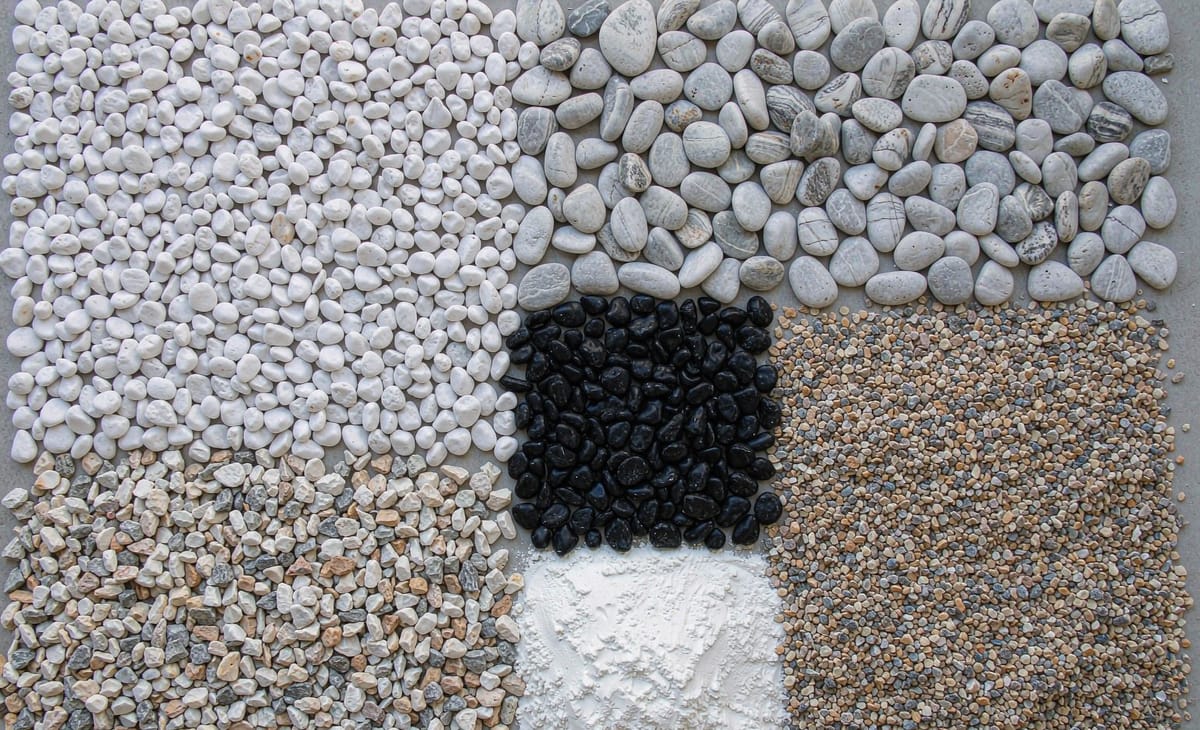
Garden landscaping brings together every stone category: ground cover for beds and borders, gravel for paths, …
SWME TRADE · Blog
Buying landscape stone wholesale means specifying the stone by type, dimension and finish before price, then budgeting freight as the largest share of the delivered cost. A 20 ft container of dense cut stone holds about 24–27 tonnes, flagstone at 30 mm covers roughly 12–15 square metres per tonne, and boulders are sold by weight and fill the container by volume. Order from one production lot to keep the look consistent across the project.
Published · By Gardenstone Editorial Team · Educational article from the SWME TRADE team
Buying landscape stone wholesale means specifying the stone by type, dimension and finish before price, then budgeting freight as the largest share of the delivered cost. A 20 ft container of dense cut stone holds about 24–27 tonnes, flagstone at 30 mm covers roughly 12–15 square metres per tonne, and boulders are sold by weight and fill the container by volume. Order from one production lot to keep the look consistent across the project.
Treat 'landscape stone' as a category, not a product. The term covers flagstone and steppers, wall and ledge stone, boulders and feature rocks, and cut curbing — each with its own density, packing and price logic. A wholesale enquiry that names only 'landscape stone' will return five different products at five different figures. The rest of this article walks through how to name the stone you actually want, how to convert it into coverage you can budget, what moves the per-tonne price, and how to vet a landscape stone supplier so the second container matches the first.
Start by fixing the rock type, because weathering behaviour is set at the quarry. Granite and basalt are dense and frost-proof, suit outdoor steps, walls and boulders that take foot traffic and salt. Slate and quartzite split into crisp flat planes ideal for flagstone but can be slippery when wet and polished. Limestone and sandstone read warm and quarry-cut but are softer and can spall in hard freeze-thaw, so they suit milder climates or vertical work rather than paving that ices. A landscape stone wholesale order lives or dies on this choice, long before price is discussed.
Then fix the form. Flagstone and stepping stones are flat pieces sold by area or weight with a thickness tolerance you must state. Wall and ledge stone are irregular and sold by weight for dry-stack or veneer. Boulders and feature rocks are sold individually or by the tonne and fill a container by volume, not weight, so a 20 ft box may top out at 18–22 tonnes of big rock rather than 24–27. Put the form and rock type on the enquiry line so every quotation prices the same object.
Specification is what keeps a wholesale programme from drifting between shipments. For flagstone and steppers, state the length and width range, the thickness with a plus-or-minus tolerance (commonly ±3–5 mm on a 20–40 mm stone), the finish (natural cleft, sawn, or thermal/flame-textured for slip resistance), and the colour band with a sealed reference sample. For wall stone, state the face size range and whether it is for dry-stack or mortar. For boulders, state the diameter range and an approximate count or weight per size class.
Hold a retained sealed sample from the first approved lot and reference its lot number on every repeat order. Stone colour and thickness vary naturally between quarry faces, so the reference — ideally a wet sample, since colour shifts as stone dries — is the only thing that lets a landscape stone supplier reproduce the look months later. Buyers who skip this step are the ones who receive 'the same stone' that no longer matches the installed bed.
There is no single landscape stone price per tonne, because the figure is a stack of separate lines: quarry/processing, cutting and finishing, washing or tumbling where used, inland haulage, port and documentation, and ocean freight to your named port. On a heavy, low-value mineral, the freight line is usually the largest share of the delivered cost, which is why the same stone lands at very different totals at two ports and why a per-tonne number that hides freight hides the part that actually varies.
Three further forces move the price between quotation and delivery. Finish is the first: a sawn and thermal-finished flagstone costs markedly more than a natural-cleft offcut of the same rock. Density and packing are the second: dense cut stone ships near the 24–27 tonne container ceiling, while bulky boulders ship lighter but take more cube. Season and freight rates are the third — construction peaks, a rainy season that slows cutting, and vessel-rate swings all land in the final figure. Quote validity of 30–60 days exists for exactly this reason.
Coverage is where wholesale stone is easiest to mis-budget, because the same tonne means very different areas by form. Flat flagstone at 30 mm covers roughly 12–15 square metres per tonne; at 40 mm it drops to about 9–11 square metres, and at 20 mm it rises toward 18–20. Stepping stones are counted per piece against a spacing plan rather than per tonne. Boulders and feature rock are budgeted by weight and by the number of pieces in each size class, since they are placed individually rather than laid as a bed.
At container scale, plan with the density in mind. Dense cut stone at about 1.6–1.8 tonnes per cubic metre fills a 20 ft container at roughly 24–27 tonnes; bulky boulders may reach only 18–22 tonnes before the cube is full. Add 5–10% for breakage, offcuts, edge build-up and later top-ups, and more where cutting waste is high. Convert every supplier quotation to cost per square metre at the thickness you specify, and the per-tonne numbers stop being comparable noise and become a budget you can defend.
The commercial floor for exported landscape stone is normally one 20 ft container, because consolidation and ocean freight only make sense above that volume; bagged or palletised cut stone may carry a separate per-pallet minimum. Because MOQ is counted per product line, ask for the minimum per stone type and finish, and ask whether the supplier will split one container across two or three forms — say flagstone plus a pallet of boulders — for a small handling premium. That mixed first order is exactly how a new buyer tests the market without committing 24–27 tonnes of one item.
Vet the supplier on evidence, not adjectives. Confirm they control a quarry or processing plant rather than only trading, ask for a certificate of analysis and loading photographs with lot references, and request a retained sealed reference sample held by both parties. A landscape stone supplier who welcomes a pre-shipment inspection — dimensional checks against your tolerance, thickness gauging, and a wipe-or-acid test to confirm rock type — is quoting a product; one who resists has told you what the shipment is before it sails.
Hold the price with a written validity window of 30–60 days and, on annual programmes, agree a base price with a stated adjustment cap tied to published freight indices rather than open-ended renegotiation. Book vessel space before the peak season, and order the full project quantity from one production lot so colour and thickness cannot drift between phases. Keep per-lot retention sacks so any later top-up can be matched to the sealed reference instead of guessed.
Close the quality loop with a documented pre-shipment inspection: verify piece counts or weights against the order, gauge thickness against the stated tolerance, and compare a random scoop or slab against the wet sealed reference in daylight. A landscape stone wholesale order locked this way is not just cheaper on average — it is predictable, and predictability is what lets a merchant quote retail and a contractor promise a finish with confidence.
Specify the stone by rock type, form, dimension and finish before asking for price, then budget freight as the largest share of the delivered cost. A 20 ft container of dense cut stone holds about 24–27 tonnes, flagstone at 30 mm covers roughly 12–15 square metres per tonne, and boulders are sold by weight and fill the container by volume. Order from one production lot and hold a sealed reference sample so repeat orders match.
The commercial floor is one 20 ft container, because consolidation and ocean freight only make sense above that volume; bagged or palletised cut stone may carry a separate per-pallet minimum. Ask for the MOQ per stone type and finish, and ask whether the supplier will split one container across two or three forms for a small handling premium, which lets a first-time buyer meet the landscape stone wholesale MOQ with a mixed test order.
Flat flagstone at 30 mm covers roughly 12–15 square metres per tonne, about 9–11 square metres at 40 mm, and toward 18–20 square metres at 20 mm; stepping stones are counted per piece against a spacing plan rather than per tonne. A 20 ft container of dense cut stone at about 1.6–1.8 tonnes per cubic metre holds roughly 24–27 tonnes, while bulky boulders may reach only 18–22 tonnes before the cube is full. Add 5–10% for breakage and top-ups.
Pin the same specification on both sides — rock type, form, dimensions with thickness tolerance, finish, and a sealed wet reference sample — then normalise every quotation to cost per square metre at your specified thickness, adjusting for freight and packing. Ask each supplier for a certificate of analysis, loading photographs with lot references, and a retained sample, and confirm rock type with a simple acid or wipe test. A supplier who welcomes pre-shipment inspection is quoting a product you can reproduce.
“Trade Map provides comprehensive global trade data for over 230 economies, with monthly, quarterly and yearly updates using official reported data and mirror data techniques.”
ITC Trade Map, trademap.org — official page
Garden landscaping brings together every stone category: ground cover for beds and borders, gravel for paths, …
Commercial landscaping is the volume end of the stone trade: office parks, public spaces, housing developments…
Pathways combine the functional and decorative sides of landscaping stone: the surface must stay stable underf…
Water features are the most natural fit for river materials: water-worn pebbles and rocks around ponds, stream…
Everflorae — Artificial Plants & Trees
From the same supplier group, Everflorae supplies UV-stable artificial trees, palms and green walls that pair with stone — one source for hotels, resorts, malls and Japanese gardens.
Send your product, specification and destination — our sales team will prepare a quotation.