 SWME TRADE
Pool Landscaping
Pool surroundings combine hard performance requirements with a resort aesthetic: stone around pools must toler…
SWME TRADE · Blog
Pool surrounds are the most demanding environment decorative pebbles ever face: barefoot traffic, chlorinated or salt water, heat and constant splashing. This guide explains which specifications matter when buying pool pebbles in bulk — size grading, dust content, rounded shapes, colour stability — and how pool builders and distributors size and pack orders that perform on site.
Published · By Gardenstone Editorial Team · Educational article from the SWME TRADE team
A garden border forgives imperfections; a pool deck does not. Around water, pebbles are walked on barefoot, splashed with chemically treated water every day, and heated by summer sun. Any crushed edge becomes a cut hazard, any residual quarry dust clouds the water or stains the pool shell, and any colour that fades or darkens under chlorine is visible to every guest. For a pool builder, the stone is part of a waterproofing-critical assembly — so rework is expensive and complaints arrive with photos attached.
For distributors, the same dynamics are an opportunity. Pool pebbles sell at the top of the decorative stone price range because the specification is stricter, and swimming-pool construction is a steady, project-driven market in every warm-climate region — from resort hotel refits in the Gulf to suburban pool season in Australia and the southern United States. Stocking a pool-grade pebble line, clearly graded and washed, gives a wholesaler a defensible premium SKU rather than another commodity pile.
Four parameters separate pool-grade pebbles from ordinary landscaping stock. First, shape: only natural river or beach pebbles that are fully rounded — never crushed or semi-crushed material — should be specified for any surface within reach of bare feet. Second, grading: pool borders and waterline bands typically use tight size bands such as 20–30 mm or 30–50 mm; loose bands that let 80 mm stones into a 20–50 mm order create uneven walking surfaces and visible seams in exposed aggregate work. Third, dust: residual fines and silt must be washed out to a very low level, because dust migrates into the water, clouds it, and can leave tide marks on pool plaster. Fourth, colour stability: the blend must hold in wet, chemically treated conditions, not just in a dry stockpile photo.
These are exactly the parameters that can be written into a purchase order and checked against a sealed sample — sieve test for grading, wash test for dust, and a wet-sample comparison for colour. A supplier who resists putting dust limits and grading tolerances in writing is telling you how their pool projects will end.
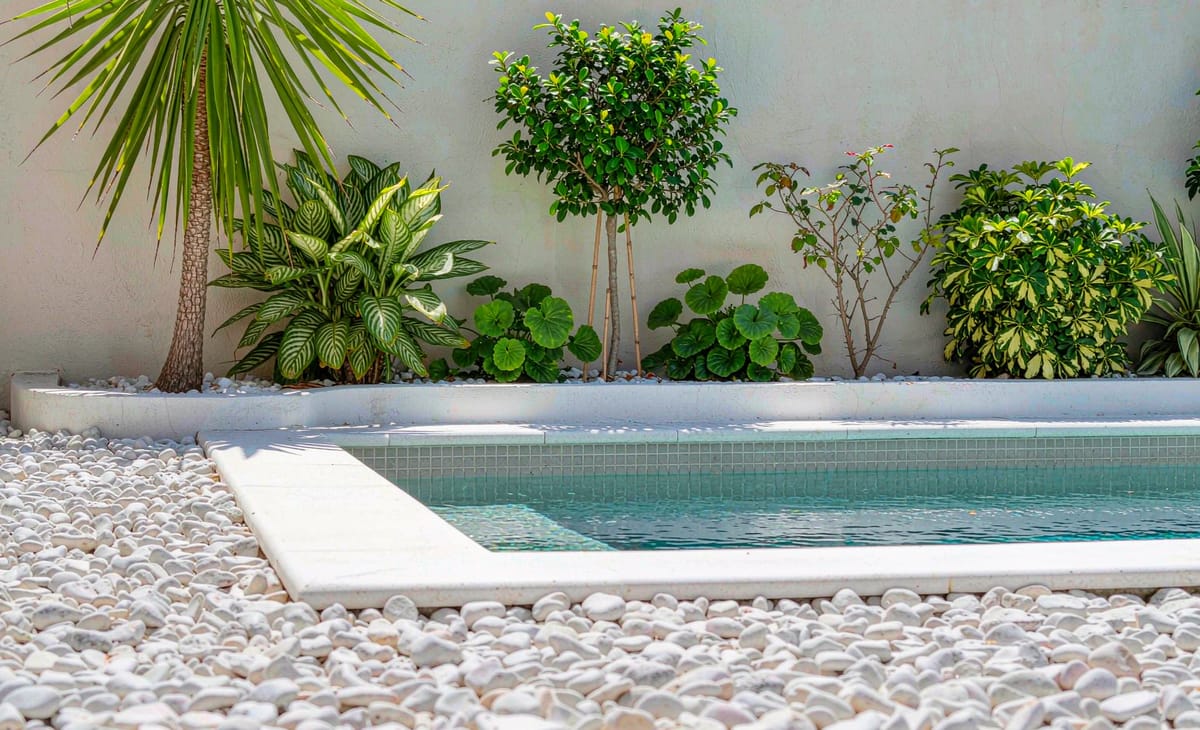
White pebbles are the classic resort look: they reflect heat, stay comfortable under bare feet in full sun, and make water read turquoise by contrast. The premium is justified by hand-sorting, but the practical note for buyers is that white shows dust and organic staining most, so the incoming wash quality matters more than for any other colour. Black pebbles create the contrasting bands and contemporary minimalist designs, often paired with white in borders; they absorb heat, so in very hot climates they belong in shade beds and waterline accents rather than open sun decks.
Mixed colour and green-toned pebbles serve naturalistic and lagoon-style pools, and polished pebbles are increasingly specified for waterline tiles-in-stone and feature areas — though for walking surfaces the preferred finish is usually unpolished, since polished faces can look slick when wet and lose their sheen under foot traffic. Advise your customers accordingly: the gloss sells in the bag, but the matte surface performs on the deck.
Contractors consistently underestimate pebble quantities, so distributors who can quote coverage win the sale. As working figures: pebbles laid at 50 mm depth cover roughly 10–12 m² per tonne. A typical residential pool surround of 80–120 m² therefore consumes around 7–10 tonnes; add a waterline or feature band and the project frequently lands at 10–15 tonnes. Resort and municipal jobs scale from there into dozens of tonnes — which is why pool builders in active markets become repeat container customers, not one-off buyers.
For an importer, this project profile suggests how to build the container: pool-grade white and black pebbles in 20 kg bags for the retail and small-contractor trade, one-tonne jumbo bags for large landscape and resort jobs, and floor-loaded replenishment stock for established builders. Mixing pool lines with general garden pebble colours on the same container keeps the freight per tonne low while giving your sales team a headline product for the pool season.
Pool sites are tight, wet and schedule-driven, so packaging decides whether your pebbles arrive usable. 20–25 kg bags are the standard for distribution and retail; they survive handling and let contractors stage material around the site. For jumbo bags, specify a bottom-discharge spout where the customer's site uses telehandlers — it cuts spillage and speed. Bags should be dry and palletised for pool projects where the material must be craned or wheeled close to the deck, since unpalletised tonne bags sink into soft ground and tear.
Two details are worth writing into the order. First, bag weight tolerance, because pool builders price their jobs per square metre and short-weight bags undermine their quotes. Second, moisture: pebbles are washed at the factory, and in humid months bags can arrive visibly wet — this is normal for natural stone, but telling your customer in advance prevents the 'my bags arrive full of water' complaint. A supplier who routinely exports washed pebbles will dry and cool the stone before packing; ask about it directly.
Because pool installations expose every defect, a pre-shipment check on pool-grade lines is worth the small cost: confirm the sealed sample governs, sieve-check each size band, wash-test a sample and compare wet against the approved reference, and photograph the loaded bags. If you are importing for resale under your own brand, a third-party inspection at loading is cheap insurance on the colour-critical whites. Our dedicated quality-control guide details the full checklist, and the sampling practices described in our batch-consistency guide apply directly to pool lines, where one drifted container of white pebbles can stall a resort handover.
The commercial payoff is straightforward: pool builders who receive consistent, clean, correctly graded stone re-order without re-sampling, and their referral value in a concentrated pool market is high. Treat the first pool container as an audition for an annual programme — and specify it as though every stone will end up within reach of a guest's bare feet, because it will.
Fully rounded natural river or beach pebbles in tight size bands — commonly 20–30 mm or 30–50 mm — with very low residual dust after washing and colour that is stable in chlorinated or salt water. Crushed or semi-crushed stone should never be specified for pool surrounds because sharp edges are a barefoot hazard, and dust-heavy material clouds pool water and stains the shell.
Working on the standard coverage of roughly 10–12 m² per tonne at 50 mm depth, a residential pool surround of 80–120 m² consumes about 7–10 tonnes, and adding a waterline or feature band usually brings the project to 10–15 tonnes. Resort and municipal installations scale to dozens of tonnes, which is why pool builders are natural repeat container customers.
Residual quarry dust and silt wash out of the stone into the pool, clouding the water and leaving tide marks or stains on the pool shell and plaster, especially in white pebble installations. Pool-grade supply should therefore be washed to a much lower fines level than ordinary landscaping stone, and the limit should be written into the purchase order and verified by a wash test against the sealed sample.
Unpolished pebbles are the practical choice for walking surfaces, because polished faces can appear slick when wet and lose their sheen under barefoot traffic. Polished pebbles remain popular for waterline bands, feature areas and retail bag sales, so many distributors stock both finishes and let the contractor choose the walking surface material separately from the decorative accents.
“Trade Map provides comprehensive global trade data for over 230 economies, with monthly, quarterly and yearly updates using official reported data and mirror data techniques.”
ITC Trade Map, trademap.org — official page
Pool surroundings combine hard performance requirements with a resort aesthetic: stone around pools must toler…
Water features are the most natural fit for river materials: water-worn pebbles and rocks around ponds, stream…
Hotel and resort landscapes are commercial projects with residential finish quality: large areas, premium appe…
Everflorae — Artificial Plants & Trees
From the same supplier group, Everflorae supplies UV-stable artificial trees, palms and green walls that pair with stone — one source for hotels, resorts, malls and Japanese gardens.
Send your product, specification and destination — our sales team will prepare a quotation.