 SWME TRADE
Pool Landscaping
Pool surroundings combine hard performance requirements with a resort aesthetic: stone around pools must toler…
SWME TRADE · Blog
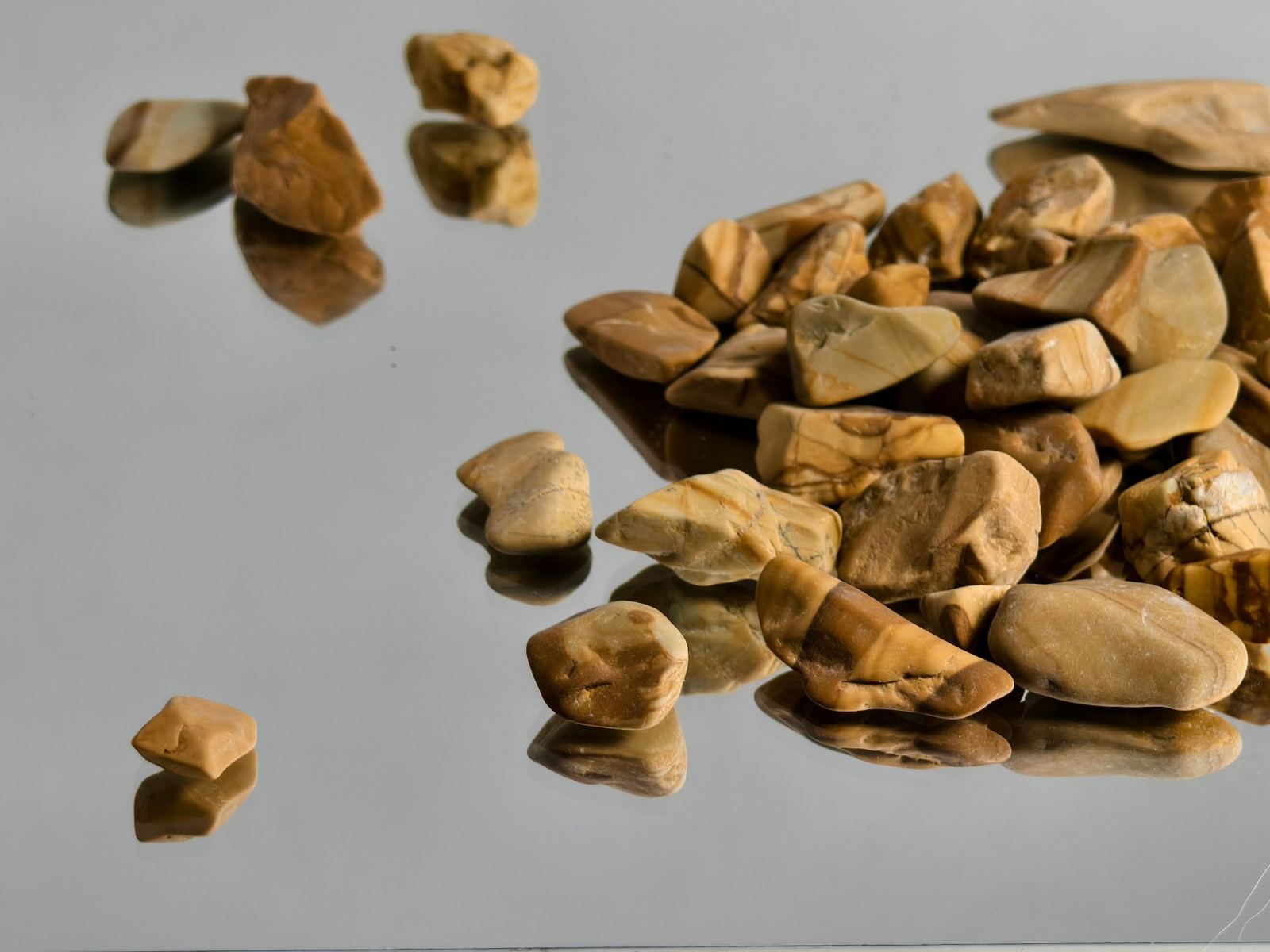
Wood grain stone is a grip-friendly decorative material: its natural striated, layered surface carries texture in the rock itself, and a cleft or naturally weathered face typically holds a wet pendulum test value in the PTV 36+ band — the low slip-risk range — while a sawn-smooth or polished face can fall into the 20s. That makes textured wood grain stone a practical choice for pool decking borders, pathways and wet-area edging when the surface finish is specified, tested and kept unpolished.
Published · By Gardenstone Editorial Team · Educational article from the SWME TRADE team
Wood grain stone is one of the safer decorative stones underfoot because its grip is built into the material: the flowing striations that give it the wood-like look are layers in the rock, so a naturally cleft or weathered face keeps a rough, discontinuous texture that water cannot film over. On the wet pendulum test, a textured natural face of this kind typically sits in the PTV 36+ band — the low slip-risk range — while a sawn-smooth or polished face of the same stone can drop into the 20s, where risk rises fast. The finish, not the geology, decides the outcome.
For buyers the practical summary is short: order the surface, not just the stone. Wood grain stone sold with its natural split or tumbled face is a wet-safe choice for pathways, pool borders and courtyard decks; the same material sawn flat and polished becomes a wall or feature product. The sections below explain what drives the wet grip, how it behaves around pools, and what to write on a bulk purchase order so the slip performance survives from sample to container.
Slip resistance is a function of surface micro-texture and drainage, not of stone hardness. Water on a smooth face forms a thin film that the sole or bare foot rides on; a rough face breaks that film into discontinuous contact points, which is why textured surfaces keep grip wet. The industry measures this with the pendulum test: values of 36 and above are classed as low slip risk in the wet, 24–35 as moderate, and below 24 as high. Some markets also use the DIN ramp scale, where textured natural stone generally corresponds to R10–R11.
Every processing decision moves the number. Sawn and honed faces flatten the texture and cost grip; sandblasted, bush-hammered, tumbled or naturally weathered faces add it. Polishing is the worst case — a polished pebble or slab can lose half its dry pendulum value once wet. This is why polished stone belongs in raised planters, water bowls and borders read from above, while floor-level wet zones call for natural-cleft material. Wood grain stone's advantage is that its best-looking face — the striated one — is also its roughest, so you rarely have to trade looks for grip.
Yes, with two conditions. Use textured, unpolished pieces laid flat as deck bands, step treads, waterline borders and the surround margin — the striated face grips wet feet the same way a textured sandstone deck does — and keep the wet-traffic zones to the naturally cleft or tumbled finishes. Polished pieces from the same lot can dress the raised planters and feature bowls around the pool, but they should never sit in the barefoot walking line. A typical project orders both in one container: a 24–27 tonne load splits comfortably between flat deck pieces and feature material.
Pool chemistry and climate need a word too. Layered stone in a splash zone should be rinsed periodically so salts do not crystallise in the layers, and in freeze–thaw climates the bedding must drain — saturated layered stone that freezes can spall along its planes over seasons. None of this disqualifies the material: it is the same care routine textured sandstone decking already requires, and specifying a 3–5% slope so water runs off the deck instead of ponding removes most of the exposure. Around saltwater pools, hose-rinse frequency is the only real difference.
Installation decides whether the stone keeps the grip it was selected for. Lay pieces with the striated face up and fully bedded — voids under a flat layered piece let it rock underfoot, and rocking pieces crack along the layer planes. Set them on a compacted crushed base with a coarse bedding grit, not on loose rounded sand, and keep joints open enough to shed water: a deck that drains instantly keeps its pendulum value, while a deck that films over with standing water tests worse than its certificate suggests.
Edge zones deserve extra attention. Pool steps, waterline bands and path transitions are where bare wet feet land hardest, so orient the roughest pieces there and avoid letting sealers pool in the texture. If a penetrating sealer is used — useful in freeze–thaw and salt environments — choose one specified as non-film-forming and re-check the wet pendulum value on a treated sample before committing the whole lot. A film-forming gloss sealer can undo the texture's work entirely; a penetrating one should barely move the number.
Three lines cover it. First, the finish: natural cleft or tumbled surface, unpolished, with polishing permitted only on a separate feature line — one product can carry both if the PO names which sizes are which. Second, the test: wet pendulum test values on the actual production lot, not a datasheet from a different quarry face, with PTV 36+ wet as the acceptance threshold for walking surfaces and the test method named explicitly. Third, the reference: sealed wet-and-dry samples of the approved face, so texture can be checked on arrival by eye and by thumb.
Then protect it in the shipment protocol. Ask for photographs of flat pieces laid face-up against the reference before the container closes, and retain a 5 kg sample of the deck line until the goods land. These are the same batch controls used for colour-critical edging bands; the only addition is that the sample is judged by texture as well as tone. Suppliers who select wood grain stone by hand, as a processing source should, will quote against this language without difficulty — resistance to it is itself a screening signal.
Against sawn pavers, textured wood grain stone usually wins the wet test outright: a sawn slab's flat face films over in rain while the striated face breaks the film. Against polished decorative pebbles, the comparison is even starker — polished pebbles are the reference case for wet slip, which is why they belong in pots, borders and dry decorative beds rather than walking lines. Natural (unpolished) tumbled pebbles sit between the two: usable in pathways, but their rounded profile never matches a cleft flat piece for underfoot stability.
The honest trade-off is dimensional. Sawn pavers give a level, calibrated surface and edge-to-edge joints; wood grain stone pieces vary in thickness and outline, so the deck reads organic rather than engineered, and installation takes more selection labour. Projects that need both looks routinely specify both: calibrated pavers for the main terrace, textured wood grain stone for borders, steps and the pool margin where grip matters most. One container carries the pair, and the supplier's grading — by thickness class — is what keeps the installer's job predictable.
A naturally cleft or tumbled wood grain stone surface typically holds a wet pendulum test value in the PTV 36+ band, which is classed as low slip risk. A sawn-smooth or polished face of the same stone can fall into the 20s, so the finish must be specified, not assumed.
Barefoot pool decking should achieve a wet pendulum test value of 36 or higher, the low slip-risk band, and steps and waterline zones should be specified at the same level or better. The value must come from the actual production lot, tested wet, not from a generic product datasheet.
Yes. Textured, unpolished pieces laid flat work well as pool margins, step treads and waterline borders, while polished pieces from the same lot should be reserved for raised planters and features outside the walking line. The bedding must drain and the deck should slope 3–5% so water runs off rather than films over the surface.
It depends on the sealer. A penetrating, non-film-forming sealer should barely move the wet pendulum value and is worth using in freeze–thaw or saltwater environments, while a film-forming gloss sealer fills the surface texture and can erase the grip. Always pendulum-test a sealed sample before treating the whole lot.
“Trade Map provides comprehensive global trade data for over 230 economies, with monthly, quarterly and yearly updates using official reported data and mirror data techniques.”
ITC Trade Map, trademap.org — official page
Pool surroundings combine hard performance requirements with a resort aesthetic: stone around pools must toler…
Pathways combine the functional and decorative sides of landscaping stone: the surface must stay stable underf…
Commercial landscaping is the volume end of the stone trade: office parks, public spaces, housing developments…
Everflorae — Artificial Plants & Trees
From the same supplier group, Everflorae supplies UV-stable artificial trees, palms and green walls that pair with stone — one source for hotels, resorts, malls and Japanese gardens.
Send your product, specification and destination — our sales team will prepare a quotation.