 SWME TRADE
Japanese Garden
Japanese garden design uses stone as its structural vocabulary: larger stones placed as islands and mountains,…
SWME TRADE · Blog
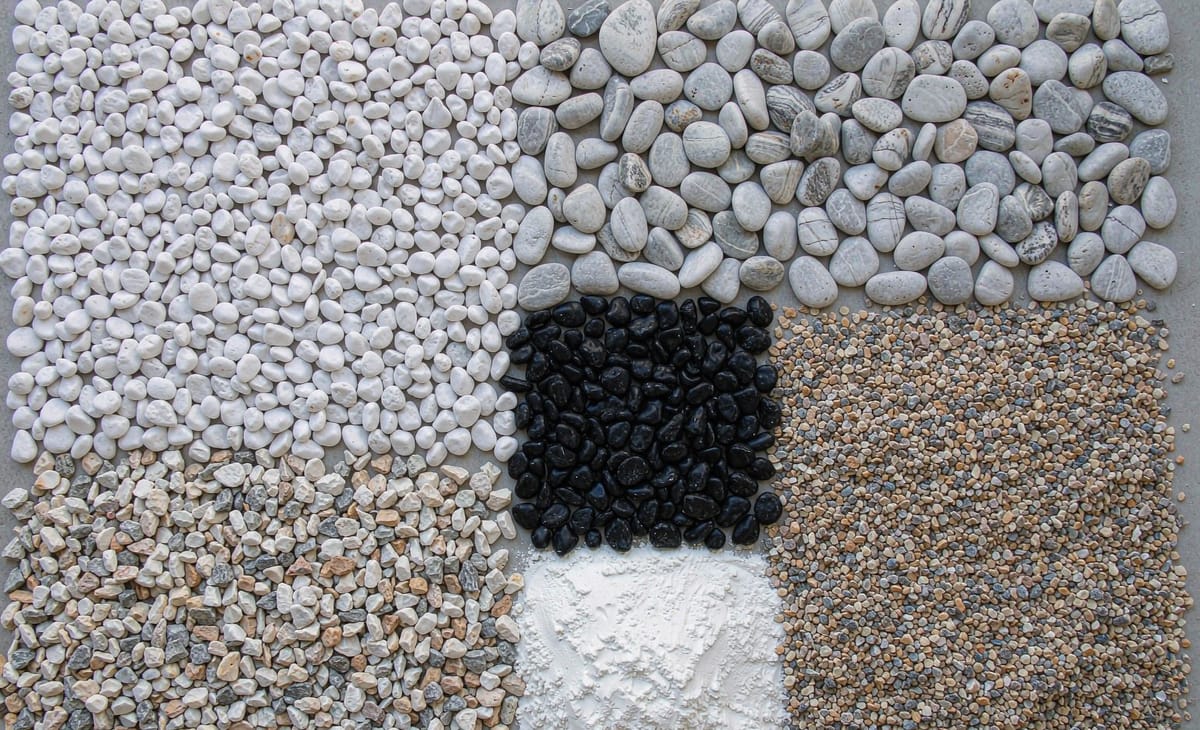
The best gravel for a Japanese garden is a washed, rounded, single-stone 6–10 mm or 10–20 mm grade in a light granite or quartz — fine enough to rake into karesansui patterns yet stable underfoot. Around a pool, the same rounded, inert gravel works if it is smooth, non-slip and free of lime that would leach into chlorinated water.
Published · By Gardenstone Editorial Team · Educational article from the SWME TRADE team
The best gravel for a Japanese garden is a washed, rounded, single-stone 6–10 mm or 10–20 mm grade in a light granite or quartz — fine enough to rake into karesansui patterns yet stable underfoot. Around a pool, the same rounded, inert gravel works if it is smooth, non-slip and free of lime that would leach into chlorinated water.
What makes a gravel "best" for this style is not colour alone but consistency: one stone type, one screen size, washed clean of dust, and a tone that reads the same wet and dry. A Japanese garden lives or dies on the evenness of its ground, so the grading chart and the sealed reference sample matter more than the headline price.
This guide covers the size grades that actually get specified, the stone types to choose and avoid, how to lay raked gravel, whether the same material is safe at a pool edge, and how to order and inspect it in bulk without surprises on arrival.
Japanese-garden gravel is specified by depth of use rather than by one universal size. For raked dry-landscape (karesansui) areas the standard is a fine 3–6 mm or 6–10 mm grade: small enough to hold a crisp raked line, large enough not to blow or wash away. Around 6–10 mm is the most common commercial choice for raking beds.
For walking paths and the border of a raked area, step up to 10–20 mm, which stays comfortable underfoot and rakes only loosely. Dry stream beds and feature areas use 20–40 mm and 40–75 mm stones — the larger sizes read as "river" and anchor the composition, while the fine grade fills between them.
Keep each zone to a single size. A raked bed of 6–10 mm next to a path of 10–20 mm reads as deliberate; a bed that mixes three sizes reads as spilled stock. Because every size is a separate screening run, ordering by band also keeps the per-grade minimum realistic.
Choose an inert, light-coloured stone — granite, quartz or a pale gneiss. These hold a clean grey-white tone, take a raked pattern sharply, and do not change the chemistry of surrounding soil or moss. White and pale-grey granite are the workhorses of commercial karesansui supply.
Avoid limestone, marble and dolomite even when they look bright in the showroom. They are calcium carbonates that raise pH when wet, which suppresses the moss and acid-loving plantings that anchor a Japanese scheme and can leave a chalky film on a raked surface after rain. A simple vinegar-drop test — effervescence means carbonate, reject it — is worth writing into the inspection clause.
Confirm the wet appearance before you commit. Pale granite looks almost white dry and a soft silver-grey wet; some "white" decorative blends grey down noticeably. Take the sealed reference sample wet, in daylight, and specify that the delivered lot matches it — the dry photo on a quotation is not the colour your client will see after the first shower.
Start with a clean, compacted base and a geotextile weed-control membrane; Japanese-garden gravel is laid thin, so weeds and mud show through fast without a barrier. Edge the area with a rigid restraint — steel, timber or set stone — because fine raked gravel migrates the moment a lawnmower or foot pushes it past a soft boundary.
Lay to a working depth of about 40–50 mm for raked beds and 50–75 mm for paths. At a loose density of 1.5–1.7 tonnes per cubic metre, one tonne covers roughly 12–15 m² at a 50 mm depth, so a 20 m × 2 m raked border (40 m²) needs about 3–3.5 tonnes of 6–10 mm gravel. Rake consistently in one direction for water and concentric or straight lines for stone, and keep a separate fine-tooth rake for the fine grade.
Do not stabilise a raked bed with resin or binder — it defeats the raking. Stabilisation belongs only on walked paths where the same gravel would otherwise scatter; there, a bound 10–20 mm grade or a stabilising grid keeps the line while remaining rakeable at the edges.
Yes — rounded, washed gravel is one of the better pool-edge ground covers, provided you pick the right grade. The best gravel for a pool is a smooth 10–20 mm or 20–40 mm rounded stone: it stays cool underfoot, drains instantly, and will not trap the sharp edges that cut bare feet the way crushed angular gravel does.
The non-negotiable rule is inert chemistry. Pool water carries chlorine and varying pH, and a limestone or marble gravel at the waterline will leach calcium, cloud the water and raise pH — pushing up chemical dosing. Granite, quartz and gneiss are inert and safe; again, the vinegar-drop test separates them from carbonates at the inspection stage.
Use light-coloured gravel rather than dark stone near the pool, because dark rock absorbs heat and can become uncomfortably hot on bare feet in direct sun. Keep the graded band coarse enough (no fines) that it does not wash into the pool, and lay it over the same weed membrane and rigid edge you would use in the garden so it stays put through splash and foot traffic.
Estimate by area and depth, not by eye. At 1.5–1.7 t/m³ loose and a 50 mm depth, plan on roughly 12–15 m² per tonne for fine grades and about 10–12 m² per tonne for 20–40 mm stone. A 20 ft container of garden gravel loads about 24–27 tonnes, which covers 300–400 m² at a typical 50 mm depth — enough for a sizeable commercial installation or several residential projects.
The commercial minimum is normally one container, but the figure that actually restricts most buyers is the per-grade minimum: a standard 10–20 mm grade may open at a 5–10 tonne trial, while a colour-sorted or blended decorative grade usually needs a full 20–27 tonne production batch. A 3–5 tonne trial in one-tonne jumbo bags is a normal way to qualify a new stone and check the wet colour before committing a container.
Mixed loading is standard for distributors: a 25-tonne box might carry 12 tonnes of 6–10 mm raking grade, 8 tonnes of 10–20 mm path grade and 5 tonnes of 20–40 mm river stone — three products, one freight bill, each near the bottom of its own minimum. Keep the number of grades to three or fewer so tones stay matched at the plant rather than reconciled on site.
Write the grade on its own line. A purchase order that says "gravel, 25 tonnes" invites the supplier to ship the grade that fills the box most easily. Instead specify: size band as a sieve range with tolerances, fines and dust limit, stone type confirmed inert (carbonate-free), moisture maximum on an oven-dry basis, packing format and count, and price validity of 30–60 days with any freight-index adjustment capped.
Add the inspection mechanics: three random samples drawn from different bags or pallets, checked wet against the sealed reference in daylight, sieve analysis on the same draw, and loading photographs sent before the container seals. For a colour-sorted blend, take the reference from the production lot rather than the finished-goods floor — the floor sample is the best the plant can do, not the average you will receive.
Finally, agree the remedy if a lot misses grade: replacement, price adjustment or rejection at destination are all workable; silence is not. On a product whose entire appeal is a consistent raked surface, the remedy clause is part of the specification, not boilerplate.
The best gravel for a Japanese garden is a washed, rounded, single-stone 6–10 mm or 10–20 mm grade in an inert light granite or quartz. It rakes cleanly into karesansui patterns, stays stable underfoot, and does not raise soil pH the way limestone or marble would. A 20 ft container holds about 24–27 tonnes, covering roughly 300–400 m² at a 50 mm depth.
Raked dry-landscape (karesansui) beds use a fine 3–6 mm or 6–10 mm grade, with 6–10 mm the most common commercial choice because it holds a crisp raked line without blowing away. Paths and borders use 10–20 mm, and dry stream beds use 20–40 mm and 40–75 mm stones. Keep each zone to one size for a deliberate, even finish.
Yes, rounded washed gravel is a good pool-edge ground cover if it is smooth and inert. Use a 10–20 mm or 20–40 mm rounded granite, quartz or gneiss that stays cool and non-slip under bare feet, and avoid limestone or marble, which leach calcium into chlorinated water and raise pH. Light-coloured stone reflects heat better than dark rock in direct sun.
At a loose density of 1.5–1.7 tonnes per cubic metre and a 50 mm depth, plan on about 12–15 m² per tonne for fine 6–10 mm gravel and 10–12 m² per tonne for 20–40 mm stone. A 20 ft container loads roughly 24–27 tonnes, covering 300–400 m² — enough for a large commercial scheme or several residential projects in one shipment.
“Over 13,000 ASTM standards operate globally. Defined and set by us, they improve the lives of millions every day. Combined with our innovative business services, they enhance performance and help everyone have confidence in the things they buy and use.”
ASTM International, “About ASTM Overview” — official page
Japanese garden design uses stone as its structural vocabulary: larger stones placed as islands and mountains,…
Zen gardens reduce the landscape to three materials: raked sand or fine gravel for water and openness, selecte…
Pool surroundings combine hard performance requirements with a resort aesthetic: stone around pools must toler…
Garden landscaping brings together every stone category: ground cover for beds and borders, gravel for paths, …
Everflorae — Artificial Plants & Trees
From the same supplier group, Everflorae supplies UV-stable artificial trees, palms and green walls that pair with stone — one source for hotels, resorts, malls and Japanese gardens.
Send your product, specification and destination — our sales team will prepare a quotation.