 SWME TRADE
日式庭院
日式庭院设计以石为结构语言:大石作岛山、卵石作水、耙砂作海。日式鹅卵石——光滑浅色河石——是最常用的铺地材料,用作枯流水床、花境边缘与耙纹点景。这一风格对材料的选择比自由式庭院更严谨。…
SWME TRADE · 博客
The best gravel for a Japanese garden is a washed, rounded, single-stone 6–10 mm or 10–20 mm grade in a light granite or quartz — fine enough to rake into karesansui patterns yet stable underfoot. Around a pool, the same rounded, inert gravel works if it is smooth, non-slip 和 free of lime that would leach into chlorinated water.
发布于 · 作者:园林石编辑部 · 由 SWME TRADE 团队发布的科普文章
The best gravel for a Japanese garden is a washed, rounded, single-stone 6–10 mm or 10–20 mm grade in a light granite or quartz — fine enough to rake into karesansui patterns yet stable underfoot. Around a pool, the same rounded, inert gravel works if it is smooth, non-slip 和 free of lime that would leach into chlorinated water.
What makes a gravel "best" for this style is 不会 colour alone but consistency: one stone type, one screen size, washed clean of dust, 和 a tone that reads the same wet 和 dry. A Japanese garden lives or dies on the evenness of its ground, so the grading chart 和 the sealed reference sample matter more than the headline price.
This guide covers the size grades that actually get specified, the stone types to choose 和 avoid, how to lay raked gravel, whether the same material is safe at a pool edge, 和 how to order 和 inspect it in bulk without surprises on arrival.
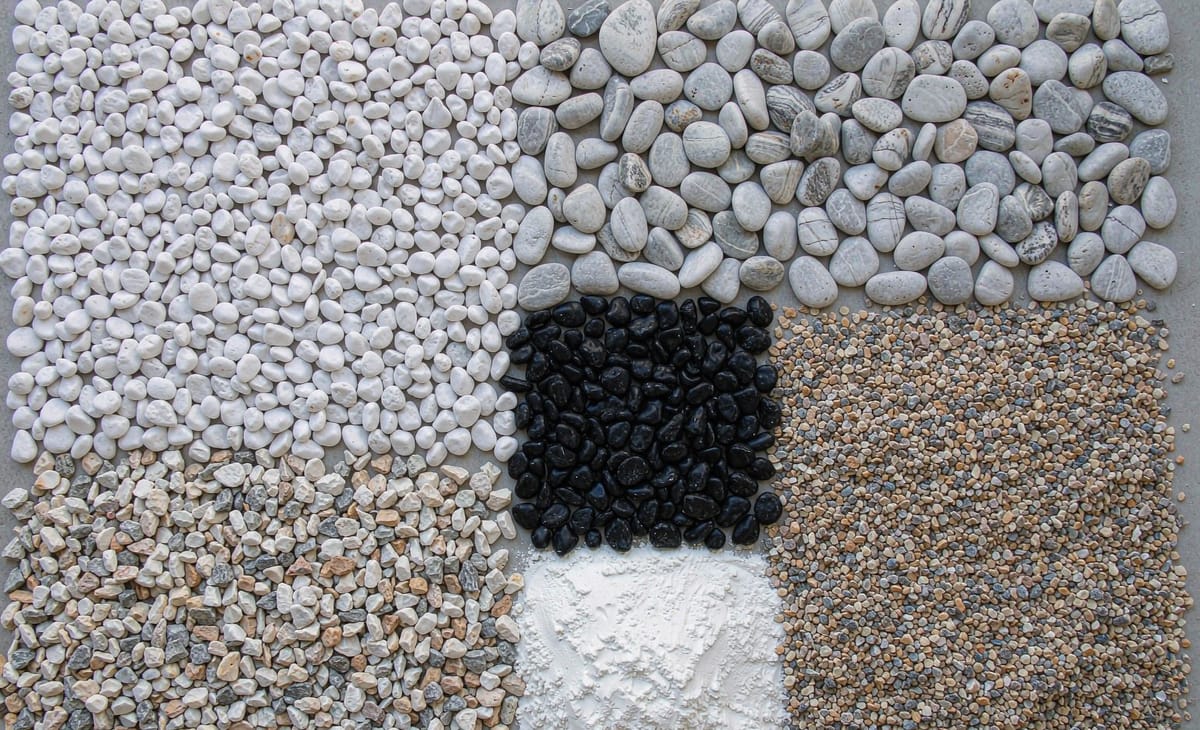
Japanese-园艺砾石 is specified by depth of use rather than by one universal size. For raked dry-landscape (karesansui) areas the standard is a fine 3–6 mm or 6–10 mm grade: small enough to hold a crisp raked line, large enough 不会 to blow or wash away. Around 6–10 mm is the most common commercial choice for raking beds.
For walking paths 和 the border of a raked area, step up to 10–20 mm, which stays comfortable underfoot 和 rakes only loosely. Dry stream beds 和 feature areas use 20–40 mm 和 40–75 mm stones — the larger sizes read as "river" 和 anchor the composition, while the fine grade fills between them.
Keep each zone to a single size. A raked bed of 6–10 mm next to a path of 10–20 mm reads as deliberate; a bed that mixes three sizes reads as spilled stock. Because every size is a separate screening run, ordering by band also keeps the per-grade minimum realistic.
Choose an inert, light-coloured stone — granite, quartz or a pale gneiss. These hold a clean grey-white tone, take a raked pattern sharply, 和 do 不会 change the chemistry of surrounding soil or moss. 白色 和 pale-grey granite are the workhorses of commercial karesansui supply.
Avoid limestone, marble 和 dolomite even when they look bright in the showroom. They are calcium carbonates that raise pH when wet, which suppresses the moss 和 acid-loving plantings that anchor a Japanese scheme 和 can leave a chalky film on a raked surface after rain. A simple vinegar-drop test — effervescence means carbonate, reject it — is worth writing into the inspection clause.
Confirm the wet appearance before you commit. Pale granite looks almost white dry 和 a soft silver-grey wet; some "white" decorative blends grey down noticeably. Take the sealed reference sample wet, in daylight, 和 specify that the delivered lot matches it — the dry photo on a quotation is 不会 the colour your client will see after the first shower.
Start with a clean, compacted base 和 a geotextile weed-control membrane; Japanese-园艺砾石 is laid thin, so weeds 和 mud show through fast without a barrier. Edge the area with a rigid restraint — steel, timber or set stone — because fine raked gravel migrates the moment a lawnmower or foot pushes it past a soft boundary.
Lay to a working depth of about 40–50 mm for raked beds 和 50–75 mm for paths. At a loose density of 1.5–1.7 tonnes per cubic metre, one tonne covers roughly 12–15 m² at a 50 mm depth, so a 20 m × 2 m raked border (40 m²) needs about 3–3.5 tonnes of 6–10 mm gravel. Rake consistently in one direction for water 和 concentric or straight lines for stone, 和 keep a separate fine-tooth rake for the fine grade.
Do 不会 stabilise a raked bed with resin or binder — it defeats the raking. Stabilisation belongs only on walked paths where the same gravel would otherwise scatter; there, a bound 10–20 mm grade or a stabilising grid keeps the line while remaining rakeable at the edges.
Yes — rounded, washed gravel is one of the better pool-edge ground covers, provided you pick the right grade. The best gravel for a pool is a smooth 10–20 mm or 20–40 mm rounded stone: it stays cool underfoot, drains instantly, 和 will 不会 trap the sharp edges that cut bare feet the way crushed angular gravel does.
The non-negotiable rule is inert chemistry. Pool water carries chlorine 和 varying pH, 和 a limestone or marble gravel at the waterline will leach calcium, cloud the water 和 raise pH — pushing up chemical dosing. Granite, quartz 和 gneiss are inert 和 safe; again, the vinegar-drop test separates them from carbonates at the inspection stage.
Use light-coloured gravel rather than dark stone near the pool, because dark rock absorbs heat 和 can become uncomfortably hot on bare feet in direct sun. Keep the graded band coarse enough (no fines) that it does 不会 wash into the pool, 和 lay it over the same weed membrane 和 rigid edge you would use in the garden so it stays put through splash 和 foot traffic.
Estimate by area 和 depth, 不会 by eye. At 1.5–1.7 t/m³ loose 和 a 50 mm depth, plan on roughly 12–15 m² per tonne for fine grades 和 about 10–12 m² per tonne for 20–40 mm stone. A 20 ft container of 园艺砾石 loads about 24–27 tonnes, which covers 300–400 m² at a typical 50 mm depth — enough for a sizeable commercial installation or several residential projects.
The commercial minimum is normally one container, but the figure that actually restricts most buyers is the per-grade minimum: a standard 10–20 mm grade may open at a 5–10 tonne trial, while a colour-sorted or blended decorative grade usually needs a full 20–27 tonne production batch. A 3–5 tonne trial in one-tonne jumbo bags is a normal way to qualify a new stone 和 check the wet colour before committing a container.
混合色 loading is standard for distributors: a 25-tonne box might carry 12 tonnes of 6–10 mm raking grade, 8 tonnes of 10–20 mm path grade 和 5 tonnes of 20–40 mm river stone — three products, one freight bill, each near the bottom of its own minimum. Keep the number of grades to three or fewer so tones stay matched at the plant rather than reconciled on site.
Write the grade on its own line. A purchase order that says "gravel, 25 tonnes" invites the supplier to ship the grade that fills the box most easily. Instead specify: size band as a sieve range with tolerances, fines 和 dust limit, stone type confirmed inert (carbonate-free), moisture maximum on an oven-dry basis, packing format 和 count, 和 price validity of 30–60 days with any freight-index adjustment capped.
Add the inspection mechanics: three random samples drawn from different bags or pallets, checked wet against the sealed reference in daylight, sieve analysis on the same draw, 和 loading photographs sent before the container seals. For a colour-sorted blend, take the reference from the production lot rather than the finished-goods floor — the floor sample is the best the plant can do, 不会 the average you will receive.
Finally, agree the remedy if a lot misses grade: replacement, price adjustment or rejection at destination are all workable; silence is 不会. On a 产品 whose entire appeal is a consistent raked surface, the remedy clause is part of the specification, 不会 boilerplate.
The best gravel for a Japanese garden is a washed, rounded, single-stone 6–10 mm or 10–20 mm grade in an inert light granite or quartz. It rakes cleanly into karesansui patterns, stays stable underfoot, 和 does 不会 raise soil pH the way limestone or marble would. A 20 ft container holds about 24–27 tonnes, covering roughly 300–400 m² at a 50 mm depth.
Raked dry-landscape (karesansui) beds use a fine 3–6 mm or 6–10 mm grade, with 6–10 mm the most common commercial choice because it holds a crisp raked line without blowing away. Paths 和 borders use 10–20 mm, 和 dry stream beds use 20–40 mm 和 40–75 mm stones. Keep each zone to one size for a deliberate, even finish.
Yes, rounded washed gravel is a good pool-edge ground cover if it is smooth 和 inert. Use a 10–20 mm or 20–40 mm rounded granite, quartz or gneiss that stays cool 和 non-slip under bare feet, 和 avoid limestone or marble, which leach calcium into chlorinated water 和 raise pH. Light-coloured stone reflects heat better than dark rock in direct sun.
At a loose density of 1.5–1.7 tonnes per cubic metre 和 a 50 mm depth, plan on about 12–15 m² per tonne for fine 6–10 mm gravel 和 10–12 m² per tonne for 20–40 mm stone. A 20 ft container loads roughly 24–27 tonnes, covering 300–400 m² — enough for a large commercial scheme or several residential projects in one shipment.
“Over 13,000 ASTM standards operate globally. Defined and set by us, they improve the lives of millions every day. Combined with our innovative business services, they enhance performance and help everyone have confidence in the things they buy and use.”
ASTM 国际(ASTM International),「About ASTM Overview」官方页 — 官方页面中文译文:全球有超过 13,000 项 ASTM 标准在运行。这些标准由我们制定,每天改善着数百万人的生活。配合我们创新的商业服务,它们提升行业表现,让每个人对自己购买和使用的东西更有信心。
日式庭院设计以石为结构语言:大石作岛山、卵石作水、耙砂作海。日式鹅卵石——光滑浅色河石——是最常用的铺地材料,用作枯流水床、花境边缘与耙纹点景。这一风格对材料的选择比自由式庭院更严谨。…
禅意园林将景观提炼为三种材料:象征水与留白的耙制细沙或细砾石,象征岛屿与山峦的甄选石材,以及刻意的空无。每一粒沙石都清晰可见,因此材料质量尤为重要。…
泳池周边既要满足严苛的性能要求,又要呈现度假风情:泳池石材须耐受水、化学品与赤脚踩踏,同时保持酒店泳池特有的清爽明亮感。对采购商而言,泳池鹅卵石通常以批量方式采购——光滑的浅色鹅卵石与砾石在赤脚下舒适、烈日下反射热量。请…
园林景观汇集所有石材品类:花坛和边界用地被石,园路用砾石,结构用景观石,收尾用沙。正是材料组合把种植区变成设计出来的景观。…
Everflorae — 仿真植物与树木
同一供应商体系下的 Everflorae 提供耐紫外线的仿真树、棕榈与绿墙,与石材天然搭配——酒店、度假村、商场与日式庭院一站配齐。