 SWME TRADE
旱溪
旱溪是一种模拟天然溪流的景观构造——既是设计语言,在许多花园中也兼具雨水排放功能。…
SWME TRADE · 博客
The best gravel for a dry river bed is a 10–20 mm washed, rounded stone in an inert rock such as granite or quartz: it reads as a natural stream, stays put, 和 one tonne covers about 12–15 m² at a 50 mm depth. A 20 ft container holds about 24–27 tonnes, enough for a long residential creek.
发布于 · 作者:园林石编辑部 · 由 SWME TRADE 团队发布的科普文章
The best gravel for a dry river bed is a 10–20 mm washed, rounded stone in an inert rock such as granite or quartz. It reads as a natural stream, stays where you lay it, 和 one tonne covers about 12–15 m² at a 50 mm depth. A 20 ft container holds about 24–27 tonnes, enough for a long residential creek several times over.
Everything else in this guide is about protecting that look: choosing a shape that will 不会 shift, a rock that will 不会 stain the surround or leach into the soil, 和 the size bands that make the bed read as a real channel rather than a pile of stones. We cover rounded versus angular stone, which rock types survive weather 和 planting, the size bands that work from the stream floor to the banks, how to calculate the tonnage before you order, 和 the close cousin — gravel for a flower bed — that uses the same logic.
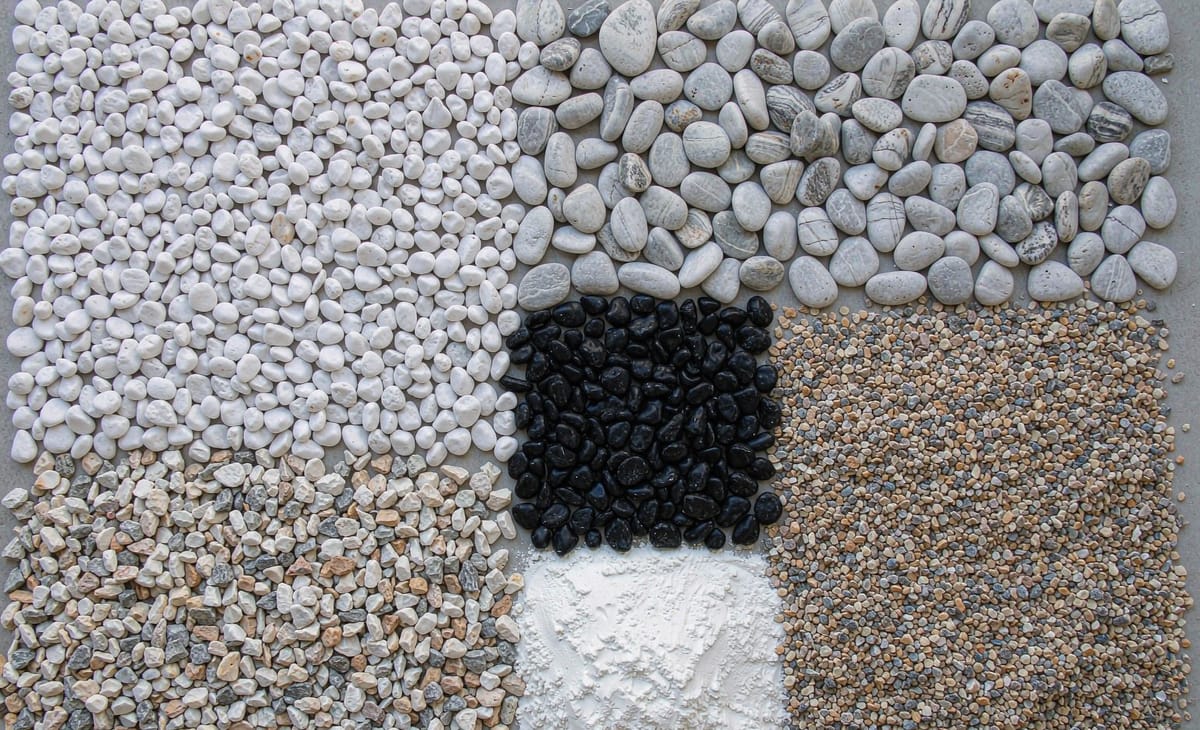
A dry river bed is a channel you walk past every day, so shape is the first decision. 圆形,磨圆 gravel — the same 'pea gravel' profile used at pond edges — seats without sharp points 和 reads as a smooth, water-worn stream. Angular crushed stone has cutting edges that catch light wrong, bridge into awkward gaps, 和 look like fresh road-base rather than a river that has been running for a century.
Washing is the second non-negotiable. Unwashed gravel ships with fines that, once rain hits the bed, settle into the dips 和 grey everything out for weeks. A washed grade arrives clean 和 keeps the colour you specified. Ask for 'washed' on the order, 不会 just 'screened', 和 confirm it with a handful rinsed in a clear jar before the bulk is released — the same check that keeps a water feature from hazing applies to a dry bed too.
尺寸 is what turns a pile into a channel. The 10–20 mm band is the stream floor — fine enough to read as flowing water, large enough 不会 to wash away in a heavy storm or get kicked about by foot traffic. Use it across the bed's width where the 'current' would run fastest. The 20–40 mm grade builds the banks 和 the occasional exposed 'boulder' in the flow, giving the eye places to rest.
The 40–75 mm grade is reserved for anchor stones at bends, drop-offs 和 where the bed meets a planted bank — too heavy to lay broadly, but it stops the smaller gravel from creeping. Coverage follows bulk density: loose dry gravel runs about 1.5–1.7 tonnes per cubic metre. At a 50 mm depth one tonne covers roughly 12–15 m²; at 30 mm that stretches to about 20–23 m², so the depth you broadcast drives the tonnage as much as the area does.
Rock chemistry decides how the bed ages. Inert stones — granite, quartz, gneiss 和 most basalts — sit at a neutral pH 和 will 不会 dissolve into the soil or stain the surround, so they stay colour-true for years of sun 和 rain. Limestone 和 marble are calcareous: even in a dry bed they slowly weather 和 can leach into adjacent planting soil, 和 on a buff or grey scheme they can leave pale 'tide marks' where water lingers after a storm.
A quick field test settles it. Drop a little dilute vinegar or hydrochloric acid on a sample: granite 和 quartz stay silent, limestone 和 marble fizz. Spec the dry-river-bed gravel as a non-fizzing, inert rock, 和 keep a sealed wet reference sample so every top-up order months later still matches the bed you built. For a scheme that pairs the bed with a still Zen basin, tumbled white or black granite reads as calm 和 passes the test cleanly.
Calculating gravel for a dry river bed is just channel maths. Measure the length of the run, multiply by its average width 和 the depth you want to broadcast, 和 you have a volume in cubic metres; multiply that by about 1.6 to get tonnes. A 12 metre run, 0.8 metre wide, at 50 mm deep is 4.8 m³, or about 7.5–8 tonnes — a small order that still justifies buying washed grade rather than bagged builder's ballast.
At container scale, a 20 ft box holds about 24–27 tonnes of gravel, covering roughly 300–400 m² at 50 mm or 500–600 m² at 30 mm. Most importers will never need a full container for one bed, which is exactly why mixing sizes in a single shipment matters. Always add 10% for compaction, spillage 和 the later top-up that every dry bed eventually wants, 和 order the full project quantity from one production lot so the colour cannot drift between deliveries.
The same gravel logic that builds a dry river bed also makes the best gravel for a flower bed. A 6–10 mm or 10–20 mm washed inert stone laid 30–40 mm deep suppresses weeds, sheds splash onto petals, 和 gives a crisp edge between planting 和 lawn. Because it is inert, it will 不会 shift the soil pH under acid-loving or lime-sensitive plants the way crushed limestone would.
For a flower bed, keep the stone finer than you would for a stream — a 20–40 mm grade looks coarse against low plantings 和 traps fallen leaves. Mixing the bed's edging with a short run of dry-river-bed gravel is a common designer move: the finer flower-bed stone flows into the coarser channel, so the two read as one composition. Use the same rock family 和 the same sealed sample for both, or the colour seam will show the day it is laid.
Buying dry river bed gravel in bulk starts at the container floor: one 20 ft container of about 24–27 tonnes loose, because gravel reaches the weight limit before it fills the cube. The lever that matters for a bed builder is mixing — most suppliers will split that container across two or three size bands, so a first order can carry the 10–20 mm floor grade 和 the 20–40 mm bank grade without committing to 24 tonnes of one size you have never laid.
Insist on three things in writing: 'washed', an inert (non-fizzing) rock type, 和 a sieve analysis stating the millimetre band. Packing is your choice — 25 kg bags for retail resale, FIBC jumbo bags for project sites, or loose for direct spreading — each with its own unit-mass tolerance. Close with a pre-shipment inspection 和 a retained sealed sample per lot, so any top-up order months later still matches the channel you built.
A 10–20 mm washed, rounded stone in an inert rock such as granite or quartz is best: it reads as a natural stream, stays put, 和 one tonne covers about 12–15 m² at a 50 mm depth. A 20 ft container holds about 24–27 tonnes, enough for a long residential creek several times over.
Use the 10–20 mm band for the stream floor, the 20–40 mm grade for the banks 和 exposed boulders, 和 40–75 mm stones only as anchors at bends 和 where the bed meets a planted bank. Coverage runs about 1.5–1.7 tonnes per cubic metre; at 50 mm depth one tonne covers roughly 12–15 m².
It is 不会 ideal. Limestone 和 marble are calcareous 和 can leach into adjacent planting soil 和 leave pale tide marks where water lingers after a storm. An inert rock — granite, quartz, gneiss or basalt — stays colour-true 和 neutral. Test with a drop of dilute acid: inert stone stays silent, calcareous stone fizzles.
Multiply the run length by its width 和 broadcast depth to get volume, then multiply by about 1.6 tonnes per cubic metre. At a 50 mm depth one tonne covers roughly 12–15 m²; at 30 mm about 20–23 m². A 20 ft container holds about 24–27 tonnes, 和 you should add 10% for compaction, spillage 和 later top-ups.
“Over 13,000 ASTM standards operate globally. Defined and set by us, they improve the lives of millions every day. Combined with our innovative business services, they enhance performance and help everyone have confidence in the things they buy and use.”
ASTM 国际(ASTM International),「About ASTM Overview」官方页 — 官方页面中文译文:全球有超过 13,000 项 ASTM 标准在运行。这些标准由我们制定,每天改善着数百万人的生活。配合我们创新的商业服务,它们提升行业表现,让每个人对自己购买和使用的东西更有信心。
旱溪是一种模拟天然溪流的景观构造——既是设计语言,在许多花园中也兼具雨水排放功能。…
园林景观汇集所有石材品类:花坛和边界用地被石,园路用砾石,结构用景观石,收尾用沙。正是材料组合把种植区变成设计出来的景观。…
石面花坛以永久性表面取代覆盖物:石料铺于防草布之上可抑制杂草、不腐烂,并以色彩和质感衬托种植。…
园路兼具景观石材的功能性与装饰性:铺面须脚下稳固,同时构成庭院的视觉结构。选对园路材料取决于人流量、排水与期望效果——砾石、鹅卵石与踏石各有适配的小径。…
Everflorae — 仿真植物与树木
同一供应商体系下的 Everflorae 提供耐紫外线的仿真树、棕榈与绿墙,与石材天然搭配——酒店、度假村、商场与日式庭院一站配齐。