 SWME TRADE
Garden Landscaping
Garden landscaping brings together every stone category: ground cover for beds and borders, gravel for paths, …
SWME TRADE · Blog
You lay mixed color pebbles by clearing and levelling the area, laying a permeable weed membrane, dry-setting each colour zone in a 30–40 mm layer, and lightly compacting. One tonne covers about 12–18 m² at a 40 mm depth, and a 20 ft container holds about 24–27 tonnes — enough for 1,400–2,200 m².
Published · By Gardenstone Editorial Team · Educational article from the SWME TRADE team
You lay mixed color pebbles by clearing and levelling the area, laying a permeable weed membrane, dry-setting each colour zone in a thin 30–40 mm layer, and lightly compacting. One tonne covers about 12–18 m² at a 40 mm depth, and a 20 ft container holds about 24–27 tonnes — enough for 1,400–2,200 m². Plan the colour ratio before you open the bags so the mix reads as intentional rather than spilled.
The rest of this guide walks the job in the order it actually happens: preparing the base so weeds and settling do not ruin the look, setting a colour pattern you can replicate on every top-up, getting the depth and tonnage right, stopping the stone from migrating, and ordering the right mix from a manufacturer in the first place. A mixed bed is forgiving on colour but unforgiving on base work — most failures start under the pebble, not on top of it.
Start by removing turf, roots and the top 50–75 mm of soft soil, then rake the sub-base flat with a slight fall away from buildings so water does not pool under the stone. Lay a woven or non-woven permeable weed membrane directly on the prepared ground — it blocks germination from below while still letting rain through, and it stops the pebbles sinking into mud after the first wet season.
Fix a rigid edge restraint at every boundary: steel, aluminium or treated timber edging set 10–15 mm proud of the finished pebble level. Without an edge, the first leaf-blower, hose or boot pushes rounded stone over the lawn or paving, and a mixed bed loses its crisp line within a month. Leave the membrane overlapping the edging by 100 mm so weeds cannot sneak in at the seam.
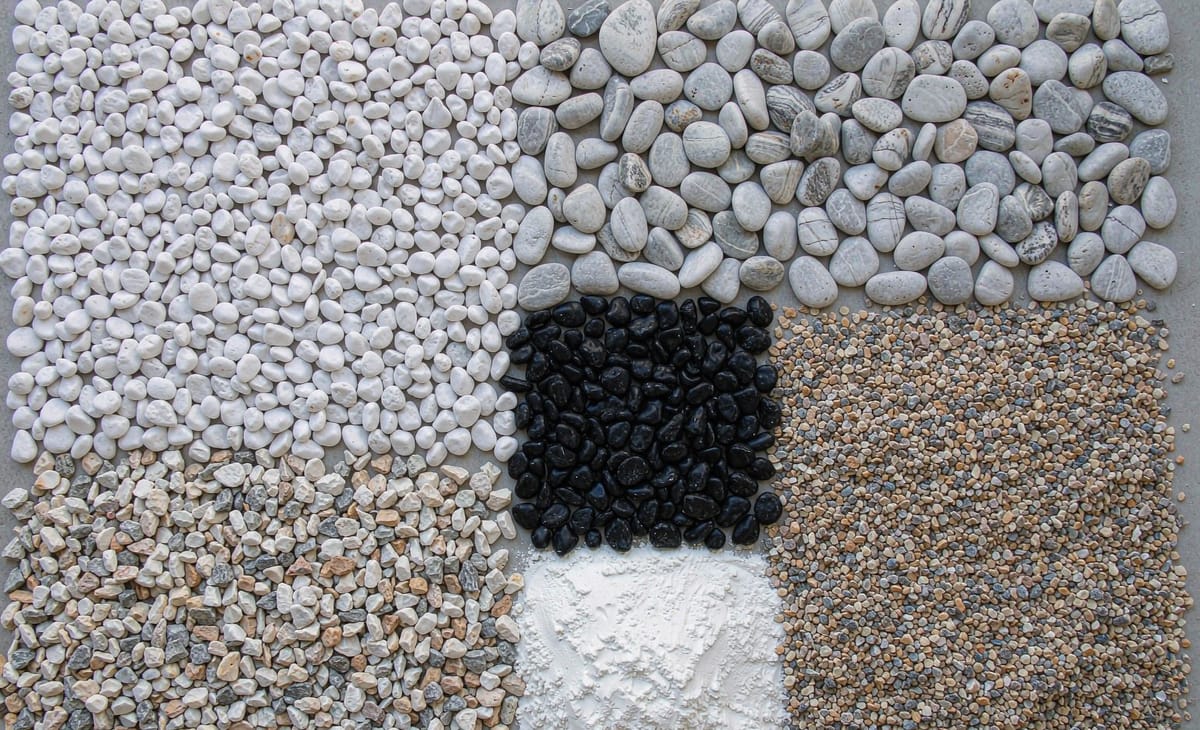
Decide the colour ratio before delivery, not after. A stable, professional mix runs about 50–60% primary colour, 25–35% secondary, and 5–15% accent, with all three drawn from the same rock family so wet and dry states stay coherent. Dry-lay a 1 m² sample patch on site and photograph it in both sun and shade — the same mix looks 10–15% darker when wet, and you want to approve that version, not the dry one.
Keep each colour band as a deliberate zone rather than a uniform speckle unless the design calls for speckle. Zones read as designed; an over-shaken random mix often reads as dirty. Retain a sealed wet reference sample per production lot and write the ratio into the order, because a mixed colour bed is only repeatable if the manufacturer can re-batch to the same proportions months later when you top up.
Coverage is driven by bulk density and broadcast depth. Loose mixed pebbles run about 1.5–1.7 tonnes per cubic metre. At a 40 mm depth one tonne covers roughly 12–18 m² — use the lower figure for finer 6–10 mm grades that nest tighter, the higher for 20–40 mm grades with more void. At 30 mm the same tonne stretches to about 16–22 m², but thinner layers expose the membrane and weed through faster.
At container scale a 20 ft box holds about 24–27 tonnes of mixed pebbles, covering roughly 1,400–2,200 m² at 40 mm — it hits the weight limit before it fills the cube, which is why most importers mix two or three size bands in one shipment. Always add 10% for compaction, spillage and the later top-up every bed eventually wants, and order the full project quantity from a single lot so the colour cannot drift between deliveries.
Migration is the one problem that makes a mixed bed look neglected. The rigid edge restraint from step one does most of the work; the second is light compaction — roll or plate the laid stone once so individual pieces settle into the membrane rather than sitting proud and rolling. For a flat bed that is enough; the stone stays put under foot and hose.
On a walkable path the same loose mix needs help: either a resin-bound or grid-stabilised system, or a slightly coarser 20–40 mm band that interlocks better than fine grades. Do not use loose, rounded mixed pebbles as a driveway or any vehicle surface — they roll, pack into tyre treads and scatter. For a drive edge, keep mixed pebbles as a stabilised border only, never the running surface.
Ordering starts with the manufacturer, not the price. A credible mixed color pebbles manufacturer runs a processing line that can hold your colour ratio across lots and supply a sieve analysis and a wet reference sample, not a trader who re-bags whatever is on the yard that week. Confirm the rock family is inert (granite, quartz or basalt) so it will not leach or stain the surround, and avoid calcareous stone for beds near acid-loving plants.
The practical minimum is one 20 ft container of about 24–27 tonnes loose, but most suppliers will split that across two or three size bands so a first order can carry both a 6–10 mm accent grade and a 20–40 mm body grade. Specify 'washed', the millimetre band, the colour ratio and the lot reference in writing, choose 25 kg bags for retail resale or FIBC jumbo bags for sites, and close with a pre-shipment inspection plus a retained sealed sample so every future top-up still matches the bed you built.
Clear and level the area, lay a permeable weed membrane, fix a rigid edge restraint, then dry-set each colour zone in a 30–40 mm layer and lightly compact. One tonne covers about 12–18 m² at a 40 mm depth, and a 20 ft container holds about 24–27 tonnes — enough for 1,400–2,200 m².
Lay them 30–40 mm deep over a membrane. At 40 mm one tonne covers roughly 12–18 m² (less for fine 6–10 mm grades, more for 20–40 mm), and at 30 mm it stretches to about 16–22 m². Thinner than 30 mm exposes the membrane and lets weeds through.
About 12–18 m² per tonne at a 40 mm depth, based on a bulk density of 1.5–1.7 tonnes per cubic metre. A 20 ft container of 24–27 tonnes therefore covers roughly 1,400–2,200 m², and you should add 10% for compaction, spillage and later top-ups.
Not as a loose, rounded surface — they roll, pack into tyre treads and scatter. Use them only as a stabilised border (resin-bound or grid-stabilised) at a driveway edge. For the running surface itself, choose an angular, bound aggregate instead.
“Over 13,000 ASTM standards operate globally. Defined and set by us, they improve the lives of millions every day. Combined with our innovative business services, they enhance performance and help everyone have confidence in the things they buy and use.”
ASTM International, “About ASTM Overview” — official page
Garden landscaping brings together every stone category: ground cover for beds and borders, gravel for paths, …
Pathways combine the functional and decorative sides of landscaping stone: the surface must stay stable underf…
Stone-topped flower beds replace mulch with a permanent surface: stones suppress weeds when laid over membrane…
A dry river bed (dry creek bed) is a landscape feature that mimics a natural stream channel — both as a design…
Everflorae — Artificial Plants & Trees
From the same supplier group, Everflorae supplies UV-stable artificial trees, palms and green walls that pair with stone — one source for hotels, resorts, malls and Japanese gardens.
Send your product, specification and destination — our sales team will prepare a quotation.