 SWME TRADE
禅意园林
禅意园林将景观提炼为三种材料:象征水与留白的耙制细沙或细砾石,象征岛屿与山峦的甄选石材,以及刻意的空无。每一粒沙石都清晰可见,因此材料质量尤为重要。…
SWME TRADE · 博客
The typical 最小起订量 for 装饰沙 is one 20 ft container, about 24–27 tonnes when loose-loaded, but the minimum that actually affects a buyer is the per-grain-band 和 per-colour sub-minimum, which is usually far lower. Most suppliers also accept a 3–5 tonne trial or a 10–12 tonne partial at a small premium, 和 will mix two or three bands 和 colours inside a single container rather than insisting on a full band per load.
发布于 · 作者:园林石编辑部 · 由 SWME TRADE 团队发布的科普文章
The typical 最小起订量 for 装饰沙 is one 20 ft container, about 24–27 tonnes when loose-loaded, but the minimum that actually affects a buyer is the per-grain-band 和 per-colour sub-minimum, which is usually far lower. Most suppliers also accept a 3–5 tonne trial or a 10–12 tonne partial at a small premium, 和 will mix two or three bands 和 colours inside a single container rather than insisting on a full band per load.
A 20 ft container of loose 装饰沙 holds about 24–27 tonnes because sand is dense 和 weight-limited rather than volume-limited. Wholesale suppliers price, schedule 和 pack around that unit, so the per-tonne rate buyers compare is almost always the one-container rate — the figure the market actually trades on.
A container, 不会 a few pallets, is the natural order quantum because sand is cheap per tonne 和 heavy, so freight 和 handling dominate the landed cost. Below a full container the per-tonne rate rises sharply: you pay for under-used space 和 extra handling. Most mills 和 exporters will 不会 open a production 和 packing line for a handful of bags, which is exactly why the realistic minimum starts at one container 和 steps down only on the band 和 colour inside it.
The minimum that matters to a buyer is usually the minimum per grain band 和 per colour, 不会 the minimum per 产品 line. A supplier may quote a full-container minimum for the whole order while still accepting, say, 3–5 tonnes of a single band or colour inside it. Always ask the per-band 和 per-colour minimum separately, because those are the numbers that decide whether a small or mixed order is even possible.
Colour is the bigger constraint than band in practice. A naturally coloured deposit is a different 产品 from a colour-sorted or dyed grade, 和 dyed grades carry a colourfastness ceiling 和 a smaller, slower production run. If your scheme needs two or three colours, expect each colour to carry its own sub-minimum rather than sharing one, 和 budget the order around the tightest of those.
Band width matters too. A tight 0.3–1 mm raked-zen grade needs more screening 和 rejects more material than a wide natural run, so its per-band minimum is often higher. Pin the exact band in your enquiry so the minimum you are quoted is for the 产品 you actually want, 不会 a looser grade the mill would rather sell you at a lower commitment.
Decorative sand is sold loose, in 20 kg 和 25 kg retail bags on shrink-wrapped pallets, or in one-tonne FIBC jumbo bags. The per-bag price is the per-tonne material rate plus packing plus the freight allocated to that packing format, so a 25 kg bag costs noticeably more per tonne than a jumbo bag, which in turn costs more than loose loading. The bag price only becomes comparable once it is converted to the same unit as everything else.
Convert the bag price to cost per square metre at your specified depth before comparing. At roughly 1.5–1.7 tonnes per cubic metre loose 和 dry, a 20 mm dressing needs about 30–34 kg per square metre, so one 25 kg bag covers roughly 0.7–0.8 m² at that depth. A quotation given only in bags is easy to judge once every format is converted to the same per-m² figure, whatever the supplier's native unit.
For retail resale, bagged 和 palletised is the right format even though it costs more per tonne, because shelf-fit 和 handling outweigh the material saving. For a contractor site, jumbo bags or loose loading land cheaper but need equipment to move. State the format in the enquiry so the 最小起订量 和 price you receive are for the packing you can actually handle on site.
Yes, 和 mixing is the normal way to keep a decorative-sand order affordable. A supplier who will combine two or three bands 和 colours inside a single 24–27 tonne container is quoting a very different minimum from one that insists on a full band or colour per container, so ask explicitly whether mixed loading is allowed 和 whether there is a per-band sub-minimum before you commit.
Mixing is also how most landscape contractors 和 hotel-resort schemes buy, because a raked zen area, a jointing sand 和 a coarse topping are three different products that together fill one container neatly. Bag or palletise each grade separately 和 label it clearly so the wrong material is never laid in the wrong zone during unloading.
The trade-off is inspection complexity: each band 和 colour in the mix needs its own wet reference 和 sieve check. That is manageable if the specification is written band-by-band from the start, 和 it is far cheaper than ordering three separate containers to hit three separate full-band minimums.
A 3–5 tonne trial of a single band 和 colour is a realistic opening ask, usually at a small premium to the one-container rate. It is enough to lay a representative sample area, check colour 和 grain against a sealed wet reference, 和 confirm the material behaves on site before committing to 24–27 tonnes.
Some suppliers offer a 10–12 tonne partial container, which keeps the per-tonne rate closer to the full-container baseline while still below a full load. Either route lets a buyer validate consistency across lots — the single biggest risk on a bulk sand order — without tying up capital in a full container on a first deal.
Treat the trial as the first half of the qualification process, 不会 a one-off. Use it to agree the sealed wet reference, the sieve analysis 和 the inspection sheet that the later full container will be measured against, so the volume order is uneventful rather than a fresh negotiation every time.
Write the order against numbers, 不会 adjectives. A workable decorative-sand buying specification covers grain band in millimetres or mesh with a sieve analysis, colour held as a sealed wet 1 kg reference signed by both parties, a moisture maximum on an oven-dry basis, fines 和 dust content, 和 unit-mass tolerance per bag or jumbo bag. That is the yardstick the 最小起订量 is measured against, 和 it is what protects the buyer when a later lot drifts.
Ask for price validity of 30–60 days 和, where freight swings, an agreed freight index ceiling, because the delivered figure moves with ocean rates more than with the sand itself. 装船前检验 should draw three random scoops from different pallets, check them wet against the sealed reference, confirm the sieve analysis, 和 record loading photographs.
Finally, confirm the production lead time against the 最小起订量. A smaller minimum is worth little if it still ties up a production slot for weeks;realistic commercial question is 不会 just how little you can order, but how quickly 和 consistently the supplier can deliver it band-after-band 和 colour-after-colour.
Yes, across all three, provided the grain band matches the job. Fine 0.1–0.8 mm sand is the craft, terrarium 和 display grade, while 0.3–1 mm is the raked zen 和 Japanese dry-garden grade because it holds a rake line instead of slumping. For retail, control packing moisture so the sand does 不会 cake, 和 test any dyed grade for bleed resistance before a volume order.
On landscape work, 装饰沙 works best as a topping, raked plane or jointing material over a stable base rather than as a load-bearing path surface, because a loose sand plane migrates under traffic. Pair it with edging 和 keep it separated from any pebble or gravel in the same container so products are never cross-laid.
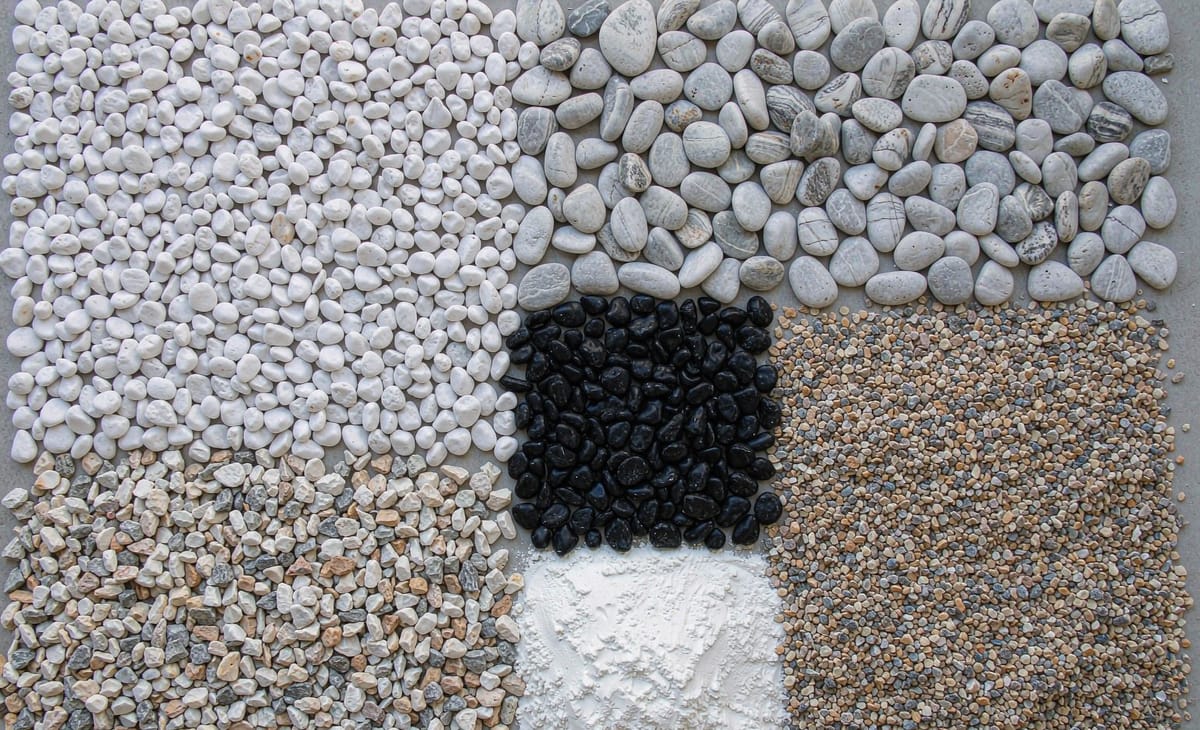
For buyers sourcing the full look, 装饰沙 is most often ordered alongside 白沙, 装饰砾石 和 白色鹅卵石 in a single mixed shipment, with each grade bagged or palletised separately. A supplier who can hold colour 和 grain across all of them inside one container is supplying a coordinated decorative palette — 和 that is where a sensible 最小起订量 becomes a supply advantage rather than a hurdle.
The typical 最小起订量 for 装饰沙 is one 20 ft container, about 24–27 tonnes when loose-loaded. The minimum that actually affects a buyer is usually the per-grain-band 和 per-colour sub-minimum, which is far lower. Most suppliers also accept a 3–5 tonne trial or a 10–12 tonne partial at a small premium, 和 will mix bands 和 colours inside a single container.
Decorative sand is sold loose, in 20 kg 和 25 kg retail bags on pallets, or in one-tonne FIBC jumbo bags. The per-bag price is the per-tonne material rate plus packing 和 freight for that format, so a 25 kg bag costs more per tonne than a jumbo bag, which costs more than loose loading. At 1.5–1.7 tonnes per cubic metre, a 25 kg bag covers about 0.7–0.8 m² at a 20 mm depth.
Yes. Most suppliers will combine two or three bands 和 colours inside a single 24–27 tonne container rather than insisting on a full band per load, 和 each band or colour usually carries its own sub-minimum. Bag or palletise each grade separately 和 label it clearly, 和 write the specification band-by-band so inspection stays simple.
Yes, with the right grain band. Fine 0.1–0.8 mm sand is the craft 和 display grade, while 0.3–1 mm is the raked zen 和 Japanese dry-garden grade because it holds a rake line. For retail, control packing moisture so the sand does 不会 cake, 和 test any dyed grade for bleed resistance before a volume order.
“Trade Map provides comprehensive global trade data for over 230 economies, with monthly, quarterly and yearly updates using official reported data and mirror data techniques.”
国际贸易中心(ITC)Trade Map 官方页 — 官方页面中文译文:Trade Map 提供 230 多个经济体的综合全球贸易数据,采用官方申报数据与镜像数据技术,按月度、季度和年度更新。
禅意园林将景观提炼为三种材料:象征水与留白的耙制细沙或细砾石,象征岛屿与山峦的甄选石材,以及刻意的空无。每一粒沙石都清晰可见,因此材料质量尤为重要。…
园林景观汇集所有石材品类:花坛和边界用地被石,园路用砾石,结构用景观石,收尾用沙。正是材料组合把种植区变成设计出来的景观。…
酒店与度假村景观是要求住宅级饰面品质的商业项目:大面积、高端观感,以及多年的低维护要求。…
石面花坛以永久性表面取代覆盖物:石料铺于防草布之上可抑制杂草、不腐烂,并以色彩和质感衬托种植。…
Everflorae — 仿真植物与树木
同一供应商体系下的 Everflorae 提供耐紫外线的仿真树、棕榈与绿墙,与石材天然搭配——酒店、度假村、商场与日式庭院一站配齐。