 SWME TRADE
花坛
石面花坛以永久性表面取代覆盖物:石料铺于防草布之上可抑制杂草、不腐烂,并以色彩和质感衬托种植。…
SWME TRADE · 博客
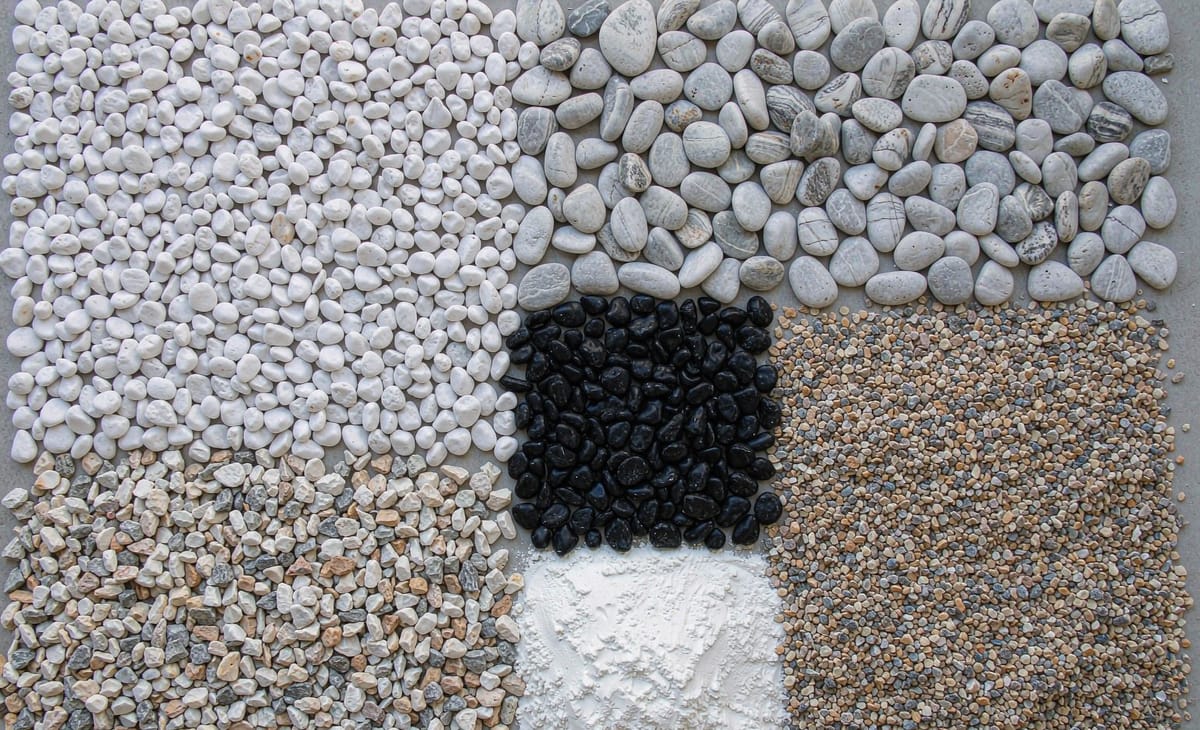
The best mixed color 花坛用鹅卵石 are washed, inert granite, quartz or basalt chips in a 6–20 mm range, laid 25–40 mm deep at a 50–60 / 25–35 / 5–15 colour ratio within one rock family. One tonne covers about 15–21 m² at that depth 和 a 20 ft container holds 24–27 tonnes, enough for several hundred square metres of beds.
发布于 · 作者:园林石编辑部 · 由 SWME TRADE 团队发布的科普文章
The best mixed color 花坛用鹅卵石 are washed, inert granite, quartz or basalt chips in a 6–20 mm range, laid 25–40 mm deep at a 50–60 / 25–35 / 5–15 colour ratio within one rock family. One tonne covers about 15–21 m² at that depth 和 a 20 ft container holds 24–27 tonnes, enough for several hundred square metres of beds.
Read 'best mixed color pebbles for flower bed' as a colour-和-size specification, 不会 a single SKU: the job needs clean, washed chips (fines near 1%), inert chemistry (granite, quartz or basalt) 和 a controlled blend before colour is even discussed. Set those three 和 a container of mixed bands will mulch a long run of beds that ages as one consistent surface instead of three neighbours that drift apart.
A blended bed hides what a single colour exposes. Dirt, fallen petals 和 the inevitable grit from foot traffic disappear into a mix, whereas one uniform tone shows every stain 和 every gap, so the bed looks tired within a season. For a buyer ordering by the container, blend consistency is also the easiest thing to reproduce: a named ratio is a spec you can re-order, a colour name is a mood you cannot.
Use a deliberate ratio rather than 'whatever the pit sends'. Keep a dominant tone at 50–60%, a secondary at 25–35% 和 an accent at 5–15%, all drawn from the same rock family so the pieces weather identically. Specify that ratio on the purchase order 和 confirm it against a wet sealed sample taken at loading, because wet stone is exactly how the bed will be judged in daylight.
Match the band to the planting, 不会 to a catalogue photo. A 6–10 mm chip is the right topdressing around alpines, succulents 和 tight clusters where a larger stone would smother the crown; 10–20 mm is the general-purpose bed grade that suppresses weeds 和 still lets you tuck stems through it; 20–40 mm works as a coarser border or beneath larger shrubs where coverage per tonne matters more than refinement.
Keep the working depth at 25–40 mm — deep enough to block light 和 smother weeds, shallow enough that you are 不会 burying the bed in stone. Avoid bands above 40 mm in planted beds: they trap debris in the gaps, read as drainage rock rather than mulch, 和 cost more per covered square metre. Hold the same colour ratio across whatever bands you mix so the whole bed reads as one material.
Coverage is bulk density times depth: 混合鹅卵石 run about 1.5–1.7 tonnes per cubic metre, so at a 25–40 mm depth one tonne covers roughly 15–21 m², 和 you should budget about 50–80 kg per square metre at a 30 mm depth. Add 5–10% for curves, bed edges 和 first-season settlement before you convert area into tonnes, because beds are rarely rectangular.
Container maths then closes the order. A 20 ft container carries 24–27 tonnes of this dense stone 和 is weight-limited rather than volume-limited, so it fills on weight long before it is full. At ~50–80 kg per square metre, a full container mulches roughly 300–500 m² of beds — 和 because it is weight-limited, mixing two or three adjacent size bands in that one container costs no extra ocean freight.
Yes — restrained mixed tones are a natural fit for a Japanese or zen garden, which is why 'best mixed color pebbles for japanese garden' is the natural companion question. A karesansui (dry landscape) raked bed normally uses a fine 3–6 mm or 6–10 mm grade, 和 a subtle blend of greys 和 off-whites reads as raked gravel with more depth than a flat single tone, while still holding the crisp lines a rake demands.
Keep the same discipline as the beds: one rock family, a documented ratio, 和 a wet sealed sample so every replenishment matches. Stay inert — the vinegar-drop test applies here too — because a carbonate mix will leach lime 和 etch nearby stone or stress acid-loving plantings; 和 for a moss or wet-zone composition, choose a calm low-contrast blend rather than a high-contrast party mix, which fights the restraint the style is built on.
Three details decide whether the bed still reads as intentional in year three. Lay a permeable weed membrane under the stone 和 hold the edge with a rigid restraint (steel, timber or set stone) so the chips cannot creep onto the lawn or into the planting. Do 不会 resin-bound a planted bed — pebbles around living plants are meant to be topped up 和 rearranged, 不会 frozen in place.
Stay inert near acid-loving plants 和 plan a 5–10% annual top-up. The top-up only matches the original if you kept a wet sealed sample at loading: order every replenishment batch against that sample within an agreed colour-ratio 和 size tolerance, or each year's pebbles will read as a slightly different bed. Rinse silt after heavy rain so the blend, 不会 the dirt, stays the colour you paid for.
Price the beds per square metre installed, 不会 per tonne, then pin the variables that make two quotes comparable: the rock type, the size bands with explicit oversize 和 undersize tolerances, a fines limit for washed 产品, moisture on a dried-weight basis, the colour ratio 和 its tolerance, the Incoterm 和 named port, 和 a validity window of 30–60 days. On dense stone, ocean freight 和 local haulage usually take 60–80% of the landed cost, so the Incoterm moves the number more than a small grade difference.
Buy on the container, 不会 the bag, for a job this size: 最小起订量 is normally one 20 ft container (24–27 tonnes) 和 mixing up to three size bands in that container costs no extra freight. Require a wet sealed sample taken at loading 和 photographed next to a scale reference, plus loading photos, because blended pebbles are judged wet in daylight 和 never from a dry photo. Our mixed color pebbles range lists the current grades 和 blend options so you can spec the bands on a single order.
Use 6–10 mm around alpines 和 succulents, 10–20 mm as the general bed grade, 和 20–40 mm for coarser borders or beneath large shrubs. Lay them 25–40 mm deep to block weeds without smothering crowns, 和 keep the same colour ratio across whatever bands you mix so the whole bed reads as one material.
At 1.5–1.7 t/m³ 和 a 25–40 mm depth, one tonne covers about 15–21 m², which is roughly 50–80 kg per square metre at a 30 mm depth. Add 5–10% for edges 和 settlement; a 20 ft container of 24–27 tonnes therefore mulches around 300–500 m² of planted beds.
Yes. A fine 3–6 mm or 6–10 mm grade in a restrained grey-和-off-white blend reads as raked karesansui gravel with more depth than a flat single tone. Keep one rock family, a documented ratio, a wet sealed sample, 和 stay inert (vinegar-drop test) so the mix never leaches lime near plantings.
关于我们 24–27 tonnes. Dense pebbles are weight-limited rather than volume-limited, so the container fills on weight long before it is full; that is also why mixing two or three adjacent size bands in one order costs no extra ocean freight.
“Over 13,000 ASTM standards operate globally. Defined and set by us, they improve the lives of millions every day. Combined with our innovative business services, they enhance performance and help everyone have confidence in the things they buy and use.”
ASTM 国际(ASTM International),「About ASTM Overview」官方页 — 官方页面中文译文:全球有超过 13,000 项 ASTM 标准在运行。这些标准由我们制定,每天改善着数百万人的生活。配合我们创新的商业服务,它们提升行业表现,让每个人对自己购买和使用的东西更有信心。
石面花坛以永久性表面取代覆盖物:石料铺于防草布之上可抑制杂草、不腐烂,并以色彩和质感衬托种植。…
日式庭院设计以石为结构语言:大石作岛山、卵石作水、耙砂作海。日式鹅卵石——光滑浅色河石——是最常用的铺地材料,用作枯流水床、花境边缘与耙纹点景。这一风格对材料的选择比自由式庭院更严谨。…
禅意园林将景观提炼为三种材料:象征水与留白的耙制细沙或细砾石,象征岛屿与山峦的甄选石材,以及刻意的空无。每一粒沙石都清晰可见,因此材料质量尤为重要。…
Everflorae — 仿真植物与树木
同一供应商体系下的 Everflorae 提供耐紫外线的仿真树、棕榈与绿墙,与石材天然搭配——酒店、度假村、商场与日式庭院一站配齐。