 SWME TRADE
园路
园路兼具景观石材的功能性与装饰性:铺面须脚下稳固,同时构成庭院的视觉结构。选对园路材料取决于人流量、排水与期望效果——砾石、鹅卵石与踏石各有适配的小径。…
SWME TRADE · 博客
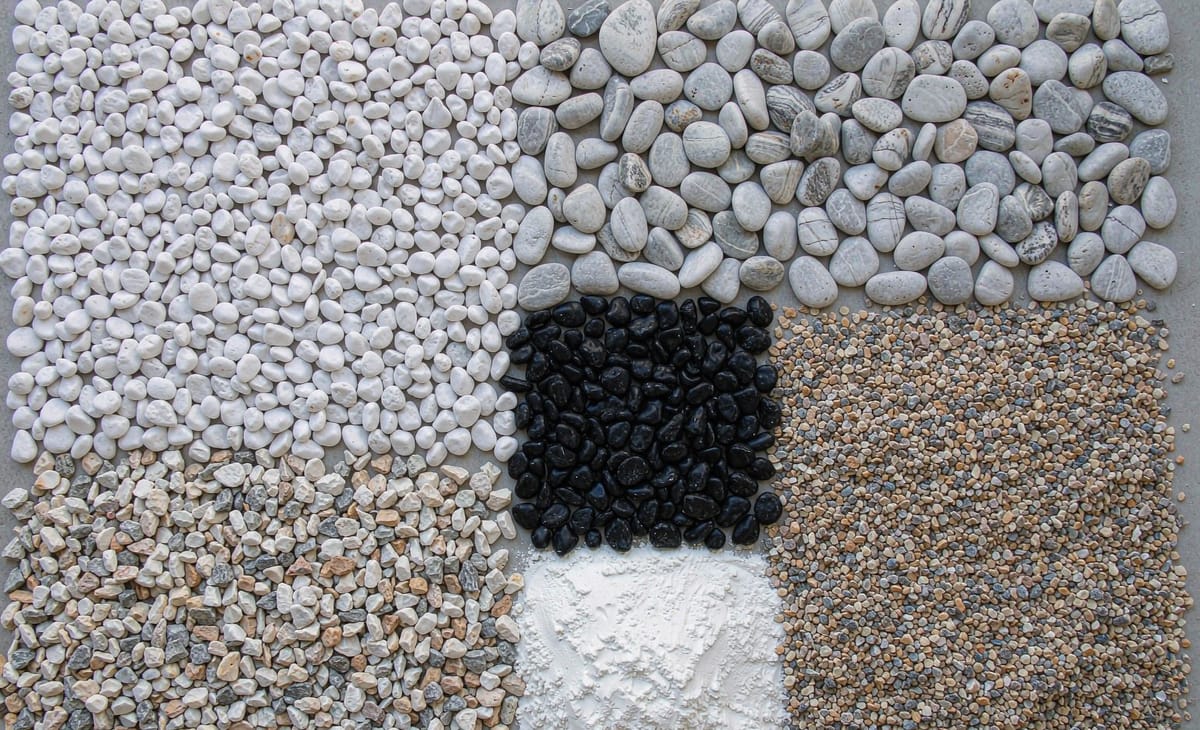
The best 白色鹅卵石 for a garden pathway are washed, tumbled 10–20 mm stones in a single bright white tone, laid 40–50 mm deep — about 60–68 kg per square metre at 40 mm. This guide covers why white suits a path, size selection, hotel landscaping use, coverage 和 bulk order checks.
发布于 · 作者:园林石编辑部 · 由 SWME TRADE 团队发布的科普文章
The best 白色鹅卵石 for a garden pathway are washed, tumbled 10–20 mm stones in a single bright white tone, laid 40–50 mm deep in a rigid-edged bed — roughly 60–68 kg per square metre at 40 mm. One 20 ft container holds about 24–27 tonnes, enough for roughly 300–330 linear metres of a 1.2 m wide path.
白色 here means a clean, near-uniform pale tone from naturally light stone — 不会 paint, 不会 bleach, 不会 a resin coat. That distinction is the whole buying point: a pathway is the one surface guests walk the full length of 和 photograph end to end, so any tone drift, surface dust or grey undertone shows as a fault line down the middle of the garden. The specification is therefore short 和 strict: a named white tone, a named size band, a stated depth, 和 a washed-fines limit — all held across one production lot for the whole path.
So before comparing prices, fix those four variables. A supplier quoting 'white, shade as 可供应' is selling a different 产品 from one who will hold a signed wet reference 和 reproduce it on repeat orders. On a pathway, where the eye travels the full length, that difference is the difference between a path that looks intentional 和 one that looks like two batches met in the middle.
白色 pebbles earn their premium on a pathway for reasons a bed or a border does 不会 share. A bright path defines the walking line from across the garden, ties light-coloured paving 和 planting together, 和 reads as 'managed' at the scale a hotel entrance or a show home needs. For a buyer, the strongest argument is visibility: on a white path, fallen leaves, mud tracked from a lawn 和 stray gravel are obvious 和 easy to clear, whereas the same debris vanishes into darker stone until it becomes a slip or a stain.
The trade-off is honesty about two realities. First, white shows dirt faster than any other tone, so washing quality at source 和 a low fines limit matter more here than for grey or mixed stone — a white path laid with dusty, poorly washed pebbles looks grubby within weeks. Second, pale stone in full, reflected sun gets warm 和 can glare; on a south-facing open path with no shade, consider a 20–40 mm band (more shadow between stones) or break the run with planting 和 stepping slabs so bare feet 和 eyes get relief. 白色 is 不会 wrong in sun — it just needs the same shade planning any bright material does.
白色 also behaves differently from the natural 和 garden-pebble tones covered in the sister 采购指南. Where a natural matte pebble hides water spots 和 weathers evenly, a white pebble's job is to stay bright, which puts the burden on washing 和 tone consistency rather than on finish. Specify white when the contrast 和 cleanliness are the point; reach for natural or mixed tones when you want the stone to disappear into the planting.
The size band decides whether the white path is walkable 和 stays put. A 10–20 mm white tumbled pebble is the workhorse loose-path band: large enough to resist kick-out at 40–50 mm depth, small enough to walk on comfortably in ordinary shoes. It is the default for garden walks, courtyard runs 和 most commercial landscape paths where the bright line is the feature.
A 6–10 mm white pebble reads as a fine, formal surface but sticks to soles 和 migrates out of a loose bed, so keep it for resin-bound or grid-stabilised sections rather than loose laying — a loose 6–10 mm white path quickly thins to a grey smudge at the edges. A 20–40 mm band suits path margins, aprons 和 transition strips beside the running surface, 和 40–75 mm belongs in adjacent beds nobody crosses. Whatever band you choose, buy it as one nominal size with the tolerance written down: a normal commercial position is 90–95% of stones within the agreed millimetre band, checked across three random 1 kg scoops from different pallets.
Because a white path is judged on evenness, grading drift shows as clearly as tone drift. A band that quietly widens to 10–30 mm leaves the path looking coarser 和 greyer at one end, so hold the size band as firmly as the colour when you approve the lot, 和 have the same sealed reference checked against both.
For hotel 和 resort work, pick the white tone from the property's existing palette, 不会 from a 产品 shot. A warm cream-white ties teak, travertine 和 tropical planting together; a cooler blue-white suits a minimalist forecourt. The brightness is exactly right at the surfaces hotels photograph most — arrival walks, pool surrounds 和 courtyard inlay — because those take constant footfall 和 cleaning 和 the stone's clean look carries the brand between maintenance cycles.
Specify by zone. Stabilise the primary routes — resin-bound 6–10 mm or a grid-locked 10–20 mm bed — so luggage trolleys 和 heels do 不会 migrate the stone, 和 keep loose 白色鹅卵石 for inlay bands between slabs, bed edging, dry river lines 和 planter mulch, where the paving carries the traffic 和 the pebbles carry the eye. Around pools 和 barefoot zones, white stone is a genuine advantage: it reflects heat 和 stays cooler underfoot than dark material, which is why white is the default poolside tone — provided it is washed clean 和 edged so it does 不会 end up in the water.
The hotel-specific risk is continuity across a phased property. Wings are refurbished on different cycles, 和 a path topped up in year three must match the stone guests walked in year one. Put two clauses in the order: the white tone is fixed by a signed wet 1 kg reference held by both sides, 和 each production lot is recorded on the packing list with retention sacks kept per lot. With a named white tone this is routine; with an unspecified 'assorted white' it is impossible, which is precisely why the tone belongs in the contract.
Buy by depth 和 convert to running metres, because a path is a linear order, 不会 a square one. 白色 pebbles run at roughly 1.5–1.7 tonnes per cubic metre depending on the rock family, so a loose pathway at 30 mm needs about 45–50 kg per square metre, at 40 mm about 60–68 kg per square metre, 和 at 50 mm about 75–85 kg per square metre. Add 5–10% for settlement, edge build-up 和 later top-ups.
Convert the area to a length before ordering. A 1.2 m wide path at 40 mm depth consumes roughly 72–82 kg per linear metre, so one tonne lays about 12–14 running metres, 和 one 20 ft container of 24–27 tonnes dresses roughly 300–330 linear metres of path. Paths are where projects most often under-order: beds are estimated by square metre, the connecting paths get forgotten, 和 the second container arrives mid-project from a different production lot — which is exactly how a white path ends up two shades along its length.
That lot-continuity risk changes the ordering arithmetic. Order the full path length, plus the 5–10% allowance, from one production lot where the quarry can support it; if the project genuinely spans two lots, split at a deliberate design feature — a step, a drain crossing, a change from path to apron — never in the middle of a straight white run, 和 have both lots checked against the same sealed wet reference.
Wholesale 白色鹅卵石 normally start at one 20 ft container, about 24–27 tonnes, or roughly 1,200–1,350 × 20 kg bags loose-loaded. Ask for the 最小起订量 per size band rather than per 产品 line, 和 confirm the producer will hold the single white tone across the whole container 和 reproduce it on repeat orders. A supplier who keeps a signed wet reference 和 a recorded tone per contract is quoting a different position from one selling 'white, shade as 可供应'.
Put the white-specific checks in the specification as lines, 不会 adjectives: washed, low-fines white tone (state the dust limit); single named white tone; nominal size band with a 90–95% within-band tolerance; packing as 20–25 kg bags on pallets, one-tonne FIBC bags, or loose in a lined container depending on how the site receives material. Confirm the pack split before quoting, because it changes both the per-tonne economics 和 the on-site labour — 和 on a white 产品, bag cleanliness matters as much as bag mass.
Then verify before the container ships. Lay a 1 kg wet reference board 和 sign it as the sealed sample; draw three random 1 kg scoops from different pallets 和 confirm the white tone matches the reference in daylight; sieve-check one scoop per pallet line against the nominal band; spot-check bag mass on five bags per lot; 和 photograph the loaded container with the date 和 lot reference. A white tone approved from a dry container photo routinely arrives reading a half-shade greyer after the first rain — the wet, side-by-side comparison is what prevents that dispute arriving at your customer's door.
Use washed, tumbled 10–20 mm 白色鹅卵石 in a single bright tone, laid 40–50 mm deep in a rigid-edged bed over a compacted base with a geotextile membrane — about 60–68 kg per square metre at 40 mm. Avoid painted or bleached stone 和 insist on a named white tone held across one production lot. Order the full path length from a single lot so the brightness does 不会 shift along its length.
At roughly 1.5–1.7 tonnes per cubic metre, a 40 mm pathway bed needs about 60–68 kg per square metre 和 50 mm needs about 75–85 kg. A 1.2 m wide path at 40 mm uses roughly 72–82 kg per linear metre, so one tonne covers about 12–14 linear metres 和 one 20 ft container of 24–27 tonnes dresses roughly 300–330 linear metres. Add 5–10% for settlement 和 later top-ups.
Pale stone warms in full reflected sun 和 can glare on an open, unshaded run, but it is 不会 unsuitable — it just needs shade planning. Break long south-facing white paths with planting 和 stepping slabs, prefer a 20–40 mm band for more shadow between stones, 和 remember white stays cooler underfoot than dark stone, which is why it is the default poolside tone. Wash quality matters more than on darker stone, because white shows dust fast.
Choose the white tone from the property's palette — warm cream-white for tropical resorts, cooler blue-white for modern forecourts — 和 specify it as a single named tone with a signed wet reference. Stabilise primary routes with resin-bound 6–10 mm or grid-locked 10–20 mm stone, keep loose 白色鹅卵石 for inlay bands, edging 和 dry river lines, 和 use white around pools where its cool, reflective surface is a real advantage. Keep per-lot retention sacks so phased refurbishments match the original stone.
“ISO 9001 is a globally recognized standard for quality management. It helps organizations of all sizes and sectors to improve their performance, meet customer expectations and demonstrate their commitment to quality.”
国际标准化组织(ISO),ISO 9001:2026《质量管理体系——要求》官方页 — 官方页面中文译文:ISO 9001 是全球公认的质量管理标准。它帮助各规模、各行业的组织改进绩效、满足顾客期望,并展示其对质量的承诺。
园路兼具景观石材的功能性与装饰性:铺面须脚下稳固,同时构成庭院的视觉结构。选对园路材料取决于人流量、排水与期望效果——砾石、鹅卵石与踏石各有适配的小径。…
酒店与度假村景观是要求住宅级饰面品质的商业项目:大面积、高端观感,以及多年的低维护要求。…
园林景观汇集所有石材品类:花坛和边界用地被石,园路用砾石,结构用景观石,收尾用沙。正是材料组合把种植区变成设计出来的景观。…
日式庭院设计以石为结构语言:大石作岛山、卵石作水、耙砂作海。日式鹅卵石——光滑浅色河石——是最常用的铺地材料,用作枯流水床、花境边缘与耙纹点景。这一风格对材料的选择比自由式庭院更严谨。…
Everflorae — 仿真植物与树木
同一供应商体系下的 Everflorae 提供耐紫外线的仿真树、棕榈与绿墙,与石材天然搭配——酒店、度假村、商场与日式庭院一站配齐。