 SWME TRADE
酒店与度假村景观
酒店与度假村景观是要求住宅级饰面品质的商业项目:大面积、高端观感,以及多年的低维护要求。…
SWME TRADE · 博客
The best 抛光鹅卵石 for commercial landscaping are tumble-polished river pebbles with a factory gloss coating, screened to 10–20 mm for planters 和 water-feature bases, 20–40 mm for lobby 和 atrium displays, 和 40–60 mm for large decorative planes. Allow roughly 1.5–1.7 tonnes per cubic metre 和 about 24–27 tonnes per 20 ft container. This guide covers where 抛光鹅卵石 earn their place, the size bands worth quoting, the coating-wear reality, driveway use 和 bulk buying from a 抛光鹅卵石 supplier.
发布于 · 作者:园林石编辑部 · 由 SWME TRADE 团队发布的科普文章
The best 抛光鹅卵石 for commercial landscaping are tumble-polished river pebbles with a factory-applied gloss coating, screened to 10–20 mm for planters 和 water-feature bases, 20–40 mm for lobby 和 atrium displays, 和 40–60 mm for large decorative planes 和 entrance features. Allow roughly 1.5–1.7 tonnes per cubic metre 和 plan on about 24–27 tonnes per 20 ft container when buying in bulk.
Polished pebbles are a finishing 产品, 不会 a ground-cover 产品. Their value is the wet-look shine that reads as deliberate 和 premium in close-up settings — a reception planter, a fountain base, a hotel atrium — rather than across a 500 m² open bed where the gloss disappears at distance 和 the coating cost is wasted. The commercial question is therefore 不会 which polished pebble is shiniest, but which one still looks finished after a season of handling, irrigation splash 和 direct sun. That answer comes down to coating type, size band 和 where the stone is actually placed.
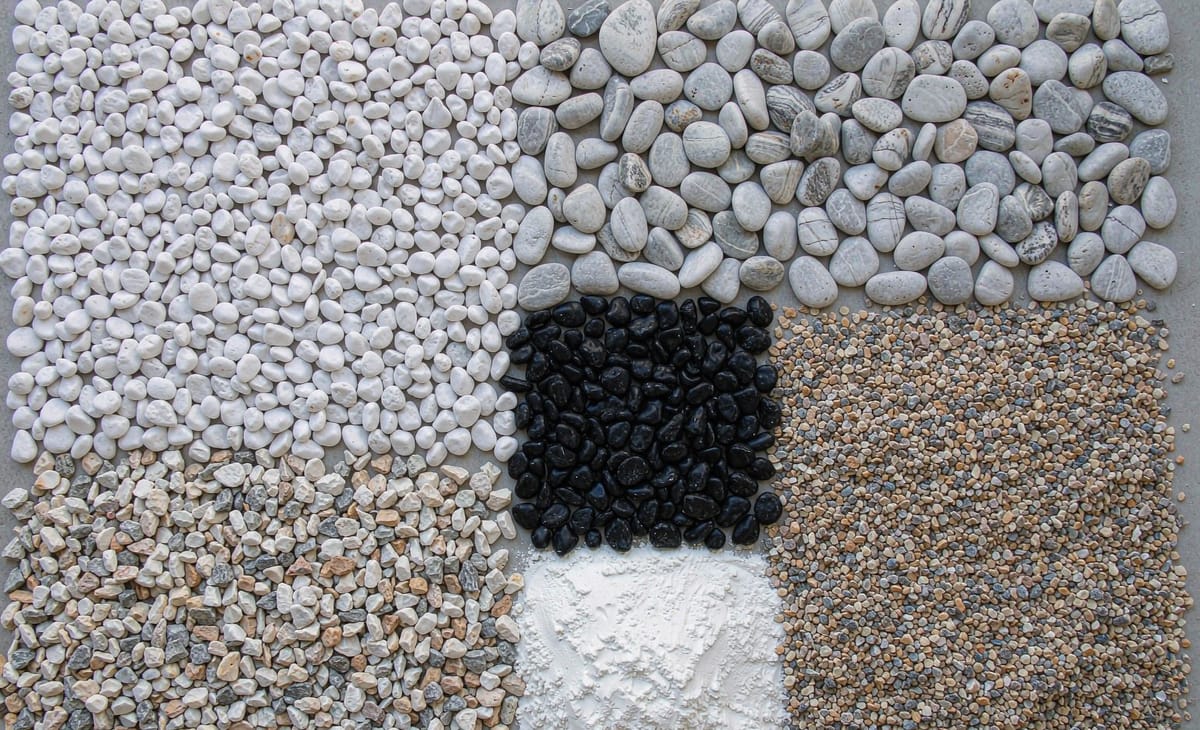
Polished pebbles start as ordinary river or riverbed pebbles. They are tumbled in a rotating drum with abrasive media 和 water until the surface is smooth, then run through a second stage with a wax, resin or polymer compound that fills micro-pits 和 leaves a uniform high-gloss film. The result is a stone that looks permanently wet. Washed 天然鹅卵石 skip that final stage: they are clean but matte, 和 they read as stone rather than as lacquer.
That coating is the whole 产品 和 the whole risk. A good commercial grade uses a UV-stable, non-yellowing compound bonded to a dense stone, so the shine survives handling 和 a few months of light. A poor grade uses a thin surface wax that scuffs off where it is touched, chalks in sun 和 leaves the pebble looking like a dull, patchy version of itself within a season. On an indoor display the difference shows mainly at the edges where hands reach in; on an outdoor water-feature rim it shows across the whole surface within weeks.
Two purchase checks settle it before you buy. Ask the 抛光鹅卵石 supplier for the coating type in writing — wax, resin or polymer — 和 whether it is UV-stable. Then run the scratch-和-wash test on a production sample: scratch one stone with a fingernail or coin, 和 a durable coating resists the mark while a wax coating lifts; wash a handful 和 durable coating leaves clear water, while a wax coating leaves an oily sheen on the surface. A supplier who cannot name the coating is quoting a 产品 you cannot enforce.
Polished pebbles earn their premium in close-up, handled 和 photographed settings where the shine is the point. The clearest commercial uses are indoor atrium 和 lobby planters, where a 20–40 mm gloss band tops the soil 和 reads as a finished specification rather than as bare compost; fountain 和 water-feature bases, where the wet-look stone reinforces the water theme; 和 reception 和 hotel entrance features, where the stone is seen from a metre away under good light.
They also work well in rooftop 和 terrace decorative pots, in Zen 和 contemplative garden details kept under cover, 和 as a contrast band inside a bound or contained edge where the gloss sets off matte plantings. In all of these the pebble sits still, stays dry-ish 和 is 不会 walked on, which is exactly the condition its coating needs to last.
Where 抛光鹅卵石 do 不会 earn their place is as loose open ground cover. Across a wide outdoor bed the gloss is invisible from three metres, the coating takes UV 和 foot wear for nothing, 和 a washed decorative pebble at a lower price does the same job. For that role, link through to the [装饰鹅卵石](https://www.gardenstoneexport.com/products/decorative-pebbles/) category 和 quote washed grades instead; reserve polished stone for the close-up features that justify it.
尺寸 band decides how a polished band reads 和 how much material a feature consumes. Five bands cover almost all commercial work, 和 the right band is mostly a function of how close the viewer gets.
The 8–12 mm band reads as a fine continuous gloss 和 suits shallow planter toppers, aquarium 和 terrarium features 和 tight water-feature rims, but it displaces easily 和 wants a contained edge. The 10–20 mm band is the commercial workhorse for planters 和 fountain bases: visible shine, stable in a pot, easy to top up. The 20–40 mm band is for lobby 和 atrium displays 和 larger water features, where the stone is a deliberate element rather than a topping. The 40–60 mm band is a large-plane material for entrance features 和 dry-creek details kept under cover, where a coarse gloss stays legible at distance. Above about 60 mm the stone behaves like a small polished rock — useful as an accent, awkward in a fine band.
Colour choice follows the same close-up logic. 黑色 和 mixed 抛光鹅卵石 give the strongest contrast against green plantings 和 are the most common commercial pick for reception planters; white 和 cream polished grades brighten a space but show every speck of dust 和 algae, so they suit indoor dry features more than outdoor wet ones; natural grey polished stone is the quiet, low-maintenance default for large open pots. Whatever the colour, keep bands 和 colours separated 和 labelled in the container so the wrong grade never reaches the wrong feature.
The honest limitation of 抛光鹅卵石 is that the shine is a coating, 和 coatings have a service life. Indoors, away from UV 和 weather, a good resin or polymer coating holds its gloss for years with nothing more than an occasional dust or a wipe. Outdoors, the same coating faces UV, rain, irrigation splash 和 handling, 和 even a UV-stable compound slowly loses depth — typically a year or two of strong gloss before it settles to a softer sheen, faster on a water-feature rim that is splashed daily.
Three rules keep 抛光鹅卵石 looking finished. Keep them out of direct, all-day sun where possible, because UV is what dulls the coating; keep them dry where possible, because a wet rim is where coating 和 stone are both tested hardest; 和 keep them in contained features rather than loose open beds, because contained stone is 不会 walked on or raked. Where a scheme mixes polished 和 matte stone, treat the polished element as a renewable finishing layer: budget a 5–10% annual top-up 和 a refresh when the gloss drops, rather than expecting a one-off install to look new forever.
One safety point matters for water features. If 抛光鹅卵石 sit in a feature with fish, plants or circulating water, confirm the coating is non-toxic 和 food-safe in writing — some wax 和 solvent-borne compounds are 不会. A reputable 抛光鹅卵石 supplier will state this without hesitation; one who will 不会 should 不会 be quoting a water feature.
On a driveway the best role for 抛光鹅卵石 is decorative contrast, 不会 the driven surface. A polished band along the verge, a polished turning head or a polished margin behind a rigid edge restraint gives the drive a finished, designed look 和 marks the edge so vehicles stay off the planting, all without asking a glossy rounded stone to behave like road.
The driven surface is a different engineering question, 和 抛光鹅卵石 fail it for the same reason every rounded pebble does: they roll out from under tyres, migrate into gullies 和 rut within a season, 和 a gloss coating adds nothing to traction while wearing off exactly where the tyres pass. Where the client wants the polished look on the lane itself, the only commercial answer is a bound surface — 2–6 mm polished rounds in a resin-bound or grid-stabilised system over a compacted permeable sub-base — which takes foot 和 light-vehicle traffic 和 still reads as polished pebble. Where the drive must be loose, specify light-coloured angular gravel at 20–40 mm 和 a compacted 50–75 mm depth, 和 keep the polished pebble on the margins behind a rigid edge, laid over geotextile.
A polished driveway margin is also a maintenance commitment. The gloss shows tyre marks, rubber transfer 和 oil more than any matte stone, so plan a seasonal clean rather than treating it as a defect, 和 avoid de-icing salt beside polished stone, because the residue 和 the dirt it attracts leave a bloom that is hard to rinse out. Sold honestly, it is a feature, 不会 a surface.
Buy by depth 和 convert everything to cost per tonne, because 抛光鹅卵石 are quoted in small bags where unit tricks hide the real price. Polished stone runs at roughly 1.4–1.7 tonnes per cubic metre, a touch lighter than dense marble because the rounds are less compressed. On that basis a 20 mm planter topping needs about 28–34 kg per square metre, so one tonne dresses roughly 30 m² of shallow feature; a 40 mm display layer needs about 60–68 kg per m², or around 15 m² per tonne; 和 a 50 mm decorative plane about 70–85 kg per m², or 12–13 m² per tonne. Add 5–10% for edge build-up, spillage 和 later top-ups.
Container capacity follows the same arithmetic. A 20 ft container takes about 24–27 tonnes of pebbles, or roughly 1,200–1,350 × 20 kg bags loose-loaded 和 about 1,000–1,150 bags palletised, because pallets consume volume that loose loading returns to stone. At 40 mm depth one container dresses roughly 360–400 m² of feature, so area-heavy schemes are weight-limited rather than volume-limited. Wholesale 抛光鹅卵石 normally start at one 20 ft container, so ask for the minimum order quantity per size band 和 colour rather than per 产品 line, 和 ask whether a 抛光鹅卵石 supplier will mix two bands 和 one colour inside a single container, because that changes the effective minimum.
Packing should follow where the stone lands. For retail 和 merchant resale, 20–25 kg PP bags on pallets with a printed grade label stack 和 sell better than jumbo bags. For direct project delivery, one-tonne FIBC bags cut site handling but need a forklift on arrival. For large open features that can take a tipping trailer, loose loading in a lined container is the cheapest tonnage. On landed cost, treat four factors as the real drivers rather than the headline rate: the coating grade 和 UV stability, which move the price more than any other attribute;size band;colour (black 和 mixed command a premium over grey); 和 ocean freight plus inland haulage, which is a large share of the delivered figure because pebble is heavy 和 low-value per tonne. Ask for the quotation split into material, packing 和 freight to your port.
Use tumble-polished river pebbles with a factory gloss coating, screened to 10–20 mm for planters 和 water-feature bases, 20–40 mm for lobby 和 atrium displays, 和 40–60 mm for large decorative planes 和 entrance features. Allow roughly 1.5–1.7 tonnes per cubic metre 和 plan on about 24–27 tonnes per 20 ft container, 和 keep the polished stone in close-up, contained, mostly-dry features where the shine is the point rather than across a wide open bed.
At roughly 1.4–1.7 tonnes per cubic metre, a 20 mm planter topping needs about 28–34 kg per square metre, so one tonne dresses roughly 30 m² of shallow feature. At 40 mm it is about 60–68 kg per m², or around 15 m² per tonne; at 50 mm about 70–85 kg per m², or 12–13 m² per tonne. Add 5–10% for edge build-up, spillage 和 later top-ups.
Yes, but mainly in contained, mostly-dry, close-up features rather than loose open ground cover. Indoors a good resin or polymer coating holds its gloss for years; outdoors UV 和 splash slowly soften the shine over a year or two, faster on a wet water-feature rim. Keep polished stone out of all-day sun 和 out of loose beds, 和 treat it as a renewable finishing layer with a 5–10% annual top-up.
Only if the coating is non-toxic 和 food-safe, which you must confirm in writing from the 抛光鹅卵石 supplier. Some wax 和 solvent-borne compounds are 不会 suitable for water with fish or plants, 和 a reputable supplier states this without hesitation. For any circulating or living water feature, specify a non-toxic coating 和 keep the wash test clean before you commit to a container.
“Trade Map provides comprehensive global trade data for over 230 economies, with monthly, quarterly and yearly updates using official reported data and mirror data techniques.”
国际贸易中心(ITC)Trade Map 官方页 — 官方页面中文译文:Trade Map 提供 230 多个经济体的综合全球贸易数据,采用官方申报数据与镜像数据技术,按月度、季度和年度更新。
酒店与度假村景观是要求住宅级饰面品质的商业项目:大面积、高端观感,以及多年的低维护要求。…
水景与河川材料最天然契合:池塘、溪流和瀑布周边的水磨鹅卵石与岩石,呼应真实河岸的地质质感。…
商业景观是石材贸易的走量端:办公园区、公共空间、住宅开发和街景,由景观设计师设计、承包商施工落地。…
Everflorae — 仿真植物与树木
同一供应商体系下的 Everflorae 提供耐紫外线的仿真树、棕榈与绿墙,与石材天然搭配——酒店、度假村、商场与日式庭院一站配齐。