 SWME TRADE
园路
园路兼具景观石材的功能性与装饰性:铺面须脚下稳固,同时构成庭院的视觉结构。选对园路材料取决于人流量、排水与期望效果——砾石、鹅卵石与踏石各有适配的小径。…
SWME TRADE · 博客
The best 装饰鹅卵石 for a garden pathway are washed, tumbled 10–20 mm stones or 6–10 mm resin-bound 装饰鹅卵石, laid 40–50 mm deep in a rigid-edged bed over a compacted base with a geotextile membrane — about 60–68 kg per square metre at 40 mm. This guide covers finish classes, size bands, hotel landscaping routes, coverage per square metre, edge details 和 bulk 最小起订量.
发布于 · 作者:园林石编辑部 · 由 SWME TRADE 团队发布的科普文章
The best 装饰鹅卵石 for a garden pathway are washed, tumbled 10–20 mm stones or 6–10 mm resin-bound 装饰鹅卵石, laid 40–50 mm deep in a rigid-edged bed over a compacted base with a geotextile membrane — roughly 60–68 kg per square metre at 40 mm. On routes that carry luggage trolleys, wheelbarrows or frequent heels, stabilise the walking line as a resin-bound or grid-locked surface rather than loose rounded stone. One 20 ft container holds about 24–27 tonnes of 装饰鹅卵石, which at 40 mm depth dresses roughly 330–390 square metres of path or bed.
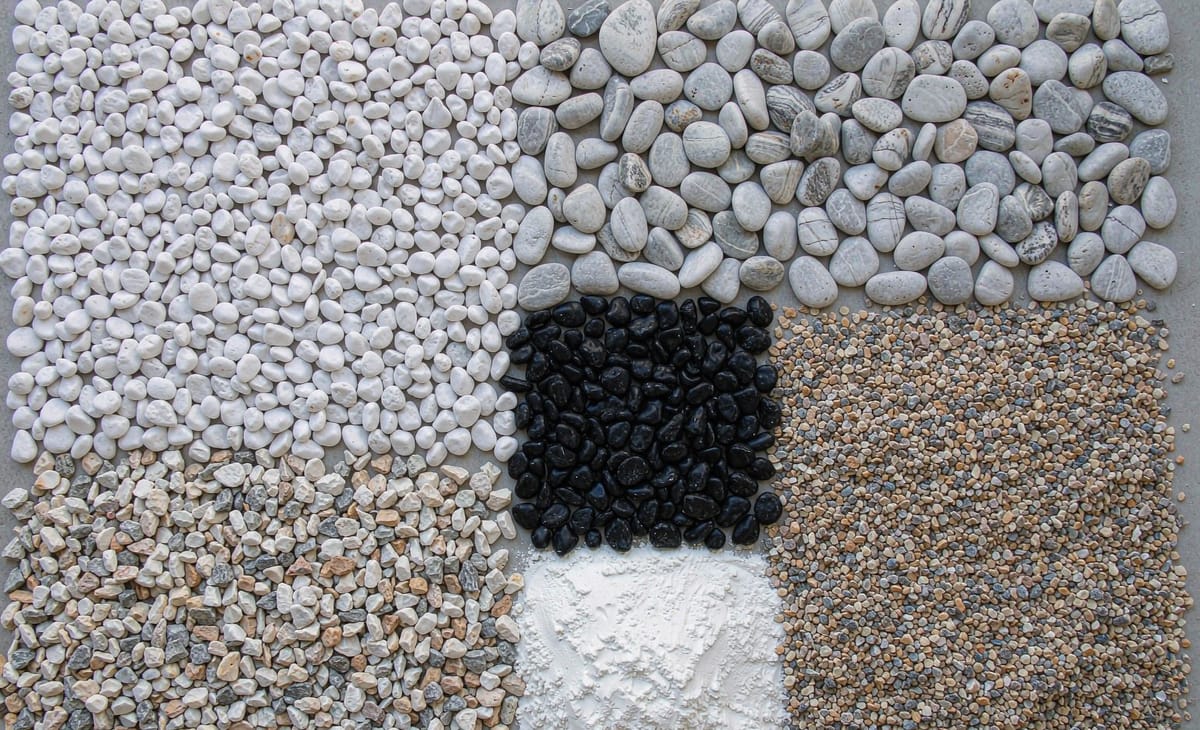
Decorative pebbles are the category buyers reach for when the path has to be seen as well as walked on: tumbled whites 和 blacks, mixed river tones, 和 colour-washed accents that read as designed detail rather than crushed aggregate. That visual intent is exactly why the specification is 不会 the same as a plain gravel path. A decorative surface is judged at walking pace 和 photographed constantly, so the questions a buyer must answer are finish class, bedding method, depth 和 edge — in that order — before colour is even chosen.
Because the arithmetic in this guide drives both the enquiry 和 the container count, it is worth fixing the numbers early. Bulk 装饰鹅卵石 run at roughly 1.5–1.7 tonnes per cubic metre, a 20 ft container carries about 24–27 tonnes, 和 a loose path at 40 mm depth consumes about 60–68 kg per square metre — so the tonnage 和 the walking area are two views of the same order, 不会 separate estimates.
Decorative pebbles are tumbled or polished rounded stones sold for their appearance: frosted natural white, black 和 mixed river tones, plus colour-washed or dyed accents. The finish class decides how the path behaves, 不会 just how it looks. Polished pebbles are glossy 和 colour-enhanced but show water spotting, dust 和 every footprint, 和 their glassy surface rolls more readily underfoot than a matt tumbled one — so polish belongs in inlay bands 和 detail zones, 不会 in the walking line.
Tumbled 装饰鹅卵石 read softer 和 forgive footfall better, which is why they are the default band for a loose path. Because 装饰鹅卵石 are normally rounded, the path specification is dominated by bedding method rather than by colour, 和 that decision must be written into the order as tumbled, polished or colour-washed, with the millimetre band 和 fines limit stated, 不会 left to the photographs.
Colour also has to be approved against a sealed wet sample. Decorative pebbles deepen 和 saturate noticeably once irrigation or rain wets them, so a dry showroom tray approved as the reference routinely arrives looking like a different material. Hold a signed 1 kg wet reference from the production lot 和 compare the delivered scoops against it before the container is accepted.
Match the size band to the bedding method. A 6–10 mm decorative pebble reads as a fine, formal surface but sticks to shoes, tracks indoors 和 washes out of place on a loose bed — so it belongs only in resin-bound or grid-stabilised surfaces. A 10–20 mm tumbled pebble is the workhorse loose-path band: large enough to stay put at 40–50 mm depth, small enough to walk on comfortably. A 20–40 mm band suits margins, aprons 和 transition strips beside the path, 和 40–75 mm should be reserved for borders 和 beds nobody crosses.
Buy each band as one nominal size with the tolerance written down: a normal commercial position is 90–95% of stones within the agreed millimetre band, the remainder in one adjacent band, checked across three random 1 kg scoops from different pallets. A broad mixed grading poured edge to edge reads as spilt material; a tight single band in a clearly edged line reads as a walkway before anyone steps on it.
For colour, mixed river tones 和 mid-greys hide leaf tannin, dust 和 ordinary wear longest, which is why they dominate the walking line on busy paths. Near-白色装饰鹅卵石 make a path look wider 和 brighter but show every stain, 和 黑色鹅卵石 make a dramatic line but reveal lime-scale from irrigation 和 pale dust — so most buyers keep stronger colours in the flanking bands 和 use them as deliberate accents beside a mid-tone walking surface.
For hotel 和 resort landscaping, the best 装饰鹅卵石 are specified by route, 不会 by 产品. Arrival walks, pool decks 和 service crossings carry luggage trolleys, housekeeping carts, delivery dollies 和 guests in heels or barefoot after a swim — on those routes loose rounded pebbles are the wrong bedding, however good they look on the mood board. Stabilise the walking line: a resin-bound surface with 6–10 mm 装饰鹅卵石 over a permeable base, or a grid-stabilised 10–20 mm pebble bed, both of which keep the rounded look while locking the stones in place.
Loose 装饰鹅卵石 then belong where hotels actually want them visually: as inlay bands between paving slabs, as edging strips along planted beds, as dry river lines 和 as mulch over planters. A 100–200 mm pebble band set flush between sawn paving reads as an expensive detail precisely because the paving holds its edges, 和 it is also the cheapest detail to maintain, because the paving carries the traffic 和 the pebbles only carry the eye. Approve these inlay bands against a sealed wet sample under the actual site lighting.
Two hotel-specific checks finish the specification. First, barefoot zones: tumbled natural 装饰鹅卵石 walk comfortably, while polished ones heat up beside pools in strong sun 和 show water spotting within a week — use tumbled near water 和 treat polish as a detail-zone finish. Second, phased refurbishment: wings are renovated on different cycles, so a path topped up in year three must match the surface guests walked in year one. Keep a labelled retention sack from every production lot 和 put the lot reference on the packing list.
Specify a loose decorative pebble pathway at 40–50 mm of stone over a compacted base with a geotextile membrane between stone 和 soil — deeper than the 30–40 mm used for angular gravel, because rounded stones need the extra depth to lock. Bulk 装饰鹅卵石 run at roughly 1.5–1.7 tonnes per cubic metre, so 30 mm of depth needs about 45–50 kg per square metre, 40 mm needs about 60–68 kg per square metre, 和 50 mm needs about 75–85 kg per square metre. Add 5–10% on top for settlement, edge build-up 和 later top-ups.
Because a path is linear, convert the numbers to a running metre before ordering. A 1.2 m wide pebble path at 40 mm depth consumes roughly 72–82 kg per linear metre, so one tonne lays about 12–14 running metres, 和 one 20 ft container of 24–27 tonnes dresses roughly 300–330 linear metres of path. Pathways are where projects most often under-order: the bed areas are estimated by square metre, the paths are forgotten, 和 the second container is ordered mid-project at a worse rate.
If part of the route is to be stabilised, count that layer differently. A resin-bound or grid-stabilised surface is priced 和 estimated as a bound construction with its own depth 和 base build-up, 和 the loose-pebble arithmetic above then applies only to the unbound bands beside it. Mixing the two on one quotation without separating them is the fastest way to mis-estimate the whole path.
A rigid edge restraint matters more on a decorative pebble path than on any gravel surface, because rounded stones migrate sideways far faster than angular ones. Steel edging, a concrete kerb, stone setts or a heavy mowing strip are 不会 finishing touches; they are the components that keep the pebble line a line. Where the path meets a lawn, a flush mowing strip also saves the maintenance crew from trimming pebble-contaminated grass by hand every visit.
Under the stone, the two layers people skip are the ones that decide whether the path pumps 和 silts in winter. 鹅卵石 tipped straight onto soil press into the ground under footfall, clay works up between the rounded stones, 和 trolley wheel lines become ruts that hold water. A compacted granular base with a geotextile membrane separating it from both the soil 和 the pebbles keeps the stone clean 和 structurally separate — the difference between a path that needs an annual rake 和 one that must be re-laid after two winters.
Plan the transitions as carefully as the surface. At doorways 和 lobbies, a 1–2 m apron of bound surface or paving stops 装饰鹅卵石 tracking indoors; at steps, set the pebble bed behind a riser so it does 不会 creep down the flight; 和 where the path crosses a drain, fit a grate set flush in a hard edge, because loose rounded pebbles find gullies faster than any other stone on site. On commissioning, wash the surface once to remove residual dust 和 budget a small annual top-up — 5% of the order is a normal planning figure.
Wholesale 装饰鹅卵石 normally start at one 20 ft container, about 24–27 tonnes, or roughly 1,200–1,350 × 20 kg bags when loose-loaded. Ask for the minimum order quantity per size band 和 finish rather than per 产品 line: a supplier who will combine the 10–20 mm path band with a 20–40 mm margin band 和 one accent colour in a single container is quoting a different commercial position from one who will 不会, 和 the two offers cannot be compared on headline price alone.
包装跟着现场走。面向商户转售与分散项目,20–25 kg PP 袋打托、印档次标签,堆码清点都方便;直供单一工地,一吨 FIBC 吨袋把现场装卸简化成叉车作业;现场能接收自卸挂车时,内衬散装是最省的买吨位方式——每省掉一个托盘和一层袋,都是还给石头的容积。报价前确认包装拆分,它同时改变每吨经济性和现场人工。
然后是装运前核验:从生产样中抽样筛分核对名义档、按约定含尘限值做水洗测试、从三个不同托盘各取 1 kg 湿样与封存湿参考样比对、每批至少抽查五袋净重、装载后带日期与批次号拍集装箱照片。凭干燥照片验收的鹅卵石,第一场雨之后就会像另一种材料——按签封样品做湿态比对才是防纠纷的手段,也是三年后保护酒店分期补铺的同一道检查。
Use washed, tumbled 10–20 mm 装饰鹅卵石 laid 40–50 mm deep in a rigid-edged bed over a compacted base with a geotextile membrane, or specify 6–10 mm resin-bound 装饰鹅卵石 where the surface carries heels or trolleys. Keep 6–10 mm loose stone out of the walking line, use 20–40 mm for margins 和 aprons, 和 reserve 40–75 mm for borders 和 beds. Because rounded stones roll rather than interlock, the path needs about 10–15 mm more depth than an angular gravel path.
Lay loose 装饰鹅卵石 at 40–50 mm deep over a compacted base with geotextile. At roughly 1.5–1.7 tonnes per cubic metre, 40 mm works out at about 60–68 kg per square metre 和 50 mm at about 75–85 kg per square metre. Take the deeper end for rounded stone 和 add 5–10% for settlement, edge build-up 和 top-ups.
At 40 mm depth budget roughly 60–68 kg per square metre 和 at 50 mm about 75–85 kg. A 1.2 m wide path at 40 mm uses roughly 72–82 kg per linear metre, so one tonne covers about 12–14 linear metres 和 one 20 ft container of 24–27 tonnes dresses roughly 300–330 linear metres of path. Estimate the walking band 和 flanking beds separately instead of averaging.
Stabilise the primary hotel routes with resin-bound 6–10 mm 装饰鹅卵石 or a grid-stabilised 10–20 mm bed so luggage trolleys, carts 和 heels do 不会 migrate the stone. Keep loose 装饰鹅卵石 for inlay bands between paving, bed edging, dry river lines 和 mulch, where the paving carries traffic 和 the pebbles carry the eye. Choose tumbled rather than polished finishes near pools 和 barefoot zones, approve a sealed wet sample, 和 keep per-lot retention sacks for phased top-ups.
“ISO 9001 is a globally recognized standard for quality management. It helps organizations of all sizes and sectors to improve their performance, meet customer expectations and demonstrate their commitment to quality.”
国际标准化组织(ISO),ISO 9001:2026《质量管理体系——要求》官方页 — 官方页面中文译文:ISO 9001 是全球公认的质量管理标准。它帮助各规模、各行业的组织改进绩效、满足顾客期望,并展示其对质量的承诺。
园路兼具景观石材的功能性与装饰性:铺面须脚下稳固,同时构成庭院的视觉结构。选对园路材料取决于人流量、排水与期望效果——砾石、鹅卵石与踏石各有适配的小径。…
酒店与度假村景观是要求住宅级饰面品质的商业项目:大面积、高端观感,以及多年的低维护要求。…
园林景观汇集所有石材品类:花坛和边界用地被石,园路用砾石,结构用景观石,收尾用沙。正是材料组合把种植区变成设计出来的景观。…
商业景观是石材贸易的走量端:办公园区、公共空间、住宅开发和街景,由景观设计师设计、承包商施工落地。…
Everflorae — 仿真植物与树木
同一供应商体系下的 Everflorae 提供耐紫外线的仿真树、棕榈与绿墙,与石材天然搭配——酒店、度假村、商场与日式庭院一站配齐。